



Contents:
- Infants and children with autism.
- Symptoms of autism in infants (0–12 months)
- Symptoms of autism in children aged 1–3 years
- Symptoms of autism in pre-school children (aged 3–6)
- Autism in girls – is it any different?
- Symptoms of autism in adolescents and adults
- Early Diagnosis and Early Developmental Support (WWR)
- Bibliography:
- Related articles
Early-childhood autism, now referred to as autism spectrum disorder (ASD), is a complex neurodevelopmental disorder that affects the way a child perceives the world, communicates and forms social relationships, as well as their behaviour and responses to environmental stimuli.
We talk about the autism spectrum in children because the symptoms and their severity can vary greatly – no two children with autism display exactly the same characteristics. In some, the symptoms are subtle, as in the case of what was formerly known as Asperger’s syndrome; in others, they are clearly noticeable, as with classic childhood autism (Kanner’s syndrome).
These days, all these conditions are referred to by the collective term ‘autism spectrum disorder’ (ASD).
Infants and children with autism.
Young children with autism may find it difficult to communicate, understand social norms and express emotions, but they may also display intense, narrow interests or unusual sensory responses.
The autism spectrum therefore refers both to the variety of symptoms and to the degree of their severity – ranging from very mild to those that profoundly affect day-to-day functioning.
Although the causes of autism are not fully understood, research points to a genetic basis that may affect brain development and the way a child processes information. Despite this complexity, certain signs of autism can be spotted as early as the first few months of life.
Diagnosing autism spectrum disorders in early childhood enables appropriate therapy and measures to support the child’s development to begin sooner, which significantly improves the child’s functioning and future prospects.
Do you need some help?
Diagnosis of autism at the Dialog Centre for Children and Families
We carry out a comprehensive psychological assessment of the autism spectrum — thoroughly, providing a complete picture of the child’s potential and recommendations for the school.
Symptoms of autism in infants (0–12 months)
Early signs of autism may appear as early as infancy, although they are often difficult to spot. A child with autism may develop normally in terms of motor skills during the first few months of life, but may display unusual behaviour in social and communicative contexts.
Possible signs of autism in early childhood:
- Limited eye contact and social smiling – the child does not look at the carer’s face or rarely makes eye contact. They may not return smiles or facial expressions – whilst other children begin to smile socially as early as around 2 months of age. The absence of a so-called ‘smile when seeing a parent’ or avoiding eye contact is a significant sign.
- Lack of response to voices and their own name – the child does not respond to the voices of loved ones nor turn their head when they hear sounds. Around 4–6 months, they usually begin to respond to a parent’s voice, and around 8–10 months, they respond to their own name. In a child on the autism spectrum, this response may not develop. The child may appear not to hear when called, even though their hearing test results are normal.
- A ‘too calm’ child – some children on the autism spectrum are exceptionally quiet, rarely cry and do not demand attention. Such a seemingly perfectly calm baby may lie alone for hours without seeking contact. Apathy, passivity and low activity levels in such a young child can be subtle signs.
- Lack of gestures and social responses – the child does not take part in ‘peek-a-boo’ games (does not show joy when a parent teases them), does not reach out their arms to be picked up. At around 7–10 months, a child usually starts waving goodbye (‘bye-bye’) or clapping – the absence of such gestures up to around 12 months may be a cause for concern. A child on the spectrum may also fail to imitate simple facial expressions or sounds made by their carer.
- Aversion to touch – some young children with ASD do not like being cuddled; they stiffen when held and do not calm down when held by a parent. They may avoid physical contact or react with irritation to attempts to cuddle them.
- Lack of babbling – by around 6–9 months of age, a baby usually starts to babble (making sounds such as ‘ba-ba’ and ‘ma-ma’). If a child is not babbling by 12 months, or if the range of sounds they make is very limited, it is worth seeking advice.
- Unusual reactions to stimuli – an infant on the autism spectrum may react in ways that are not what one would expect: for example, a lack of reaction to a loud sound (they will not be startled by a sudden noise) or, conversely, overreact to ordinary sounds (e.g. crying at the sound of a hoover). They may also stare intently at a single source of stimulation (e.g. a ceiling fan, a light) and ignore faces.
Please note:
A single one of the above symptoms does not necessarily indicate autism, but a combination of several persistent signs should prompt parents to keep an eye on their child and seek advice from a specialist.
Leo Kanner, the psychiatrist who in 1943 was the first to describe early-childhood autism (known as Kanner’s syndrome), drew attention to the social withdrawal of infants – a lack of desire to interact with parents, and avoiding eye contact – as alarming characteristics that warranted diagnosis.
We now know that the children described by Kanner exhibited extreme forms of autism, but even more subtle symptoms in infancy (e.g. a lack of response to one’s name or limited facial expressions) may indicate autism spectrum disorders.
Symptoms of autism in children aged 1–3 years
During early development, many children on the autism spectrum often begin to display further characteristic features. It is often during this period that parents start to notice that their child is developing differently from their peers.
Typical symptoms of autism in young children (the so-called post-infancy and toddler stages) include:
- Delayed or absent speech development – the child does not say single words by around 16 months or does not combine words into simple sentences by around their second birthday. Some children experience a regression in speech – the child had started to say a few words but then stopped using them. They may also lack the babbling or sound imitation typical of young children.
- Unusual interaction with the environment – the child seems to ‘live in a world of their own’. They may pay no attention to other people, including other children – they do not initiate contact with their peers; they play alongside them, but not with them (lack of shared play). They often do not show their parents their toys or discoveries (lack of sharing interests). They may ignore being called – they constantly seem to be preoccupied with ‘their own things’.
- A lack of gestures and social skills – children aged thirteen or eighteen months are usually able to point to what they want or what has caught their interest, wave goodbye, blow a kiss or cuddle a soft toy. A child in whom autism is suspected may lack such gestures. The toddler does not point at objects, nor does he or she try to imitate the actions of adults (e.g. pretending to talk on the phone). They do not engage in ‘pretend play’ – they do not feed a doll or pretend to drive a car; instead, they may prefer to arrange objects or set them in motion.
- Repetitive behaviours (stereotypies) – around 24 months, stereotypical movements may appear, such as waving their arms, spinning round in circles, rocking their body forwards and backwards, or walking on tiptoes. The child may also repeat certain actions over and over (e.g. opening and closing doors, arranging building blocks in a row). Such behaviours often serve as a means of self-soothing or result from a different perception of stimuli.
- A strong need for routine – young children on the autism spectrum usually cannot cope with change. They may react with crying, anger or anxiety when their daily routine is disrupted. Even a minor change – a different order of activities in the morning routine or a change to the walking route – can cause the child a great deal of stress. The little one prefers a consistent environment, the same games and a fixed daily schedule.
- Narrow interests – rather than playing with a variety of toys, a child may show an unusual interest in a single type of object or activity. For example, they might spin the wheels of a toy car for hours on end, arrange soft toys in exactly the same line every time, or be fascinated exclusively by numbers or patterns. It is difficult to distract them from this activity – they ignore other toys or attempts to engage them in a new game.
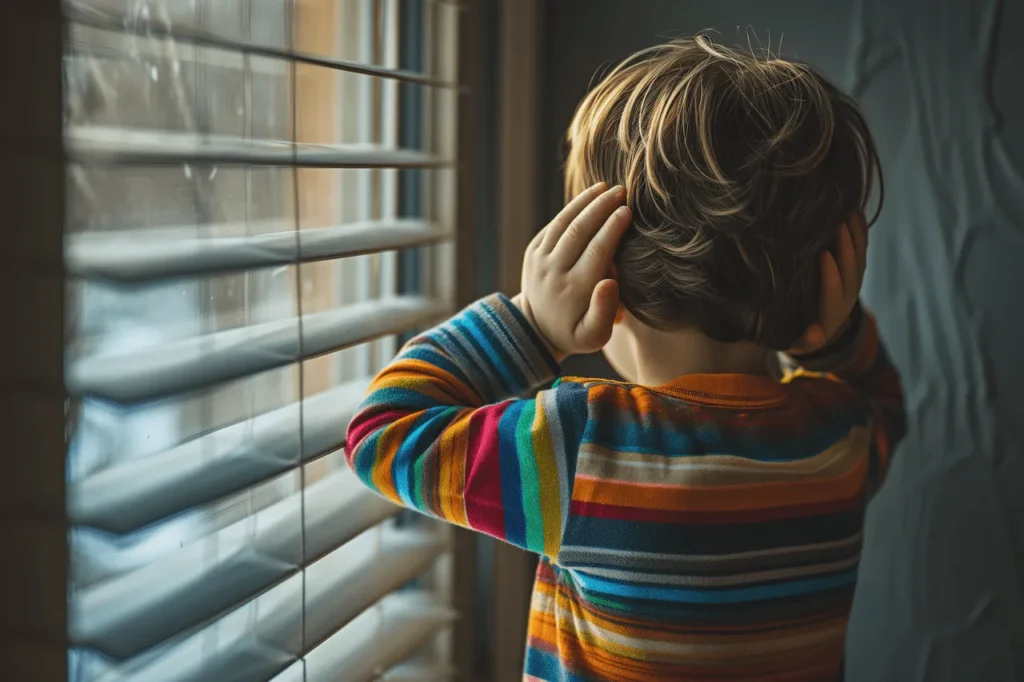
- Hypersensitivity or hyposensitivity – a child on the autism spectrum may have unusual sensory responses. They may be hypersensitive to sounds (covering their ears at louder noises, or even being bothered by the hum of a hairdryer) or hypersensitive to touch (unable to tolerate certain textures of clothing, having their hair washed, or having their nails cut). Other children, by contrast, show a lack of sensitivity to pain or temperature (e.g. they do not cry when they fall, nor do they indicate when they are cold). Sensory processing disorders may also manifest as food selectivity (eating only foods of a certain texture or flavour) or staring at light sources.
- Difficulties with non-verbal communication – the toddler may not understand simple instructions or may respond to them selectively, even though their hearing is physically fine. They often fail to indicate what they want (e.g. they stand in front of the cupboard and cry instead of pointing to their favourite treat). Sometimes they use other people’s hands as tools – for example, they might place their mum’s hand on the door handle when they want to go out, rather than communicating this with words or a gesture.
Many of the above symptoms become apparent around 24 months of age, when neurotypical children begin to play in groups, talk a lot and imitate adult behaviour.
A child on the spectrum may find social interactions difficult. As a result, they may fall further and further behind their peers in terms of social development. It is worth remembering, however, that autism is a spectrum – not every child with autism displays all these characteristics.
The severity of the symptoms varies: some young children, for example, do not speak at all, whilst others speak a great deal but mainly talk at length about their own interests. The key is to observe whether there is a combination of many subtle signs across different areas (communication, relationships, play, behaviour).
Careful observation by parents is key to diagnosing autism, and it is worth consulting a specialist if a parent’s observations give cause for concern.
Do you need some help?
Diagnosis of autism at the Dialog Centre for Children and Families
We carry out a comprehensive psychological assessment of the autism spectrum — thoroughly, providing a complete picture of the child’s potential and recommendations for the school.
Symptoms of autism in pre-school children (aged 3–6)
In pre-school children on the autism spectrum, the communication, social and behavioural difficulties described earlier usually persist. Some children are only diagnosed during this period – particularly if their symptoms were milder. In nursery, developmental differences become more apparent when compared with their peers.
What should you look out for in a child aged 3–6?
- Further difficulties in peer relationships – the child may not play with other children in the usual way. They often prefer to play alone or impose rigid rules on play, being unable to compromise when it comes to sharing roles. They may not understand the concept of cooperation – for example, instead of taking turns on the slide, they prefer to keep it all to themselves. A preschooler on the spectrum may avoid contact with children they do not know and show no natural curiosity about other people.
- Communication and language difficulties – if the child speaks, their way of communicating may be unusual. Difficulties in holding a conversation are common: the child may not answer questions or may speak off-topic, or may repeat the same phrases over and over. A characteristic feature is speaking to adults as if to themselves – delivering monologues on their favourite topic, without any back-and-forth conversation. Echolalia, or the repetition of overheard sentences (e.g. dialogues from fairy tales or a teacher’s instructions), may also persist. Some children speak in a very formal manner for their age (e.g. addressing others as ‘Miss’) or, conversely, use strange-sounding combinations of words. Their intonation may be monotonous, ‘mechanical’ or sing-song.
- A lack of understanding of social norms and emotions – a child on the spectrum may find it difficult to recognise the feelings and intentions of others. For example, they may not realise that a friend is sad or that their own behaviour is bothering someone. People’s gestures and facial expressions can be unclear to them. They may also fail to understand irony or jokes – they take what is said very literally, which leads to misunderstandings amongst their peers.
- Rigid interests and a strong attachment to routine – many children with ASD at this age already have clearly defined, specific interests. These may be unusual hobbies (e.g. a fascination with bus timetables, dinosaurs or the arrangement of the planets) or simply a favourite story or toy that the child is obsessed with. They play in a repetitive manner – for example, they always arrange their building blocks in the same way or act out the same scenes. If something disrupts their routine or someone changes the rules of the game, they react with frustration. Such children feel more comfortable when everything follows their established patterns. In nursery, they may therefore struggle with sudden changes to the daily routine or spontaneous activities.
- Exceptional abilities or developmental delays – the autism spectrum includes both children with intellectual disabilities and those who are highly intelligent. In some pre-school children with ASD, the development of outstanding skills in a narrow field is observed, alongside deficits in other areas. For example, a child may be able to read fluently at the age of 4 (known as hyperlexia) or be excellent at doing jigsaw puzzles, but find it completely impossible to hold a conversation or engage in make-believe play. Another child might remember minute details, such as all the species of dinosaurs, but be unable to tie their shoes or learn to eat with a fork. Such uneven development can also be an indication for a more in-depth diagnosis.
- Sensory and motor behaviours – at pre-school age, stereotypical movements are often still evident, such as flapping the arms, jumping up and down with joy, or spinning round, particularly when the child is excited or stressed. Peers may begin to notice this. A child on the spectrum may also have problems with motor coordination – for example, they may run clumsily, trip over things or find it difficult to learn to ride a balance bike. Sensory integration disorders (sensory hypersensitivity or hyposensitivity) can affect day-to-day functioning: the child may become upset when there is excessive noise (e.g. crying whilst singing together at nursery), avoid getting paint on their hands, or, conversely, seek out strong sensations (e.g. they enjoy very vigorous swinging, firm pressure when being hugged, or looking closely at patterns on the carpet).
Do you need some help?
Diagnosis of autism at the Dialog Centre for Children and Families
We carry out a comprehensive psychological assessment of the autism spectrum — thoroughly, providing a complete picture of the child’s potential and recommendations for the school.
Autism in girls – is it any different?
One important aspect of early diagnosis is the realisation that the symptoms of autism in girls may differ from those observed in boys. Statistically, ASD is diagnosed around 3–4 times more frequently in boys than in girls. However, this is not because girls are less likely to have autism – it is largely due to the fact that symptoms in girls tend to be less obvious and are more easily overlooked.
Girls with autism often exhibit milder social symptoms and are better able to compensate for their difficulties; as a result, the first signs of autism must be very clearly evident.
Social development
In practice, a little girl may seem more interested in social interaction than a boy on the spectrum – for example, she approaches other children, smiles and tries to imitate the behaviour of her peers. As a result, she is often perceived as, at most, shy or calm, whereas a boy with a similar level of autism would immediately be seen as withdrawn.
Girls often learn certain social rules by heart at an early age – they may observe and imitate other children, which enables them, for example, to play with dolls ‘seemingly normally’, re-enacting scenes they have witnessed. This masking of symptoms means that those around them do not recognise the problem. Nevertheless, the child may not understand the deeper aspects of relationships – they play with others mechanically, following learnt patterns.
Girls on the spectrum also often put a great deal of effort into fitting in and hiding their difficulties, which takes a mental toll on them. At home, they may then react to the accumulated stress (e.g. crying fits after a day at nursery), even though they were ‘well-behaved’ at the nursery.
Interests
Another difference lies in girls’ interests and play. Stereotypical ‘autistic’ hobbies are associated with boys’ interests (trains, numbers, computers). However, a girl on the spectrum may also have narrow interests, but these often fall within a framework more typical of girls – for example, an obsessive interest in horses, dolls, drawing princesses or reading books about animals.
As this sort of play does not seem unusual, nobody suspects autism. It is only by analysing the intensity and nature of this play (whether it is flexible and social, or rather rigid and solitary) that the difference becomes apparent.
As a result, girls with ASD often go undiagnosed in early childhood. It is only in later years, when social and communicative demands increase, that their difficulties become more apparent and lead to a diagnosis.
It is important that parents of young girls are also alert to the symptoms described earlier. Better social skills in a girl do not rule out autism – they may simply delay its diagnosis. Regardless of gender, any unusual behaviour in a child should be assessed by a specialist.
Rett syndrome
Rett syndrome is a genetically determined condition that affects only girls. Following an initial period of normal development (usually up to 6–18 months of age), previously acquired skills begin to regress, followed by stereotypical hand movements, increasing difficulties with mobility (including the possibility of losing the ability to walk), epileptic seizures, communication disorders, respiratory abnormalities, and, as the condition progresses, scoliosis and microcephaly.
Symptoms usually become apparent in the second half of the first year of life and gradually progress following a period of regression.
Do you need some help?
Diagnosis of autism at the Dialog Centre for Children and Families
We carry out a comprehensive psychological assessment of the autism spectrum — thoroughly, providing a complete picture of the child’s potential and recommendations for the school.
Symptoms of autism in adolescents and adults
The symptoms of autism are not limited to children. Young people are often diagnosed with an autism spectrum disorder after having previously slipped through the diagnostic net because the symptoms of autism were not as apparent in their development up to that point.
Adults on the autism spectrum, too, may go through most of their lives without realising that the various difficulties they experience may stem from signs of autism. The symptoms of autism in adults vary depending on a number of factors. After the age of 18, the autism spectrum can encompass a variety of behavioural patterns.
Various symptom patterns fall within the criteria for a diagnosis on the autism spectrum; however, people with autism differ depending on a number of factors. If you have any concerns, it is worth consulting a team of specialists to assess whether a child, teenager or adult has autism.
Early Diagnosis and Early Developmental Support (WWR)
If a parent notices several worrying symptoms in their child, they should not wait – it is best to see a specialist, such as a psychologist or a developmental paediatrician, for further assessment.
The diagnosis of autism in young children is based on observing the child in various situations – both during free play and whilst carrying out tasks designed to elicit specific social or communicative responses.
Specialists assess a young child’s social, communicative and cognitive development, often using standardised tools (such as the ADOS-2, the Autism Diagnostic Observation Schedule).
It is also important to rule out other causes of developmental delays (e.g. a hearing test, a neurological consultation). A diagnosis of autism can be officially made by a child psychiatrist, usually in collaboration with a team of specialists. It is becoming increasingly common to recognise autism as early as the age of 2, although diagnoses are typically made around the age of 4 or 5.
Specialists assess whether symptoms of autism are evident in a child’s day-to-day functioning, their interactions with adults and peers, the way they respond to stimuli, and their speech development.
The whole process makes it possible to determine whether a child’s behaviour is indicative of autism spectrum disorder or stems from other developmental causes.
Early Childhood Support (ECS)
Children with autism spectrum disorders may need additional support. WWR is a therapeutic programme in Poland which is available free of charge to children diagnosed with (or suspected of having) developmental disorders – including those on the autism spectrum – from the moment their disability is identified until they start school. In other words, from infancy until the child is around 7 years old, parents can access specialist support for their child through the education system.
To receive this support, you must contact the Psychological and Educational Counselling Centre, which, after carrying out its own assessment, issues an opinion on the need for early developmental support. On this basis, therapeutic sessions are organised for the child. As part of the Early Developmental Support Programme (WWR), the child may receive care from a psychologist, speech and language therapist, educationalist, physiotherapist or sensory integration therapist – depending on their individual needs.
The sessions are tailored to the child’s abilities and usually last a total of 4 to 8 hours per month (often spread over weekly sessions). Therapy may take place on a one-to-one basis with the child and their parent, or it may be conducted in small peer groups, for example in an inclusive nursery.
Diagnosis in children
The most important benefit of an early diagnosis is therefore the opportunity to provide the child with specialist support straight away and to start therapy at an early stage. This makes it possible to work on the development of speech, communication, social skills and independence at a time when the child’s brain is at its most malleable and receptive.
Numerous studies and therapeutic experiences show that children who began therapy before the age of three make greater progress than those for whom intervention began later. Therapy (e.g. social skills training, behavioural therapy, speech and language therapy, sensory integration) can significantly improve the functioning of a child with ASD – teaching them to communicate their needs, reducing tantrums, developing their play skills, and also supporting parents in understanding the unique way their child experiences the world.
That is why it is not worth ignoring the warning signs of autism. The sooner we spot them and take action, the better a future we can ensure for our child.
Bibliography:
- Ferenc K. Symptoms of autism – does my child have autism? PolskiAutyzm.pl [Internet]. 2020. Available at: https://polskiautyzm.pl/objawy-autyzmu-u-dziecka/
- FOCUS Psychological and Educational Counselling Centre. Early signs of autism in infants and young children – a checklist. [Internet]. [n.d.; accessed 13 October 2025]. Available at: https://wspomaganie-rozwoju.pl/blog/pierwsze-objawy-autyzmu-u-niemowlat-i-malych-dzieci/
- Wojteczek, J. Autism. Its symptoms can be observed even in infants. PAP Health Service [Internet]. 2022. Available at: https://zdrowie.pap.pl/rodzice/autyzm-jego-objawy-mozna-dostrzec-juz-u-niemowlat
- Hobbs KG. Autism in girls and women – symptoms and diagnosis. PolskiAutyzm.pl [Internet]. 2021. Available at: https://polskiautyzm.pl/objawy-autyzmu-dziewczynki-kobiety/
- Autism in Poland. Early intervention – administrative procedures. [Internet]. 2015 (updated); (accessed: 13 October 2025). Available at: https://polskiautyzm.pl/wczesne-wspomaganie-rozwoju/
- BadamyDzieci.pl. Kanner’s syndrome – symptoms, causes, diagnosis. [Internet]. [n.d.; accessed 13 October 2025]. Available at: https://badamydzieci.pl/porady/autyzm/zespol-kannera-objawy-przyczyny-diagnostyka/
- American Psychiatric Association. Diagnostic and Statistical Manual of Mental Disorders. 5th ed. Arlington, VA: American Psychiatric Association; 2013.
Read more
Related articles
The Autism Spectrum in Girls
A word of introduction In the 1970s, the British psychiatrist Lorna Wing observed that if a child exhibits various difficulties in three areas: then we can talk about autism. The Autism Spectrum We are talking about the autism spectrum, which means that symptoms and the severity of difficulties can vary significantly from person to person. […]
Symptoms of autism spectrum disorder in children – how to recognise them and when to seek help?
A child who ‘lives in a world of their own’ – this is a very unfair stereotype that has persisted for years in relation to young patients with autism spectrum disorders. Doesn’t this description actually apply to all of us? After all, we all have a different set of characteristics and experience everyday situations in […]

Social skills training for children
Social Skills Training, abbreviated to TUS, can be described, in the simplest terms, as active therapy in the form of workshops, which are conducted in groups of people of a similar age or with a similar level of functioning. The aim of TUS is to develop emotional and social skills through modelling (i.e. learning by […]

Psychomotor development (children aged 0–3 years)
A child’s psychomotor development is a process in which the child develops both their mental and motor skills during the first three years of life. This is a period of rapid change, during which a child reaches many milestones in the development of their motor, cognitive and social skills. During the first three years of […]

Snoezelen, or the Sensory Room
1. Introduction The senses form the basis of every person’s development. They provide information about the world around us. Without them, none of us could develop. However, some people are unable to respond to them appropriately, whilst others have lost these abilities due to an accident or illness. For these people, the world can be […]

Early speech and language therapy intervention – A newborn baby sees a speech and language therapist.
Early speech and language therapy intervention: a newborn’s first visit to a speech and language therapist There are many factors which have an adverse effect on a child’s speech development and subsequent functioning. The earlier any abnormalities are identified, the quicker and more effective speech and language therapy may prove to be. Special speech and […]
Do you need some help?
Diagnosis of autism at the Dialog Centre for Children and Families
We carry out a comprehensive psychological assessment of the autism spectrum — thoroughly, providing a complete picture of the child’s potential and recommendations for the school.
Book a consultation