STEP BY STEP
What does the examination involve from start
to finish?
The whole process begins with a pre-diagnostic consultation, followed by
three diagnostic appointments.
Diagnostic examination
Pre-diagnostic consultation
A meeting between a parent and a specialist, during which a detailed history is taken to tailor the diagnostic process to the individual’s needs.
Intelligence test
1 hourA detailed assessment of a child’s intellectual development and cognitive potential, forming the basis for further diagnosis.
Diagnosis of dyscalculia
2 hoursA battery of methods for diagnosing dyscalculia in pupils – a pedagogical developmental assessment of mathematical disorders (dyscalculia) in pupils aged 10–16.
Discussing the results with parents
1 hourA detailed discussion of the assessment results and the provision of a written report, together with recommendations for further work with the child.

The first step is a pre-diagnostic consultation
Arrange a relaxed chat with a specialist. You can decide on the next steps together.
After the examination
You’ve got your results – what next?
An opinion recognised by educational institutions
As a private psychological and educational counselling centre, the opinions issued by our diagnostic team are recognised by educational institutions, which enables the requirements and teaching methods at the child’s school to be adapted accordingly.
Adjustments to the Year 8 and A-level examinations
On the basis of the assessment carried out and the opinion received, the pupil may apply for adjustments to the examination requirements, in accordance with the announcements issued by the Central Educational Commission regarding the Year 8 examination and the school-leaving examination

Do you need educational therapy following a diagnosis?
We offer special sessions for children who have been diagnosed. Please book remedial and compensatory classes
or educational therapy online or by telephone.
Indications for the test
Who is the dyscalculia assessment for?
Specific difficulties in learning maths affect children and young people aged 10–16 who continue to experience problems with arithmetic and understanding mathematical concepts despite regular study and practice. If any of the following areas sound familiar, a pre-diagnostic consultation will help determine whether a full diagnosis is required.

Difficulties with basic arithmetic

Confusing numbers and mathematical symbols

Difficulties with the multiplication table

Difficulties in understanding concepts
Getting lost in word problems

Difficulties in telling the time
Take a look inside
The interiors of our Centre
We carry out dyscalculia assessments at the Dialog Centre for Children and Families in Śródmieście, at 19 Słomińskiego Street (next to the Arkadia shopping centre) — in a space designed with the comfort of children and parents in mind.
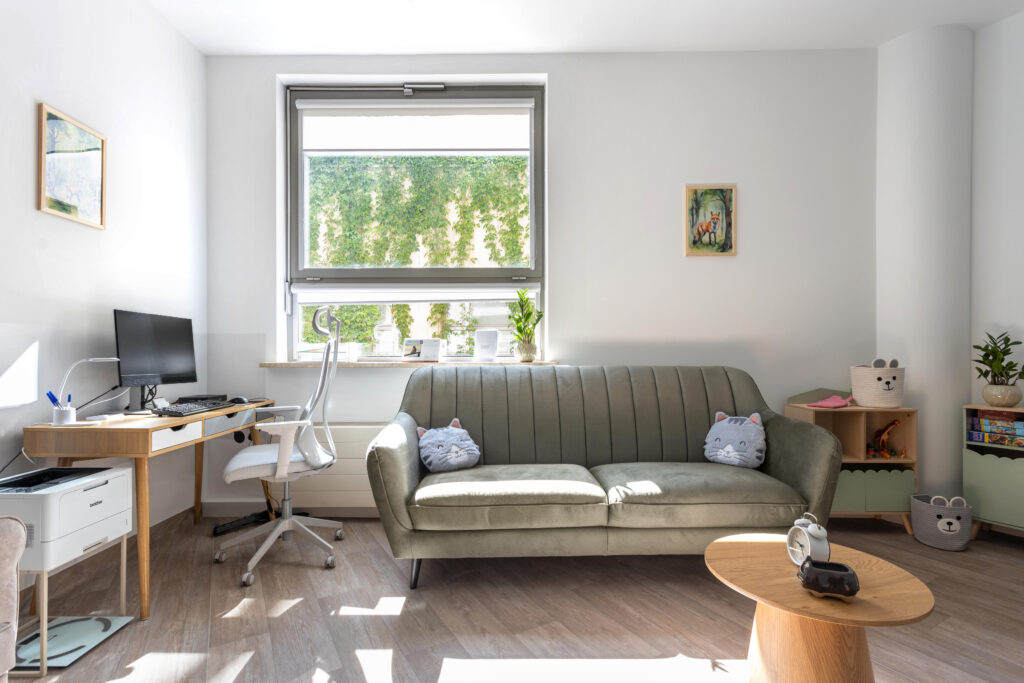
Therapy room

Waiting room

Reception area

Reception

Therapy room
Why choose us?
Why should you choose the Dialog Centre for Children and Families?