


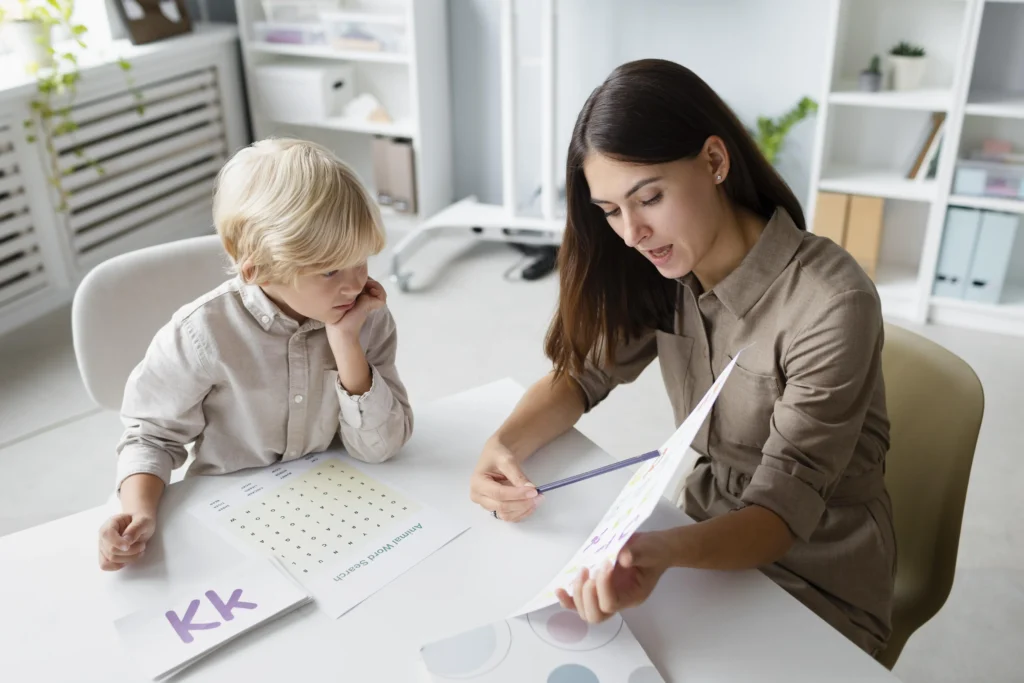
Not sure how to help your child? Start by having a calm chat with a specialist.
Psychological counselling for children and young people
How it works
What is a psychological consultation?
A psychological consultation is a meeting between a parent and a specialist, during which they can discuss any concerning behaviours, emotions, or difficulties the child may be experiencing at school, at home or with their peers. Its aim is to make an initial assessment of the situation and to identify the needs of the young person and their family.
A psychologist can help:
- to identify and better understand the difficulties observed,
- to assess whether the child’s behaviour falls within the scope of typical developmental challenges,
- indicate whether a more detailed assessment is required,
- propose an appropriate form of further assistance,
- provide parents with some initial guidance to use at home,
- choose the specialist best suited to the child’s needs.

Consultation
A consultation may be a one-off meeting or the start of a longer-term relationship. It all depends on the child’s situation and the reason the family has come forward.
See for yourselves
When should you take your child to see a psychologist?
It is worth seeking advice if you notice that your child:
is often sad, downcast, irritable or tense,
experiences intense anxiety, worries or avoids certain situations,
withdraws from contact with their family or peers,
has difficulty forming and maintaining relationships,
reacts with anger, aggression or very strong emotions,
has problems with sleep, appetite or day-to-day functioning,
doesn’t want to go to school or nursery,
has difficulties with learning, concentration or motivation,
experiences peer conflicts, rejection or violence,
has low self-esteem and does not believe in their own abilities,
is going through their parents’ separation, bereavement, a change of school or another difficult situation,
engages in risky or self-harming behaviour,
suddenly it started behaving differently from before,
has been diagnosed and needs support in coping with the consequences.

Are you ready to get started?
You can also get in touch if you are unable to pinpoint the problem exactly, but feel that your child needs help. There’s no need to wait until the difficulties get worse.
Step by step
What does a psychological consultation involve?
We’re getting to know your situation
At the start, the psychologist will ask about the reason for the appointment, the child’s development, their day-to-day functioning, and their situation at home, at school or at nursery. This is a space where you can feel free to talk about your observations and concerns.
We look at the child’s needs
Depending on the child’s age and the nature of the difficulties, the specialist may speak with the parent, the child or the teenager. The format of the meeting is tailored to the young person’s age, abilities and sense of security.
We’re deciding on the next steps
At the end of the session, the psychologist summarises the key points and outlines possible next steps. They may recommend a further consultation, therapy, a psychological assessment, a consultation with a psychiatrist or another specialist, or provide parents with guidance they can follow themselves.
Would you like to start with a chat?
Arrange your first appointment. A psychologist will help you make sense of the situation and work with you to determine what your child needs at the moment.
Appointments with some specialists can also take place online.
What can a consultation offer?
Benefits for the child and the whole family

A better understanding of the situation

A quicker response

Practical advice for parents

The right approach to providing assistance

A safe space for a child

Support for the whole family
Why choose us?
Why should you choose a psychological consultation
at the Dialog Centre for Children and Families?



What happens next after the consultation?
Support tailored to the child’s needs
A single session may be enough to sort things out and provide parents with some basic advice. Sometimes the psychologist suggests further consultations or one of the available forms of support:

- individual psychotherapy for a child or teenager,
- psychological counselling for parents,
- family therapy,
- a psychological assessment,
- a consultation with a child and adolescent psychiatrist,
- Social Skills Training,
- a consultation on educational support, speech and language therapy or sensory integration.
A recommendation is always tailored to the circumstances and does not imply an obligation to continue providing assistance in a specific form.