


DIALOG Children’s and Family Centre, Warsaw
Sensory Integration Therapy in Mokotów

Why do parents choose Dialog?
Convenience and time are on your side
There are many SI clinics in Warsaw. What makes the difference is what happens alongside the therapy. We
save you time and simplify the logistics so that your child’s development doesn’t clash with your working day.

The ‘Safe Road’ programme
Double-checking diagnoses

Open from 7.30 am to 10.00 pm

Two locations in Warsaw
the ‘Pick & up’ scheme
We collect our child from nursery for therapy and take them back again
Regular therapy sessions don’t have to mean leaving work in the middle of the day. Our carer collects your child from nursery, takes them to their sessions at the Dialog Centre for Children and Families, and then brings them back. Everything takes place during the nursery’s opening hours, so you don’t have to organise transport, and you have the afternoons to yourselves.


30 zł
For collection and return
High standard
A room full of therapeutic aids
For us, quality is not just about a nice interior. Above all, it is a space where a child can move freely, swing, balance and experiment with various stimuli. At the Dialog Centre for Children and Families, we have created a room in which every element supports therapeutic work.




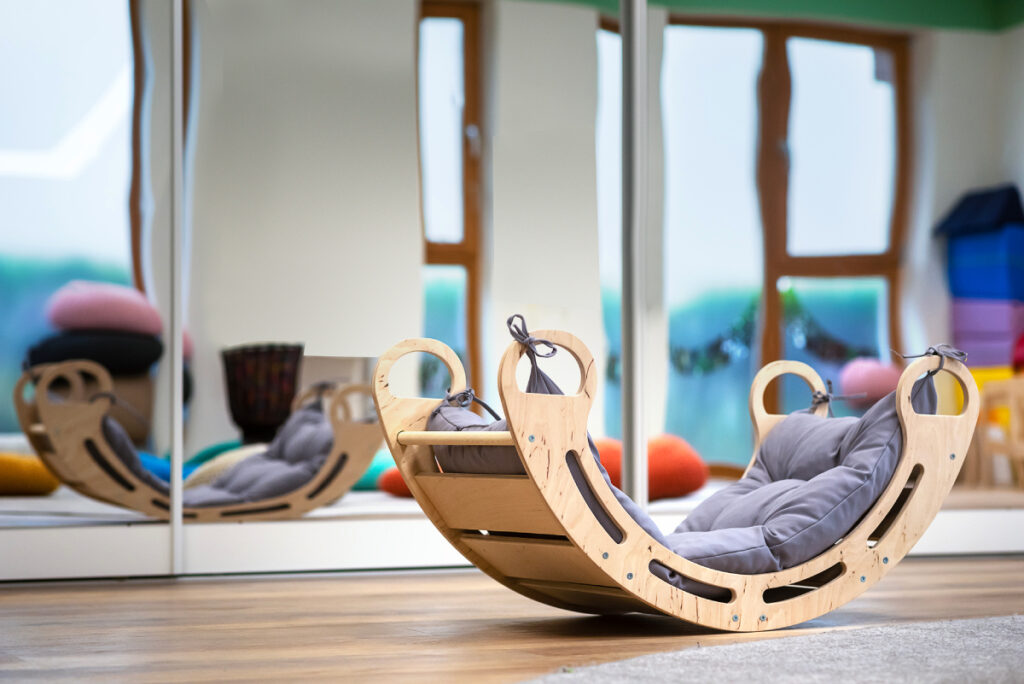
THERAPEUTIC SPACE
Take a look inside
The interiors of our Centre
Below are some photos of our sensory integration room and the ‘World Experience Room’ at the Dialog Centre for Children and Families in Mokotów.
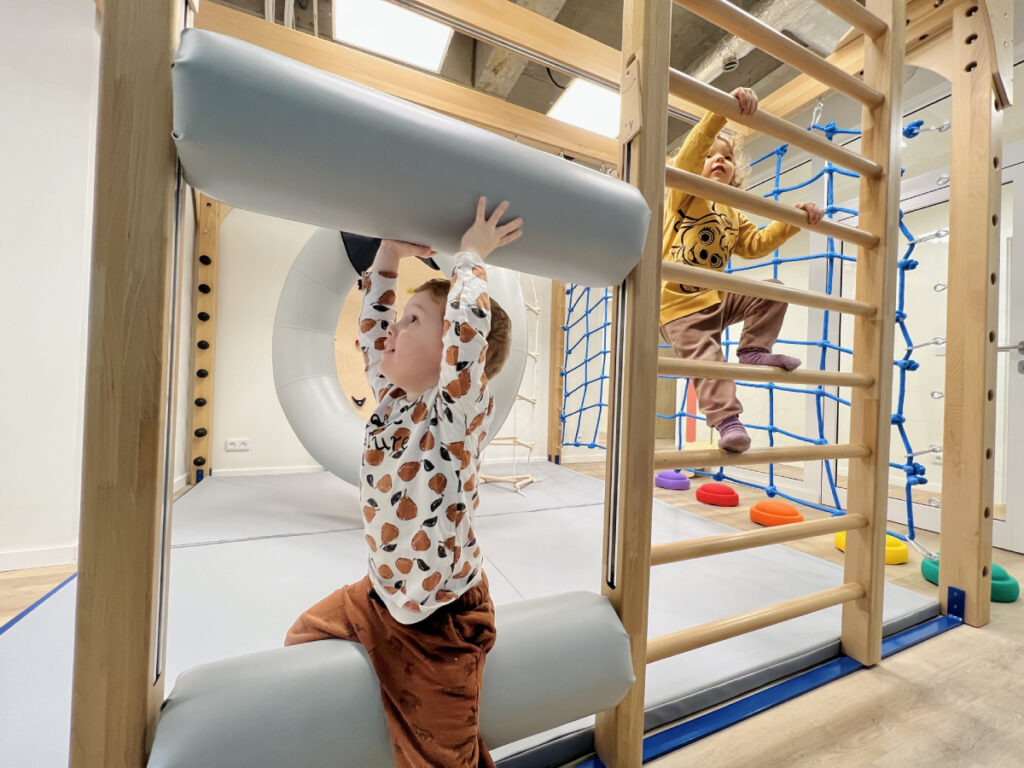
Sensory Integration Room
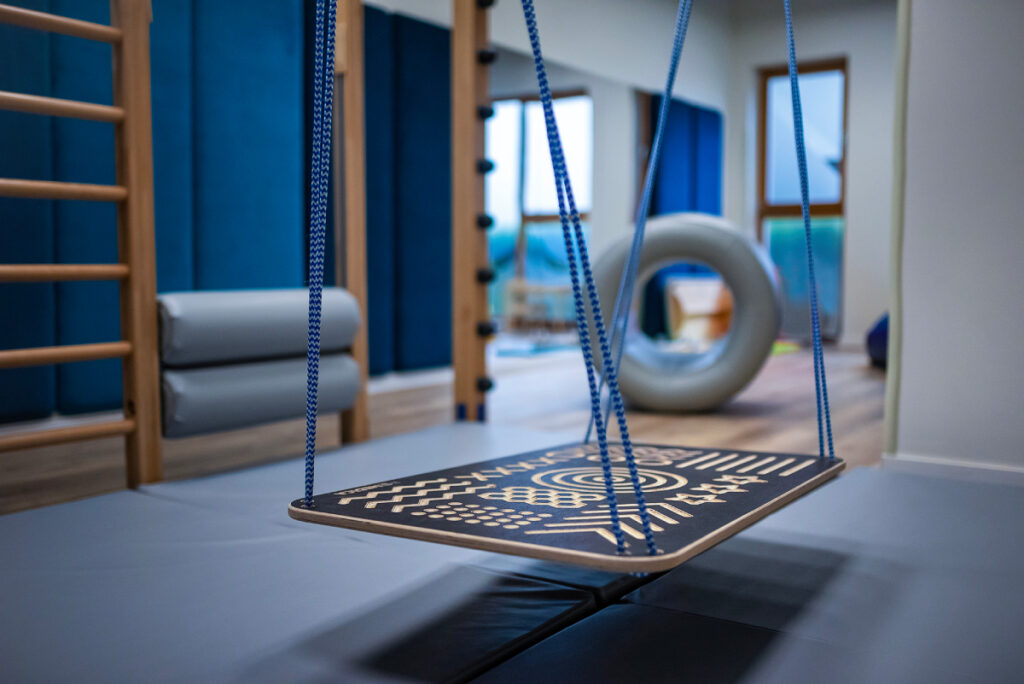
Proprioceptive zone
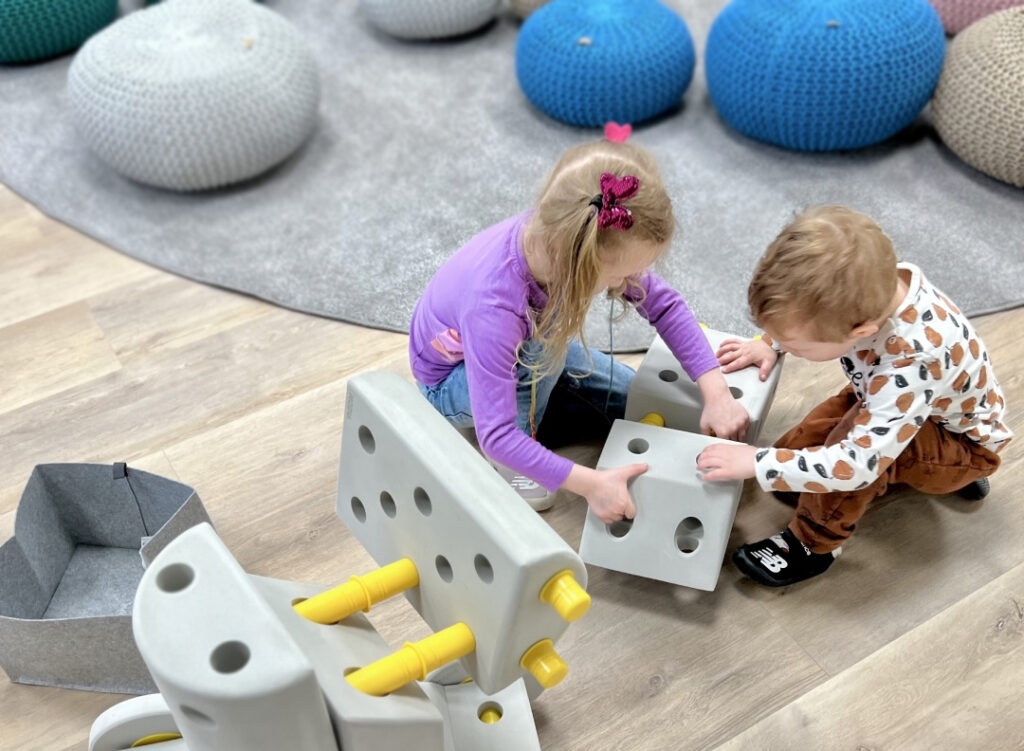
Sensory materials

Snoezelen room
Four forms in one place
We start with a sensory integration consultation
During the consultation, the therapist assesses the child’s difficulties and selects the appropriate form of support. We
all provide these services at the Dialog Centre for Children and Families. An SI consultation costs 250 zł,
and a single therapy session starts at 200 zł.

Sensory integration therapy

Hand therapy

Sensory integration and physiotherapy

Sensory diet
Basic form
Sensory Integration Therapy
How we help: one-to-one sessions at the centre
This is classic SI therapy, which is usually where we start after a consultation. We work on how the child perceives touch, movement, balance and other stimuli, so that they can cope better with learning, play and everyday situations. Sessions take place in a room equipped with sensory stimulation equipment.
WHO IS IT FOR?
- Children with sensory processing disorders, including those on the autism spectrum, with ADHD or aphasia
- Children who are hypersensitive or not sensitive enough to touch, sounds or movement
- Children with difficulties in concentration, balance and coordination
what the child gains
- A more organised perception of stimuli from the environment and one’s own body
- Better coping at nursery, school and at home
- Greater confidence in activities she used to avoid
Fine motor skills
Hand therapy
How we help: one-to-one sessions at the centre
Hand therapy focuses on improving fine motor skills – that is, the precise movements of the arms, hands and fingers – as well as on improving hand-eye coordination. Our work also takes into account the shoulder girdle, which forms the basis of manual dexterity. This support is provided wherever a child needs help with everyday independence.
WHO IS IT FOR?
- Children with delayed motor development and reduced manual dexterity
- Children who find it difficult to write, draw, cut things out or fasten buttons
- Children with graphomotor difficulties, those on the autism spectrum, those with Down’s syndrome or dyspraxia
what the child gains
- A more secure grip and greater precision in hand movements
- Better preparation for writing and art projects
- Greater independence in everyday activities
Sensory perception and movement
Sensory integration and physiotherapy
How we help: one-to-one sessions at the centre
This approach combines work on sensory processing with simultaneous support for posture and bodily function. We extend standard SI therapy to include elements of physiotherapy, such as work on muscle tone, posture correction and massage techniques. This enables us to support the child in several areas at once.
WHO IS IT FOR?
- Children with sensory integration disorders, including those on the autism spectrum and those with ADHD
- Children with delays in motor skills, coordination and balance
- Children with postural problems, limited mobility or who have suffered injuries
what the child gains
- Comprehensive support combining sensory and motor skills
- Greater freedom of movement in everyday activities
- Better posture and control over your own body
Basic form
Sensory diet
How we help: one-to-one sessions at the centre
Sensory therapy is not a programme run at a centre, but a personalised activity plan that a therapist draws up for your child and which you carry out at home. It helps to regulate the amount and type of stimuli your child is exposed to throughout the day, so as to support the proper functioning of the nervous system and prevent it from becoming overloaded. It is a tool that complements therapy between sessions.
WHO IS IT FOR?
- Children who become easily overstimulated or seek out intense experiences
- Children who are receiving SI therapy and need support outside the therapy room as well
- Families who want to know how to support their child on a day-to-day basis
what the child gains
- A more consistent level of alertness throughout the day
- Fewer situations involving sensory overload
- Specific activities to be carried out at home, devised in consultation with a therapist

Not sure where to start?
Book a sensory integration consultation. The therapist will assess your child’s needs and suggest the most appropriate form of support.
Areas of work
What does the work involve during therapy?
As part of sensory integration therapy, we use a range of techniques, which the therapist selects and adapts to suit your child’s goals. They all take the form of play, but each one has a specific therapeutic aim behind it.
Balance and coordination
Touch-based games
Proprioceptive exercises

Skill games

Eye-hand coordination exercises
Visual-spatial exercises

Sound therapy

The senses of smell and taste
Relaxation exercises
When should you consider treatment?
Is SI therapy right for your child?
It is worth considering therapy if any of the following situations arise in your child’s day-to-day life. You
don’t need to be certain – that’s what a consultation with a specialist is for.


Do you recognise these difficulties in your child?
Book a consultation and we’ll work out together whether therapy is right for your child, and if so, what form it should take.
Why Dialogue?
Quality you can rely on
at the Dialog Centre for Children and Families
We’ve already covered convenience and logistics above. Here, we’ll look at what lies behind the quality of the therapy itself, as this is what determines the results.




Articles
Have a look at our articles on this topic

Hyperactivity – symptoms, causes and ways of coping
Hyperactivity is a term that is cropping up more and more frequently in discussions about the mental health of children, young people and adults. It is sometimes equated solely with an excess of energy, but in reality it is a far more complex phenomenon. It can affect emotions, behaviour, concentration and day-to-day functioning at home, […]

Sensory overload – symptoms, causes and ways of coping
Sensory overload is a condition in which the nervous system receives more stimuli than it is able to process effectively. It can affect anyone, but is particularly common amongst highly sensitive people, those with neurodiversity, and those living under chronic stress. It manifests itself both physically and mentally, affecting day-to-day functioning, relationships and well-being. In […]