


Contents:
- 1. Introduction
- 2. The beginning: who came up with the idea?
- 3. The Unique Character of the ‘World Experience Room’
- 4. Who can benefit from Snoezelen therapy?
- 5. What senses do we have?
- 6. How can the individual senses be stimulated in a Snoezelen room?
- 7. The Snoezelen Room at Senso Senso
- Bibliography:
- Related articles
1. Introduction
The senses form the basis of every person’s development. They provide information about the world around us. Without them, none of us could develop. However, some people are unable to respond to them appropriately, whilst others have lost these abilities due to an accident or illness. For these people, the world can be a place full of either excessive or insufficient stimulation. They may behave inappropriately and act or react in ways that others do not understand.
Snoezelen is a form of therapy which, by stimulating the human senses through the use of a specially designed space, improves their functioning as well as a person’s perceptual, emotional and cognitive abilities.
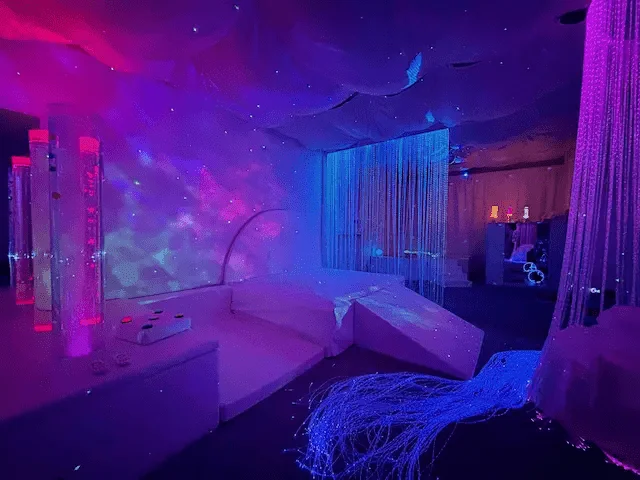
This space, known as a Snoezelen room – and in Poland also as the ‘World Experience Room’ – is, in fact, a specially designed room that stimulates patients’ senses using a variety of devices, lighting and equipment.
It is used both as a stand-alone therapy and to complement other therapeutic and physiotherapy interventions, including sensory integration.
In the article below, we explain the origins of the Snoezelen method, describe what it involves, and explain how and to whom it can be of help.
Do you need some help?
The Snoezelen Sensory Experience Room at the Dialog Centre for Children and Families
A unique multisensory space designed to promote calm, emotional regulation and relaxation — safe and tailored to the child’s needs.
2. The beginning: who came up with the idea?
In 1978, two Dutch therapists – Jan Hulsegge (a music therapist) and Ad Verheul (an occupational therapist) – created a special place: an experimental sensory ‘activity tent’.
The tent was made from canvas, and black plastic sheeting was used to mark out paths and corridors. Sound, light, balloons and hay were used. The aim of the project was to create a wealth of sensory experiences for visitors within a small space.
The use of this experimental tent yielded surprisingly positive results.
The institute’s patients, who had previously been apathetic, began to show cognitive initiative. They took the initiative themselves, seeking ways to experience their surroundings through their senses, particularly touch, hearing and sight. This applied to both patients who communicated verbally and those who used alternative means of communication. They showed a great deal of interest and attempted to explore this space, whilst at the same time interacting with their accompanying therapist.
Hulsegge and Verheul therefore decided to move on from a tent to something more permanent. And so they created a special room, the name of which, ‘Snoezelen’, comes from a combination of two Dutch words: ‘snuffelen’ (sniffing, touching) and ‘doezelen’ (dozing, relaxing).
The idea of this kind of non-directive therapy (i.e. without directly guiding the patient’s actions) was revolutionary at the time. Since its inception, Snoezelen therapy has quickly become a global phenomenon, and today these special rooms can be found all over the world!
In Poland, the term ‘Snoezelen’ has been given its own equivalent – ‘Sala Doświadczania Świata’ (Room for Experiencing the World). This term, proposed and popularised by Dr Agnieszka Smrokowska-Reichmann, was deemed by the method’s creators to be very apt (no other country has made such an attempt). According to Ad Verheul, the Polish equivalent of this Dutch neologism – which is difficult to translate – perfectly captures the main message of Snoezelen.
Both terms are currently used interchangeably.
3. The Unique Character of the ‘World Experience Room’
The World Experience Room is a therapeutic space designed to stimulate patients’ various senses, whilst also helping them to achieve a state of relaxation and calm. It can be used as a stand-alone therapy, but can also play a complementary role alongside other therapeutic and physiotherapy interventions.
A state of relaxation is a very important element of this therapy, as it is highly beneficial to patients’ health and well-being, and:
- helps to reduce stress and tension,
- improves the quality of sleep,
- reduces pain,
- It increases endorphin levels in the body, which helps to improve one’s well-being and reduce anxiety.
A state of relaxation is also an important element in the treatment of various disorders, such as neurological conditions, mood disorders or behavioural disorders. It is particularly beneficial for people on the autism spectrum, those with attention deficit disorder, and people with physical and/or intellectual disabilities.
Snoezelen therapy stimulates their senses and helps them to improve their perceptual, emotional and cognitive functioning. This approach is based on the theory that sensory stimuli, such as light, sound, smell, touch and taste, can influence a person’s emotional state and behaviour. This stimulation is achieved using the equipment and devices available in the room
such as:
- special lighting – which can be adjusted to suit different needs, to stimulate the sense of sight and influence mood,
- projectors – multimedia projections enable the display of various visualisations, animations and films, which can stimulate the sense of sight and encourage patients to interact,
- music and sounds – to stimulate the sense of hearing and influence patients’ moods,
- textiles – special blankets, cushions and mats allow children to explore different textures and materials, which stimulates the sense of touch,
- aromatherapy – scents and essential oils can be used to stimulate the sense of smell and influence mood,
- sensory balls and toys – with different textures, shapes and sizes, which allow children to explore sensory stimuli and develop their perceptual skills,
- water, sand and other materials – allow children to explore different textures and temperatures, which stimulates the sense of touch and affects their mood,
- Specialised furniture – benches, armchairs and swings – allows children to relax and explore different positions and movements, which helps develop their sense of balance and spatial awareness.
Such facilities offer a wide range of opportunities to interact with various sensory stimuli. One might think that, given the nature of this therapy, participants will simply feel comfortable, relax, and that’s all. Contrary to appearances, however, Snoezelen therapy has very specific objectives, which are tailored to the needs of individual patients.
Snoezelen can offer the following benefits, amongst others:
- improving concentration and attention, developing perceptiveness and sensory memory,
- the development of motor skills and the improvement of their precision,
- encouraging activity, stimulating the senses, familiarising children with various stimuli,
- improved body awareness,
- normalising muscle tone,
- reducing stress and anxiety, achieving a state of relaxation,
- the development of social skills such as communication and cooperation,
- improvement in cognitive abilities, such as abstract thinking, creativity and problem-solving skills,
- gaining new experiences and developing one’s powers of observation.
4. Who can benefit from Snoezelen therapy?
Snoezelen rooms can be beneficial for a very wide range of patients.
It is used, amongst other things, to work with:
- patients with neurological disorders, such as epilepsy, multiple sclerosis, Parkinson’s disease,
- patients with mental health conditions such as schizophrenia, depression and anxiety disorders,
- patients with intellectual disabilities – supporting their treatment by stimulating their various senses and helping them to develop social and communication skills,
- patients with dementia, such as Alzheimer’s disease, by stimulating their memory and encouraging them to be active,
- healthy people who wish to relax and improve their well-being by stimulating their various senses and reducing stress.
In addition, using the Snoezelen room can be particularly beneficial for people who:
- experience stress, anxiety or tension – sensory stimulation can help to alleviate these conditions by inducing a sense of relaxation and calm,
- have difficulty concentrating or paying attention – engaging different senses can help improve concentration and attention by stimulating the brain and the senses,
- experience physical pain or discomfort – therapy can help to alleviate these symptoms by stimulating the senses and inducing a sense of relaxation,
- have difficulties with communication or social interaction – sensory stimulation can help to improve communication and social interaction by encouraging them to interact with various items of equipment in the room,
- need sensory stimulation – a Snoezelen room can help to stimulate the various senses, which can be particularly beneficial for people with various conditions, such as autism, ADHD and sensory processing disorders.
5. What senses do we have?
The five senses that we are generally familiar with are:
- sight – provides us with detailed information about what we see and helps us to define boundaries as our brain processes colour, contrast, shape and movement,
- touch – keeps us in touch with our surroundings. Touch is essential for our survival and is one of the ways in which we communicate. From head to toe, our skin helps us to sense temperature, light touch, deep pressure, vibrations, pain and much more,
- smell – we use our sense of smell all the time. Floral, pungent, musty, acrid and rotten – we recognise many things by their smells. Strong memories can also be linked to smells,
- hearing – provides us with detailed information about the sounds we hear, such as volume, pitch, rhythm, tone and sequence,
- taste – provides us with feedback on different types of flavours: sweet, sour, spicy, salty, bitter, etc.
Two senses that we are less aware of in our day-to-day lives are:
- sense of balance (vestibular) – enables us to maintain correct posture, move in a co-ordinated manner and stabilise our vision when changing the position of our head. It tells us whether we are moving or standing still, as well as the direction and speed of our movement. Thanks to it, we can even tell whether we are in an upright or horizontal position – even with our eyes closed,
- sense of orientation (known as proprioception or kinesthesia) – is the ability to distinguish between left and right within one’s own body schema and in space. It is also the ability to determine the relationships between objects and to orient oneself within the body schema of a person standing opposite.
6. How can the individual senses be stimulated in a Snoezelen room?
Touch
Therapists use various touch techniques for this purpose, such as massage, stroking, pressure or light scratching, to help patients relax and reduce stress. It is important for the therapist to adapt these touch techniques to each person’s individual needs and preferences.
The Snoezelen room features a variety of textures and surfaces, such as soft blankets, cushions, balls, stones and many others, which help to stimulate the sense of touch. It can also be practised through interaction with different surfaces and textures, such as soft furs, smooth metal surfaces, rough fabrics or shiny surfaces.
This helps to develop tactile perception and enrich sensory experiences.
Sight
Vision can be developed using elements that stimulate this sense, such as lights, colours, shapes, patterns, images, projections and many others. Therapists use various techniques, such as visual exploration, visual games and activities, and different types of visual sensory stimuli, such as coloured lights, image projections on walls, light fountains, disco balls, flickering images and many others to help patients develop their visual perception and stimulate their curiosity.
Participants can also improve their visual perception by interacting with various textures and surfaces, such as matt, glossy, shiny, silky, satiny or cotton surfaces.
This helps children develop their ability to recognise and compare different shapes and textures, and aids in the development of their visual perception.
Hearing
Hearing can be stimulated by using elements that engage this sense, such as sounds, music, rhythms, the sounds of nature, the sounds of speech, animal sounds and many others.
Therapists use a variety of techniques, such as auditory games and activities, sound exploration, auditory meditation, and various types of auditory sensory stimuli, such as white noise, the sounds of the ocean, birds, rain, wind and many others.
You can also practise auditory perception by interacting with various musical instruments, such as xylophones, drums and percussion instruments, as well as by singing and recording your own voice. This helps to develop the ability to recognise and compare different sounds and aids in the development of auditory perception.
Sense of smell
The sense of smell can be stimulated by elements that stimulate this sense, such as: scents, essential oils, incense, perfumes, and many others.
Patients can also practise their sense of smell by interacting with various textures and materials that have a distinctive scent, such as flowers, herbs, spices, as well as by interacting with different surfaces that give off a distinct scent, such as wood, leather, cotton or silk.
This enables patients to develop their sense of smell and stimulate their curiosity.
Flavour
Taste can be stimulated using various elements that develop this sense, such as: tasty snacks, drinks, lollipops, chewing gum, jelly sweets and many others. Therapists use various techniques, such as tasting, taste exploration, and different types of taste-related sensory stimuli, such as sweet, sour, bitter or salty flavours, to help participants develop their perception of taste and stimulate their curiosity.
You can also practise this sense by using different textures and consistencies that have a distinctive flavour, such as soft and crunchy snacks, fruit and vegetables with different flavours, as well as by experimenting with different textures and temperatures, such as cold, warm, soft and hard.
Sense of balance
The sense of balance in the Snoezelen room can be stimulated by, amongst other things:
- on a balance board – the patient can stand or walk on the balance board to improve their coordination and stability,
- on a ball – the patient can stand or sit on the ball and maintain their balance,
- on unstable cushions or mattresses – which will help the patient maintain their balance and improve their motor coordination.
Sense of direction
Techniques for practising the sense of orientation in the Snoezelen room include, amongst others:
- observing the surroundings – the patient can observe the surroundings of the room and pay attention to various items of furniture, as well as their colours, shapes, textures and movements. This exercise helps the patient to better understand the space and find their bearings within it,
- sound recognition – various sounds and noises, such as bells, wind chimes, birdsong or the sounds of nature, can be used to help recognise the direction and location of the sound source,
- observing light – stimulates the sense of sight and helps to improve spatial awareness. The patient may notice different colours and lighting effects, as well as the position and direction from which the light is coming,
- Use of movement – various pieces of equipment, such as swings, balls or blankets, can be used to help patients better understand their surroundings and orientate themselves within them whilst moving.
7. The Snoezelen Room at Senso Senso
The Snoezelen room at our Development Support Centre on Cybernetyki Street (Mokotów, Warsaw) stands out from similar facilities, primarily due to the range of equipment it houses, its aesthetic appeal and the fact that it is specifically designed for sensory integration therapy (for more details, see ‘Sensory Integration in the Snoezelen Room’).
Individual sessions in the World Experience Room are led by a specialist Snoezelen therapist. During the 50-minute non-directive therapy session, patients (or other participants) use the room at their own pace. They determine the course of the therapeutic session themselves, with the opportunity to repeat, explore and process sensory experiences as often as they like.
Sensory integration sessions using the Snoezelen Room are led by our experienced Si therapists. These sessions are structured. They also last 50 minutes.
As well as one-to-one sessions, the World Exploration Room also hosts group role-play sessions. In these sessions, the young participants, with the help of their imagination, the creativity of our therapists, and the use of lights, colours, smells and sounds, are guided through adventures in space, an enchanted forest or other settings, using all their senses. Each of these forms of play has therapeutic value.
The above are just some of the typical uses of a Snoezelen room and therapy.
We warmly invite you to visit our reception for further details and to sign up!
Bibliography:
- Smrokowska-Reichmann, A. (2013). Snoezelen – A Room for Experiencing the World. A handbook for carers and therapists. Wrocław: Rosa Foundation.
- Michałowska-Olechnowicz, I. (2017). Occupational Therapy. The Snoezelen Method – A Room for Experiencing the World. Poznań: Oficyna MM.
- Zawiślak, A. (2009). Snoezelen (World Experience Room). Origins and development. Bydgoszcz: Kazimierz Wielki University Press.
- Jędrzejowska, A. (2017). The ‘World Experience Room’ as a new space for developing students’ therapeutic skills during teaching placements. University of Wrocław.
- Mach, A. (2017). The Snoezelen Room in therapeutic practice. University of Rzeszów.
- Chmielewska, K., & Krajewska, K. (2020). The use of the Snoezelen method in the therapy of children with developmental disorders. In: M. Górska (ed.), Modern methods of supporting child development (pp. 45–60). Warsaw: Difin.
- Nowak, A. (2019). The importance of multisensory stimulation in the treatment of children with sensory integration disorders. Kraków: UP Scientific Publishing House.
- Hulsegge, J., & Verheul, A. (1986). Snoezelen: Another World. A Practical Book of Sensory Experience Environments for People with Intellectual Disabilities. Chesterfield: ROMPA.
- Pagliano, P. (2012). Multisensory Environments: Theory and Practice. London: David Fulton Publishers.
- Fotheringham, J., & Gregory, M. (2011). Snoezelen – An Approach to Stimulate and Relax. Birmingham: British Institute of Learning Disabilities (BILD).
- Stephenson, J., & Carter, M. (2011). The use of multisensory environments in schools for pupils with severe disabilities: Teachers’ perceptions. European Journal of Special Needs Education, 26(2), 217–232.
- Lotan, M., & Gold, C. (2009). Meta-analysis of the effectiveness of the Snoezelen multisensory environment for individuals with intellectual and developmental disabilities. Journal of Intellectual and Developmental Disability, 34(3), 207–215.
- Stawicka, M. (2021). The World Experience Room as a space supporting children’s emotional and cognitive development. Wrocław: DSW Academic Publishing House.
- Czerwińska, E. (2018). Multisensory therapy in educational and therapeutic practice. Warsaw: Special Education Academy Press.
- Novak, C., & Masek, J. (2018). The use of multisensory environments in early childhood intervention. Early Child Development and Care, 188(5), 648–659.
Read more
Related articles
Psychomotor development (children aged 0–3 years)
A child’s psychomotor development is a process in which the child develops both their mental and motor skills during the first three years of life. This is a period of rapid change, during which a child reaches many milestones in the development of their motor, cognitive and social skills. During the first three years of […]
Sensory diet
Where does the term ‘sensory diet’ come from? The term ‘sensory diet’ was introduced by Patricia Wilbarger, an American occupational therapist and specialist in sensory integration. Wilbarger developed this concept in the 1990s as part of her work with children and adults who had difficulties with sensory processing. She was a pioneer in this field, […]
Sensory integration disorders – how can you recognise them and support your child?
Every day, a child’s brain receives hundreds of stimuli – sounds, images, smells, touch, sensations from movement and from within the body. If they can make sense of them, the little one learns and plays without any major difficulties. However, when a child’s nervous system becomes ‘overwhelmed’ by this flood of signals, everyday activities can […]
Sensory overload – symptoms, causes and ways of coping
Sensory overload is a condition in which the nervous system receives more stimuli than it is able to process effectively. It can affect anyone, but is particularly common amongst highly sensitive people, those with neurodiversity, and those living under chronic stress. It manifests itself both physically and mentally, affecting day-to-day functioning, relationships and well-being. In […]
Social skills training for children
Social Skills Training, abbreviated to TUS, can be described, in the simplest terms, as active therapy in the form of workshops, which are conducted in groups of people of a similar age or with a similar level of functioning. The aim of TUS is to develop emotional and social skills through modelling (i.e. learning by […]
Sensory Integration in the Snoezelen Room
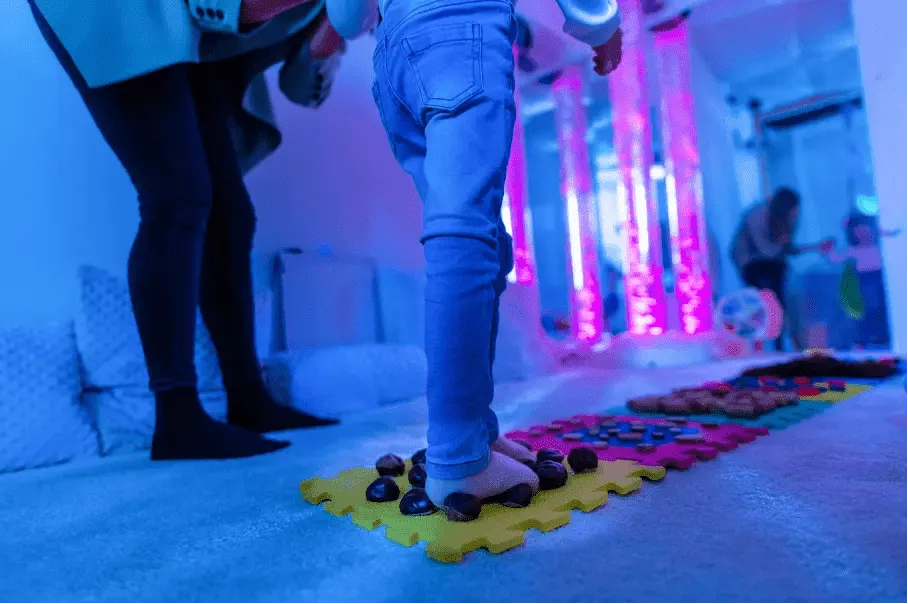
A sensory room, also known as a ‘Snoezelen sensory room’ or simply a ‘Snoezelen room’, is a specially designed space intended to create an environment that stimulates the senses whilst providing a sense of safety and relaxation. These rooms are often used when working with people with a range of needs, including those with developmental […]
Do you need some help?
The Snoezelen Sensory Experience Room at the Dialog Centre for Children and Families
A unique multisensory space designed to promote calm, emotional regulation and relaxation — safe and tailored to the child’s needs.
Book an appointment