Separator line

make an appointment by phone

Mon–Sun: 7.30 am – 10.00 pm

ADHD diagnosis
in children in Warsaw

Before the diagnosis

Pre-diagnostic consultation

A meeting between a parent and a specialist, during which a detailed history is taken to tailor the diagnostic process to the individual’s needs.

1H 250 zł
4 matches 1,800 zł
1
Meeting

Initial assessment appointment

1 hour
Conners Test 3

The assessment is the most accurate tool for evaluating symptoms of ADHD and co-occurring difficulties. One sheet is intended for use in schools, so that the diagnostician can assess the child’s functioning in an educational setting.

2
Meeting

Second diagnostic appointment

1 hour
Stanford-Binet Test V

A detailed assessment of a child’s intellectual development and cognitive potential.

3
Meeting

The third diagnostic meeting

1 hour
Observation + cognitive functions

Observation of the child and assessment of cognitive functions. The assessor may also request a report from the child’s school regarding how the child functions amongst their peers.

4
Meeting

Summary

1 hour
Discussion + written opinion

Discussing the results with parents and providing feedback with recommendations for further work.

A visit to a child and adolescent psychiatrist

With a full report of the test results, you will be referred to a child and adolescent psychiatrist, who, on the basis of a detailed assessment prepared by a psychologist, will make a diagnosis and issue the necessary certificates. The psychiatrist may also initiate any necessary pharmacological treatment.

An opinion recognised by educational institutions

As a private psychological and educational counselling centre, the opinions issued by our assessment team are recognised by educational institutions, which enables the requirements and teaching methods at the child’s school to be adapted accordingly.

Child and adolescent psychologist

Individual therapy, emotional support and psychoeducation for both the child and the parent.

Child and adolescent psychiatrist

Making a clinical diagnosis and, where appropriate, prescribing medication.

TUS – Social Skills Training

Group sessions designed to develop social and emotional skills.

Parenting Skills Training

A workshop for parents — how to effectively support a child with ADHD on a day-to-day basis.

Advice for parents

Practical advice on how to deal with difficult parenting situations.

Family therapy

Support for the whole family when ADHD affects relationships at home.

Two-stage substantive supervision

The reports issued by our diagnosticians are further approved by our managers — this guarantees the highest quality and accuracy of content.

Official authorisation of the counselling centre

We operate as Non-Public Psychological and Educational Counselling Centre No. 44P. Our RSPO number is 129211 ➔

A clear and straightforward process

No hidden costs. You’ll know from the outset how much you’ll pay and exactly what will happen at every stage of the diagnosis.

A multidisciplinary team

Diagnosticians, psychologists, psychiatrists and therapists work together in a single centre to ensure that children receive consistent and comprehensive support.

01

Understanding the reasons behind the difficulties

A diagnosis explains the reasons behind your child’s behaviour. It is the first step towards stopping you from blaming your child (and yourself) for situations over which you had no control.

02

Better support at school

A formal diagnosis makes it possible to adapt the learning environment to the child’s needs: extra time in tests, a personalised approach from teachers, or support from a special needs teacher.

03

Building self-esteem

Realising that difficulties are not down to ‘laziness’ or ‘malice’ helps a child regain their self-confidence and motivation to take action.

04

A more peaceful everyday life at home

When you understand what really lies behind challenging behaviour, it becomes easier to adapt your daily rules, routines and ways of communicating. Parents who are better informed are able to respond more calmly and effectively.

05

Personalised support plan

A diagnosis enables us to select the appropriate forms of support: therapy, social skills training or strategies for managing attention. This support is tailored to the individual child, rather than being based on random advice.

06

An opportunity for harmonious development

Early diagnosis and appropriate support increase a child’s chances of realising their full potential, at school, in their relationships and in their future adult life.

Dziewczynka trzymająca zabawki sensoryczne

Can a pupil with ADHD be granted a special educational needs certificate?

Can a pupil with ADHD be assessed? How can I get support for my child? The administrative procedures involved in a child’s diagnosis can be overwhelming for many parents. This is particularly true when, for the first time, there is a need to obtain an assessment or a report from a psychological and educational counselling […]
Czytaj
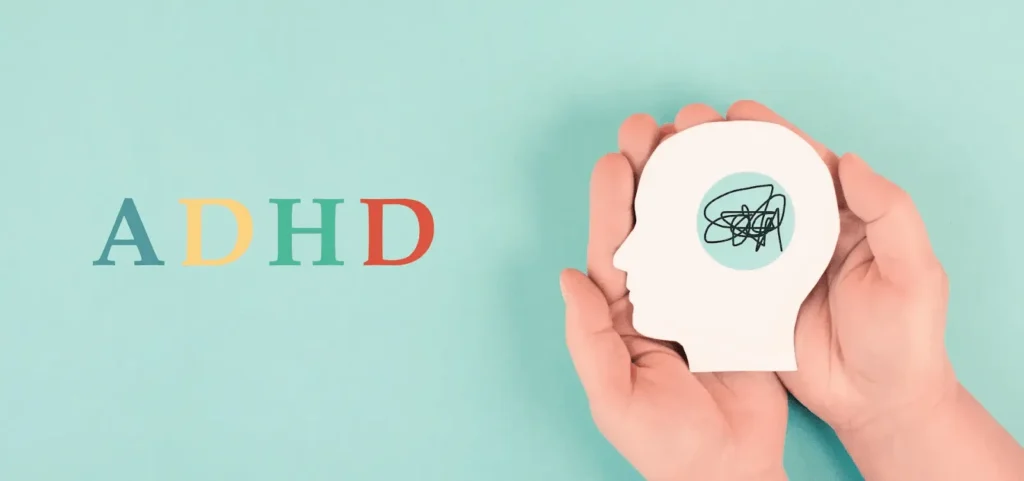
Napis adhd na zielonym tle obok rąk dziecka

ADHD and autism – similarities and differences in functioning

Autism and ADHD are two neurodevelopmental disorders which, despite having different diagnostic criteria, can often occur together and co-occur in the same person. Modern diagnosis and in-depth assessment are making it increasingly possible to distinguish between their characteristic symptoms and to identify instances where they may occur together or overlap in the functioning of children […]

Czytaj
Dziecko z pędzlem na tle pomalowanej ściany

Hyperactivity – symptoms, causes and ways of coping

Hyperactivity is a term that is cropping up more and more frequently in discussions about the mental health of children, young people and adults. It is sometimes equated solely with an excess of energy, but in reality it is a far more complex phenomenon. It can affect emotions, behaviour, concentration and day-to-day functioning at home, […]

Czytaj
Occasional episodes of hyperactivity, inattention or impulsivity are a natural part of development and happen to every child. We speak of ADHD when such behaviours are severe, persist for at least several months and occur in various situations (at home, at school and amongst peers), and, moreover, significantly hinder the child’s day-to-day functioning. This is precisely why a diagnosis is carried out: a thorough assessment using standardised tools allows us to distinguish between a temporary ‘difficult phase’ and ADHD, and to identify what the child really needs.
The process begins with a pre-diagnostic consultation: a meeting between the parent and a specialist, during which a detailed history is taken. This is followed by a series of four sessions: the Conners 3 test, an assessment of intellectual development using the Stanford-Binet V test, observation and assessment of cognitive functions, and finally a summary meeting at which we discuss the results with the parents and provide a written report with recommendations.
The full ADHD assessment package comprises four sessions, each lasting approximately one hour, preceded by a pre-assessment consultation. The total duration of the entire process depends on the availability of appointments and the pace at which the necessary information is received (e.g. a form completed by the school), but it usually takes several weeks. We are committed to ensuring that the diagnosis is thorough and carried out at a pace that is comfortable for the child.
A diagnosis at our centre involves much more than just a conversation. It is based on standardised tools: the Conners 3 test (assessment of ADHD symptoms) and the Stanford-Binet V (assessment of intellectual development), supplemented by observation of the child, an assessment of cognitive functions, and information from parents and, where necessary, from the school. This ensures that our conclusions are based on data, rather than solely on subjective impressions.
Yes. The parent is an active participant in the process, from the interview during the pre-diagnostic consultation right through to the debriefing session. One of the Conners 3 test forms is intended for the school, and the assessor may also request feedback from the educational institution regarding the child’s functioning within a peer group. Looking at the situation from several perspectives (home and school) provides a more complete picture.
It’s best to keep things calm and relaxed. It’s a good idea to tell your child that they’ll be meeting a nice lady or gentleman with whom they’ll have a chat, do some drawing and carry out various tasks – a bit like playing or doing exercises. There’s no need to use the word ‘examination’ or threaten them with consequences. Make sure your child has had a good night’s sleep and has eaten well. Remember that the first consultation takes place without the child; it is a conversation between the parent and the specialist, so the child will only get to know the clinic during the diagnostic sessions.
Our ADHD assessment package is designed for children aged 6 and over. This is the age when children usually start school, and any difficulties with attention, hyperactivity or impulsivity become more apparent in a structured environment. Diagnosis can also be carried out for teenagers; the tools we use are tailored to different age groups.
This is one of the most important elements of a reliable diagnosis: what is known as a differential diagnosis. Symptoms resembling ADHD may stem from other causes, such as anxiety disorders, autism spectrum disorders, sensory processing difficulties or specific learning difficulties. Our specialists are experienced in distinguishing between these conditions, and if other difficulties are suspected, we recommend further diagnostic tests. The aim is for the child to receive the right support, rather than being labelled.
The diagnostic assessment is carried out by an experienced diagnostic psychologist with the relevant qualifications. Based on the detailed report drawn up by the psychologist, a child and adolescent psychiatrist makes a clinical diagnosis and prepares the necessary certificates. We work as a team, which means that once a diagnosis has been made, you do not need to look for another specialist on your own.
Once the process is complete, you will receive a written report setting out the results and specific recommendations for work at home and at school. As we operate as a private psychological and educational counselling centre, our reports are recognised by educational institutions, which enables requirements and teaching methods to be adapted to the child’s needs.
Yes. This is one of the main advantages of being diagnosed at our centre: the entire support pathway is available in one place. Following diagnosis, the child can continue working with our specialists: individual therapy, Social Skills Training (SST), counselling for parents, Parenting Skills Training or family therapy. We also offer additional appointments with psychiatrists for patients following their diagnosis.
We offer a wide range of support: individual therapy with a psychologist, child and adolescent psychiatric care, Social Skills Training (SST), Parenting Skills Training for parents, parenting advice and family therapy. We tailor the forms of support to each individual case, depending on the needs of the child and the whole family.
Not always. The decision on whether to prescribe medication is made by a psychiatrist on a case-by-case basis, based on the nature of the difficulties and the severity of the symptoms. For many children, non-pharmacological interventions play a key role: therapy, skills training, adjustments at school and parental support. Pharmacotherapy may be one element of support, but it is not a rule that applies to every child with ADHD.
It’s worth speaking calmly, simply and without judgement. It’s good to emphasise that a diagnosis isn’t ‘something bad’, but a way to better understand how a child’s mind works and how to help them so that everyday life is easier. It helps to focus on the child’s strengths and reassure them that they are neither ‘worse’ nor ‘broken’. If you need support with such a conversation, our specialists will be happy to advise you on how to tailor your message to the child’s age and personality.
Please bear in mind a few things: does the centre use standardised assessment tools (e.g. the Conners 3, Stanford-Binet V), do the diagnosticians hold the relevant qualifications and have sufficient experience, is a differential diagnosis carried out, are the reports recognised by schools, and can support continue at the same centre following the diagnosis? At the Dialog Centre for Children and Families, we meet all these criteria: assessment, psychiatric care and therapy are all available under one roof.

Contact

Centres for Children and Families

City Centre

📍 19
Zygmunta Słomińskiego Street, Entrance C/I, Flat 520, 00-195 Warsaw

Mokotów

📍 3c Cybernetyki Street,
02-677 Warsaw

Our specialists also see patients at other branches of the Dialog Therapy Centre

Wspólna

70 Wspólna Street (Park Avenue)

Wola

137 Górczewska Street

Mokotów Domaniewska

26B Bukowińska Street

Gocław

33A Bora-Komorowskiego Street

Żoliborz

5 Gwiaździsta Street

City Centre

19 Słomińskiego Street, Entrance C

Ursynów

19 Stryjeńskich Street

Wilanów

35 Kosiarzy Street

Powiśle

16/22 Fabryczna Street