


Contents:
- What does a speech and language therapy assessment involve?
- A step-by-step speech and language therapy assessment
- What conditions can speech and language therapists diagnose?
- What is a speech and language therapy assessment?
- Who carries out a speech and language assessment – a speech and language therapist or a neuro-speech and language therapist?
- Bibliography
- Related articles
We often regard a child’s first words as one of the most important milestones in their development. Every little one goes through this stage at their own pace. However, it is worth keeping a regular eye on whether the subsequent stages in the development of our children’s communication skills are progressing as they should.
To monitor the development of children and young people in nurseries and schools, speech and language screening tests are organised from time to time. The aim of the vigilance shown by teachers and speech and language therapists is to identify difficulties at an early stage in those pupils who may need additional support.
Unfortunately, these measures are only preliminary and do not replace a full assessment by a specialist – however, they may encourage parents to take further action.
A speech and language therapy assessment enables a precise evaluation of how speech and language function, identifying the patient’s strengths and the areas requiring therapy. How does this process work?
Do you need some help?
Speech and language therapy assessment at the Dialog Centre for Children and Families
A comprehensive assessment of a child’s speech and communication — culminating in a formal report and a specific plan for further support.
What does a speech and language therapy assessment involve?
During a speech and language therapy assessment, a specialist (speech and language therapist or neuro-speech therapist) identifies difficulties with speech and language in the patient – they check whether and how a child’s speech is developing normally, or what is causing an inadequate level of speech development in an adult patient.
A speech and language therapist assesses the function of the speech organs, sentence structure, vocabulary, fluency and rate of speech. They also assess language comprehension – that is, the extent to which the person being assessed responds to instructions and whether they are able to make use of information conveyed verbally.
As well as the issues most commonly associated with speech and language therapy, the specialist also focuses on functions related to the speech apparatus. They assess breathing patterns, the mobility of the tongue and lips, muscle tone in the face, and the coordination of breathing with speech. In very young children, a comprehensive assessment also takes into account feeding, biting and swallowing, as difficulties in these areas can affect the development of the articulatory organs.
That is how it all looks from a specialist’s perspective. Although the description above outlines the key elements of the process, it is hardly surprising that patients or parents of young children might find such rather technical terms unfamiliar.
So what actually happens in practice?
What is a speech and language therapy assessment like from a child’s perspective?
For a child, a session with a speech and language therapist is like a game. The therapist asks the child to repeat carefully chosen words, look at pictures (special picture questionnaires have been developed for the youngest children), tell stories or respond to questions. The consultation room is equipped with books, jigsaw puzzles, picture cards and everyday objects, which help ensure that the tasks are not perceived as a test, but as a natural activity.
The young patient is unaware that they are ‘being assessed’. This makes them feel safe and more willing to follow the instructions necessary to reach a diagnosis – speech and language therapists working with pre-school and early-school-age children have experience in creating a friendly environment conducive to effective speech and language therapy.
Do you need some help?
Speech and language therapy assessment at the Dialog Centre for Children and Families
A comprehensive assessment of a child’s speech and communication — culminating in a formal report and a specific plan for further support.
A step-by-step speech and language therapy assessment
The speech and language therapy assessment process is a multi-stage one. At Senso Senso, it consists of four sessions, the format of which varies depending on the patient’s age.
Stages of the diagnostic process for a child
The diagnostic process for children differs from that for adults. This is because young patients are not always able to consciously describe their difficulties; that is why parents play such an important role throughout the procedure, providing information about their child.
1. The first session is of an organisational and informative nature. The speech and language therapist conducts an interview and asks about the main areas of concern. During the consultation, they gather basic information which can be used to determine the course of further action and even to make a preliminary diagnosis. Topics discussed include the child’s speech development, first words, typical language behaviours and any language communication difficulties that the parents have noticed. Parents or carers should not be surprised if issues such as feeding, eating habits, chronic illnesses or previous experiences with therapy are raised.
- The appointment lasts around 50 minutes and helps to determine the scope of the further assessment. Parents are told what the next stages will involve and how long the whole process will take.
2. The second appointment focuses exclusively on a discussion with the parent. The young patient does not take part in it. The interview is more detailed than the initial consultation. The speech and language therapist asks about behaviour at home, at nursery, whilst playing with peers, reactions to sounds, interests, favourite activities and potential symptoms associated with sensory integration disorders. The information gathered also relates to communication within the family – how the child responds to instructions, how they use gestures, and how they understand longer statements.
3. The third session is the most important part of the diagnostic process. This is the stage at which the speech and language therapist works with the child in the therapy room. The therapist encourages the child to play, talk and carry out age-appropriate tasks. The observation lasts around 45 minutes and is documented in detail by the speech and language therapist.
4. The final, fourth meeting is devoted to discussing the results. The parent receives a written report which, on the one hand, details the areas requiring support and, on the other, highlights the child’s well-developed qualities. The document contains conclusions drawn from observations and work carried out in the clinic. This is also the time when the specialist discusses the next steps – explaining whether speech and language therapy is required, how often it should take place, and what exercises would be beneficial to practise at home.
- If the child’s situation so requires, the speech and language therapist may recommend further tests. Consultations with a neurologist, ENT specialist, psychologist or orthodontist may be necessary in order to reach a diagnosis.
How long does a speech and language therapy assessment take?
The stages described above require several separate appointments. The exact time taken to obtain a diagnosis depends on the availability of specialists. At Senso Senso, we ensure that subsequent appointments are scheduled as closely together as possible.
It is important to bear in mind that, in some cases, a speech and language therapist may make a preliminary diagnosis based on the information gathered and an assessment of speech development. The hypothesis put forward may require further appointments with other specialists. A comprehensive assessment of the patient’s various areas of health forms the basis for well-considered and effective treatment.
At Senso Senso, we offer practical solutions, as our team of specialists comprises experts from various fields. However, this may mean that the entire diagnostic and treatment process takes longer. Throughout this period, our patients can count on our full support and clear information regarding the next steps.
Do you need some help?
Speech and language therapy assessment at the Dialog Centre for Children and Families
A comprehensive assessment of a child’s speech and communication — culminating in a formal report and a specific plan for further support.
What conditions can speech and language therapists diagnose?
Problems with correct pronunciation and other speech disorders that can be diagnosed by a speech and language therapist include:
- delayed speech development,
- speech impediments,
- stammering (speech fluency disorders),
- dyslalia,
- dysarthria,
- dysphagia,
- aphasia,
- difficulties in understanding the language,
- phonological disorders,
- disorders associated with the anatomical structure of the articulatory apparatus,
- voice disorders,
- disruptions to the normal course of mutation.
What is a speech and language therapy assessment?
A speech and language therapist’s report summarises the entire diagnostic process. It is a written document in which the speech and language therapist outlines the patient’s language and communication development. It takes into account observations made during sessions, test results and information provided by the parent or the patient themselves.
The document contains recommendations – these may relate to starting treatment, introducing exercises at home, or making adjustments to conditions at school or at work.
Who carries out a speech and language assessment – a speech and language therapist or a neuro-speech and language therapist?
Both specialists are qualified to carry out the diagnostic process. Which of them is best suited to the patient’s needs depends on the patient’s individual circumstances. This is precisely why Senso Senso offers initial consultations – during the first appointment, it is possible to determine which specialist will be best placed to meet the patient’s needs.
- A speech and language therapist specialises in the diagnosis and treatment of speech, language, voice and communication disorders. They work with children, young people and adults. They support speech development in young children, correct pronunciation errors, provide stammering therapy and work on voice production.
- A neuro-speech and language therapist is a speech and language therapist with additional training in neurology. They specialise in working with patients whose communication difficulties stem from diseases or damage to the nervous system. They also assess feeding and swallowing functions, which are closely linked to the development of the speech organs.
Bibliography
- Regulation of the Minister of National Education of 9 August 2017 on the rules for the organisation and provision of psychological and educational support in state-funded nurseries, schools and educational establishments (Journal of Laws 2017, item 1591). Retrieved from: https://isap.sejm.gov.pl/isap.nsf/DocDetails.xsp?id=WDU20170001591
- Gacka, E. (2018). Speech and language therapy assessment of newborns and infants. Interdisciplinary Contexts of Special Education, (14), 13–28.
- Michalak-Widera, I., & Moćko, N. (2013). Speech and language therapy prevention as an element of effective diagnosis in young patients. In: Speech and language therapy prevention in educational practice. Vol. 2 (eds. K. Węsierska, N. Moćko), 134–149. Katowice: University of Silesia Press.
- Załucka, D., & Łukasik, M. J. (2022). Assessing needs in the field of speech and language therapy prevention. Edukacja Dziecka, 6, 47–63.
- Pluta-Wojciechowska, D. (2023). Traditional versus new approaches to the diagnosis of phoneme articulation disorders. A proposed analysis. Logopaedica Lodziensia, (7), 173–186.
- Walencik-Topiłko, A. (2023). Voice assessment and therapy – a holistic approach. Methodological guidelines and a case study. Logopaedica Lodziensia, (8), 161–171.
- Sochoń, M., Krajewska-Kułak, E., & Śmigielska-Kuzia, J. (2016). Expectations of parents of pre-school children regarding speech and language therapists. Nursing and Public Health, (2), 105–117.
Read more
Related articles

Support for children with speech disorders
Speech disorders are various types of communication problems that can make it difficult for a child to interact with other people. They include problems with: In children, speech disorders can affect their emotional and social development, which often leads to feelings of isolation and frustration. Speech disorders in children are a problem that can take […]

Auditory processing – What are auditory processing disorders and how can they be treated?
Have you ever wondered how the ability to listen – rather than simply hear – affects a person’s overall development? The ear is not just for hearing. It also stimulates the brain and helps maintain balance. Good hearing plays a key role in the development of a person’s personality. Problems arise when we are dealing […]

Early speech and language therapy intervention – A newborn baby sees a speech and language therapist.
Early speech and language therapy intervention: a newborn’s first visit to a speech and language therapist There are many factors which have an adverse effect on a child’s speech development and subsequent functioning. The earlier any abnormalities are identified, the quicker and more effective speech and language therapy may prove to be. Special speech and […]
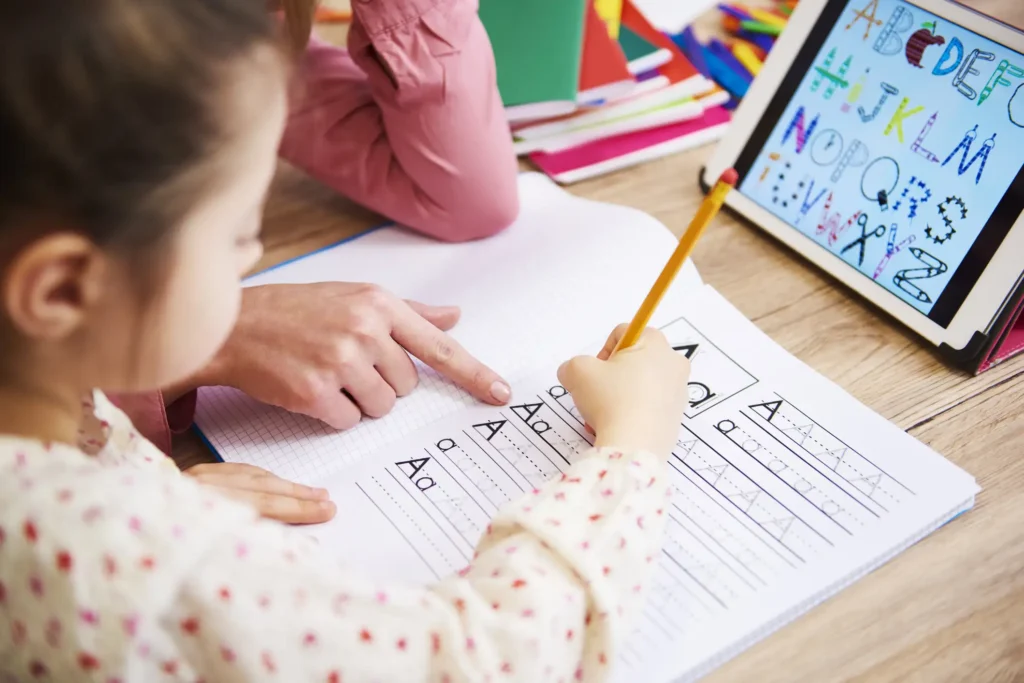
Dyslexia – what is it and what causes it?
Diagnosis: the most effective form of educational support for children and young people! Developmental dyslexia is a specific difficulty in learning to read and write that occurs in children with normal intellectual development. It is a neurodevelopmental disorder (with a neurobiological basis) – this means that it stems from abnormalities in the functioning of the […]

Dyscalculia in children – what is it and how does it affect a child’s learning?
Dyscalculia is one of a number of specific developmental disorders, characterised by significant difficulties in learning mathematics. It is often referred to as ‘mathematical dyslexia’, because, just as with dyslexia (which affects reading and writing), dyscalculia mainly affects numeracy and the ability to work with numbers. A child with dyscalculia has difficulty understanding numbers, performing […]
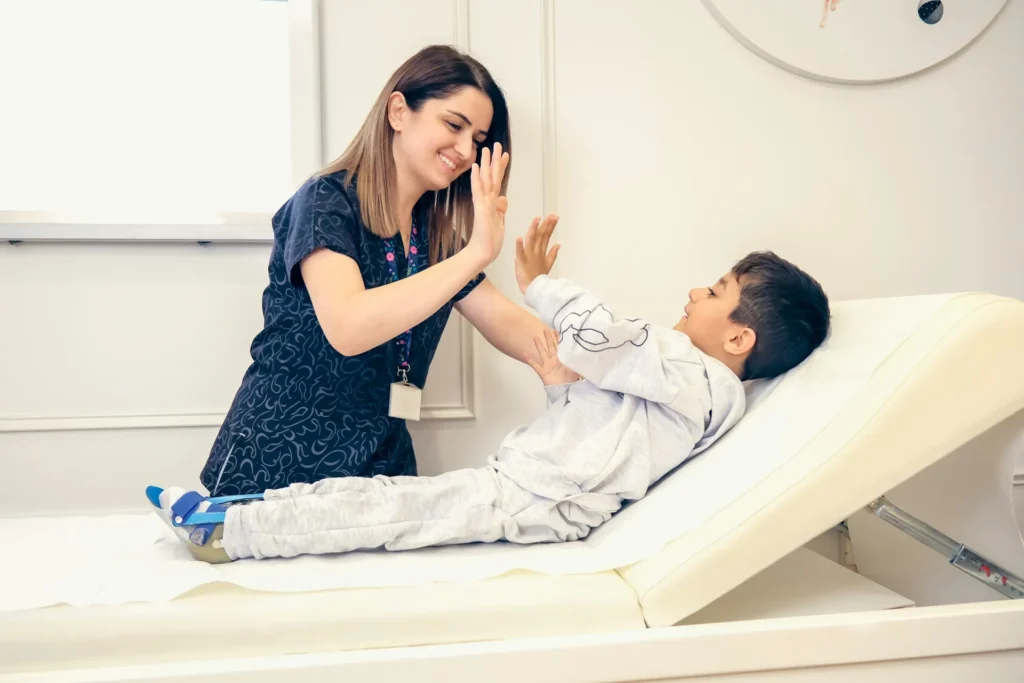
Sensory Integration (SI) diagnosis – what is sensory integration and what does the assessment involve?
What is sensory integration? Sensory integration refers to the process by which the nervous system receives sensory stimuli and utilises them in everyday functioning. Thanks to this, the body is able to respond appropriately to sounds, sights, touch, movement, taste, smell and signals from the motor system. But what happens when certain aspects of this […]
Do you need some help?
Speech and language therapy assessment at the Dialog Centre for Children and Families
A comprehensive assessment of a child’s speech and communication — culminating in a formal report and a specific plan for further support.
Book a speech and language therapy assessment