


Contents:
Speech disorders are various types of communication problems that can make it difficult for a child to interact with other people. They include problems with:
- pronunciation,
- understanding of the language,
- the organisation of thoughts or
- word recall.
In children, speech disorders can affect their emotional and social development, which often leads to feelings of isolation and frustration.
Speech disorders in children are a problem that can take various forms and arise for a variety of reasons; it is therefore important for parents to be aware of the symptoms of these disorders and to know when to seek help from a specialist.
What signs should cause a parent concern?
One of the first signs that may indicate a speech disorder in a child is delayed speech development. If a child aged 2–3 does not speak or speaks very little, this may be a sign of speech problems.
Another symptom is a failure to understand simple instructions or to answer questions. The child may also repeat words or syllables, use incorrect grammatical forms or have difficulty pronouncing certain sounds.
In some cases, speech disorders may be caused by health problems such as hearing loss, neurological conditions or breathing difficulties; parents should therefore consult the relevant specialist to rule out these causes.
Speech or communication disorders may also be associated with emotional and developmental difficulties, in which case speech difficulties occur as a concomitant symptom.
In each of these cases, it is worth consulting a psychologist or speech and language therapist so that effective treatment can begin as soon as possible.
Do you need some help?
Speech and language therapy at the Dialog Centre for Children and Families
Individual speech and language therapy sessions to support a child’s speech and communication — tailored to their age, needs and rate of development.
How can you help a child with a speech disorder?
Speech and language therapy is one of the best ways to tackle speech disorders. It involves various types of exercises and techniques that help a child improve their pronunciation, enhance their understanding of language, and organise their thoughts and improve their vocabulary. Speech and language therapy is also effective in teaching children how to cope with communication difficulties.
One of the most important aspects of speech and language therapy is taking an individual approach to each child. Speech and language therapy should, above all, be child-friendly and engaging, so that the child can develop their skills in a safe and supportive environment.
Another important aspect of speech and language therapy is the involvement of parents, who can help ensure that exercises are carried out regularly and reinforce the benefits of the therapy. Parents therefore need guidance on the exercises and techniques used during therapy so that they can continue working with their child at home.
In summary, speech and language therapy is an effective way of helping children with speech disorders. This therapy should be tailored to the child’s individual needs and involves various techniques and exercises that help to improve pronunciation, enhance language comprehension and organise thoughts. It is important for parents to be involved, as they can help ensure the exercises are carried out regularly and reinforce the benefits of the therapy.
At the Dialog Centre for Children and Families, we offer comprehensive support from speech and language therapists who provide the best possible care and ensure that therapy is engaging for the child.
Read more
Related articles

Auditory processing – What are auditory processing disorders and how can they be treated?
Have you ever wondered how the ability to listen – rather than simply hear – affects a person’s overall development? The ear is not just for hearing. It also stimulates the brain and helps maintain balance. Good hearing plays a key role in the development of a person’s personality. Problems arise when we are dealing […]

Early speech and language therapy intervention – A newborn baby sees a speech and language therapist.
Early speech and language therapy intervention: a newborn’s first visit to a speech and language therapist There are many factors which have an adverse effect on a child’s speech development and subsequent functioning. The earlier any abnormalities are identified, the quicker and more effective speech and language therapy may prove to be. Special speech and […]

Speech and language therapy assessment – how does it work and when is it advisable to have one?
We often regard a child’s first words as one of the most important milestones in their development. Every little one goes through this stage at their own pace. However, it is worth keeping a regular eye on whether the subsequent stages in the development of our children’s communication skills are progressing as they should. To […]

Speech prosody in autism – what it is and how it affects communication
Speech is not just about words and a rich vocabulary, but also about the way we say them. The pace, intonation, stress, rhythm and modulation of our voice enable the listener to understand our intentions and emotions. This is precisely the area that prosody deals with. In the context of neurodiversity, such as autism, this […]
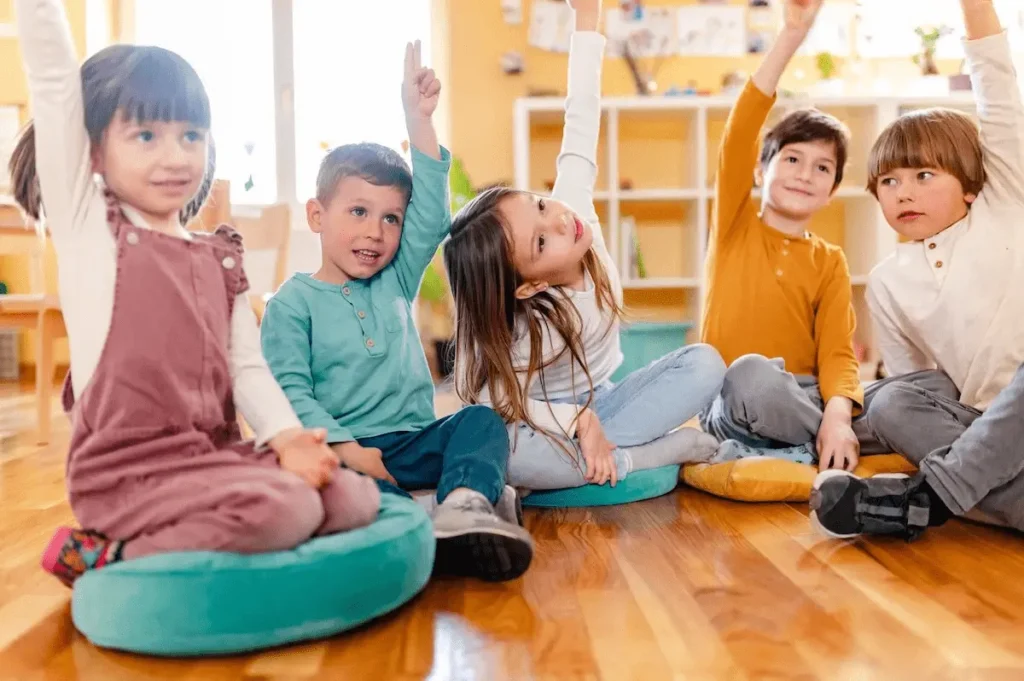
Social skills training for children
Social Skills Training, abbreviated to TUS, can be described, in the simplest terms, as active therapy in the form of workshops, which are conducted in groups of people of a similar age or with a similar level of functioning. The aim of TUS is to develop emotional and social skills through modelling (i.e. learning by […]
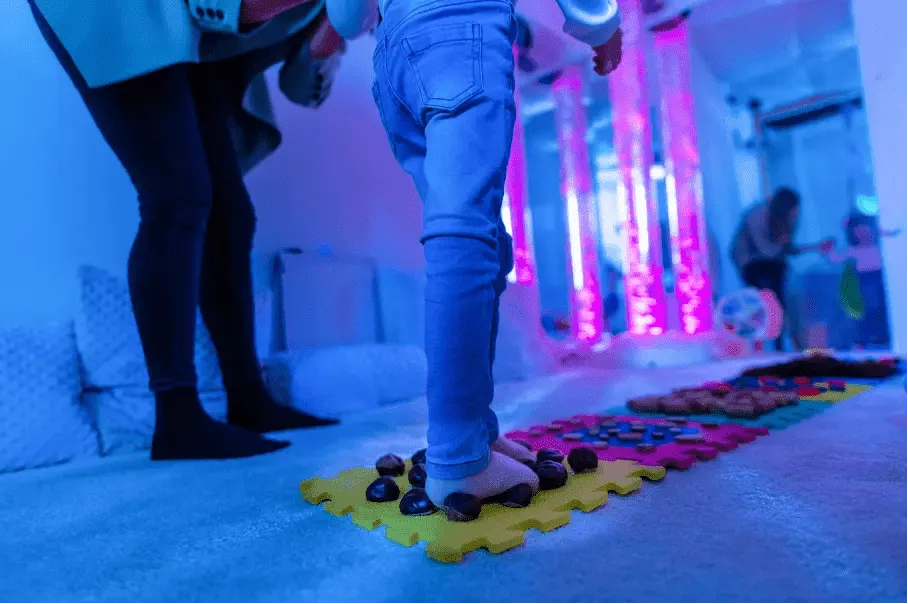
Sensory Integration in the Snoezelen Room
A sensory room, also known as a ‘Snoezelen sensory room’ or simply a ‘Snoezelen room’, is a specially designed space intended to create an environment that stimulates the senses whilst providing a sense of safety and relaxation. These rooms are often used when working with people with a range of needs, including those with developmental […]
Do you need some help?
Speech and language therapy at the Dialog Centre for Children and Families
Individual speech and language therapy sessions to support a child’s speech and communication — tailored to their age, needs and rate of development.
Book a speech and language therapy session