


Contents:
- 1. What are social skills?
- TUS training for children
- What does TUS mean in practice?
- Thematic blocks at TUS
- TUS training for children – building relationships
- TUS training for children – self-presentation
- TUS training for children – anger management
- Factors influencing the effectiveness of TUS
- How long should TUS last?
- TUS at the Dialog Centre for Children and Families
- Related articles
Social Skills Training, abbreviated to TUS, can be described, in the simplest terms, as active therapy in the form of workshops, which are conducted in groups of people of a similar age or with a similar level of functioning.
The aim of TUS is to develop emotional and social skills through modelling (i.e. learning by observation and imitation) and to reinforce appropriate behaviours. TUS offers many benefits. It enables individuals to practise, improve or completely change certain behaviours into desirable or socially acceptable ones.
Do you need some help?
Social Skills Training for Children — Warsaw
Group sessions in which children learn to understand their emotions, communicate with their peers and find their place within the group — in a safe, supportive environment.
1. What are social skills?
Social skills are a set of competencies necessary for effective communication, interaction and interpersonal cooperation, as well as for coping with a variety of situations involving other people.
The most important social skills include, first and foremost:
- verbal and non-verbal communication – the ability to express one’s thoughts and feelings through words, tone of voice, body language, gestures and facial expressions,
- active listening – the ability to listen attentively to others, understand their perspective and show empathy,
- assertiveness – the ability to express one’s needs, feelings and boundaries in a way that respects both oneself and others, whilst avoiding aggressive or submissive behaviour,
- empathy – the ability to understand other people’s feelings, needs and perspectives, which enables better communication and helps build strong relationships,
- cooperation and teamwork – the ability to work with others, share tasks, make decisions and strive towards common goals,
- conflict management – the ability to recognise conflict situations, manage them and work towards constructive solutions,
- building and maintaining relationships – the ability to make contacts, make friends, maintain healthy relationships with others and resolve relationship issues,
- emotional intelligence – the ability to recognise and manage one’s own emotions, cope with stress, and understand and respond to other people’s emotions.
Unfortunately, it is not uncommon for people to need support in developing essential social skills. Why is that?
Here are some of the most common reasons:
- personality and temperament – certain personality traits, such as introversion, shyness or social anxiety, often hinder the development of social skills. People with such traits may avoid social situations, which leads to less experience in interacting with others;
- upbringing and environment – social skills are often shaped during childhood. If a person grows up amongst peers or within a family where the necessary social role models were lacking, they may find it difficult to develop these skills,
- the impact of technology – modern technologies, such as smartphones and social media, often lead to fewer face-to-face social interactions, which may affect the development of these skills, particularly among children and young people,
- developmental disorders – people on the autism spectrum, with Asperger’s syndrome, ADHD or other disorders may have difficulties with social skills. In these cases, these difficulties stem from differences in brain function and cognitive processes,
For such people, the ideal way to develop or learn these extremely important skills is to make use of what are known as TUSs.
It is worth noting that social skills training can be very useful not only for people who need help in acquiring such skills, but also for those who wish to improve them.
TUSs are often chosen by:
- parents – to communicate and work together more effectively with their children, partners and teachers,
- employees in various professions – to improve their ability to communicate more effectively with colleagues, clients or line managers,
- older people – to cope with age-related changes and maintain active relationships with family, friends and the community,
- people who wish to boost their self-esteem, self-awareness and self-confidence by improving their social skills.
All these groups, as well as many others not mentioned here, can benefit from TUS to bring about positive changes in their lives through therapy. In this article, however, we focus primarily on how TUS can help children.
Do you need some help?
Social Skills Training for Children — Warsaw
Group sessions in which children learn to understand their emotions, communicate with their peers and find their place within the group — in a safe, supportive environment.
TUS training for children
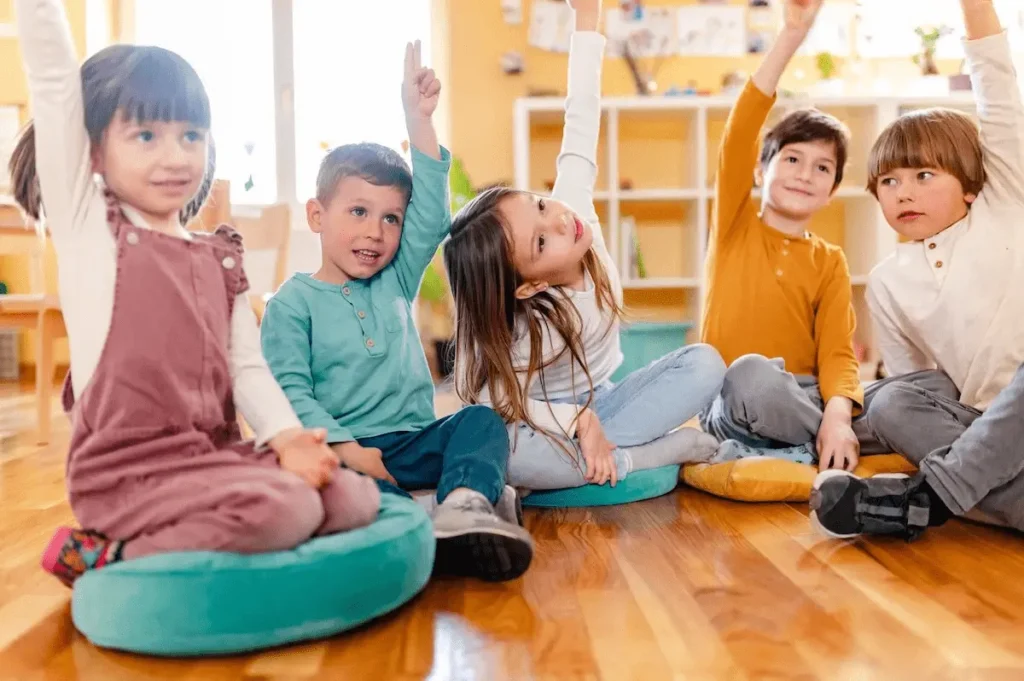
TUS for children involves group work in the form of play and exercises designed to teach appropriate social behaviour. Through such sessions, children have the opportunity to learn desirable behaviours in an emotionally safe and friendly environment, so that they can then apply them in everyday life, for example at home or at school.
Social skills training can be particularly beneficial for children in helping them to overcome:
- communication difficulties – children who have problems expressing themselves, understanding others or establishing verbal and non-verbal contact can benefit from TUS to improve their communication skills,
- difficulties in forming relationships – children who find it hard to form and maintain relationships with peers, teachers or family members can learn how to build healthy and lasting relationships during TUS,
- low self-esteem and a lack of self-confidence – children who struggle with self-esteem and self-confidence can find support at TUS by learning how to view themselves positively and cope with negative beliefs,
- emotional difficulties – children who struggle to control their emotions, such as anger, sadness or anxiety, can learn techniques during TUS to help them manage their emotions and express their feelings in a healthier way,
- problems with assertiveness – children who find it difficult to express their own needs and boundaries can learn, through TUS, how to be assertive and cope with conflict situations,
- behavioural difficulties – children who display aggressive or oppositional-defiant behaviour can, during TUS, learn strategies for managing conflicts, controlling their impulsivity and building healthy relationships.
TUS can also support children who find themselves temporarily in very difficult circumstances, for example due to their parents’ divorce or the death of a loved one. These extreme situations can trigger feelings that the child is unable to cope with. Through this training, they may find it easier to identify and understand their emotions.
A formal diagnosis is not required before taking part in the training. TUS is available to a wide range of people, both those who experience difficulties with social skills and those who wish to improve them.
In the case of children with specific difficulties, such as autism spectrum disorders, ADHD or anxiety disorders, it is advisable to consult a specialist who will assess whether TUS training will provide effective support and to what extent.
The diagnosis will also be helpful in tailoring the TUS training programme to the child’s individual needs. For example, it will help coaches to take into account the specific difficulties associated with a particular disorder and adapt the programme or training methods accordingly, so that the child derives the greatest benefit.
It is worth emphasising that cooperation between trainers and parents, teachers or other specialists, in order to obtain the additional information needed to work more effectively with children, is the foundation of good and effective Social Skills Training.
Do you need some help?
Social Skills Training for Children — Warsaw
Group sessions in which children learn to understand their emotions, communicate with their peers and find their place within the group — in a safe, supportive environment.
What does TUS mean in practice?
In practice, TUS for children consists of a variety of activities, games and working methods tailored to the participants’ ages.
In psychological terminology, these are collectively referred to as ‘activating methods’. These methods aim to create a motivating and safe environment for children, so that they can practise their social skills in an interactive and practical way.
The following are usually most effective when working with children:
- role play – participants act out scenarios, simulating various social situations, in order to practise skills such as communication, assertiveness and conflict resolution in a safe and controlled environment,
- art and creativity – using art, music, writing or dance as a means of expressing emotions, communicating and developing social skills,
- discussions and brainstorming sessions – children take part in group discussions, share their opinions and ideas, listen to others and learn to negotiate differences of opinion,
- practical exercises – children have the opportunity to put their social skills into practice, for example, by having conversations, dealing with conflict situations, or expressing their own feelings and needs,
- case studies and analysis – participants discuss specific situations or stories, and then discuss what could be done better or differently in such situations,
- exercises in pairs and groups – participants work together to solve tasks that require communication, cooperation and negotiation,
- games and activities – engaging and interactive games and activities that develop social skills such as cooperation, communication, empathy and conflict resolution. Board games, team games and games designed to foster empathy can be very effective,
- feedback – participants receive feedback from the facilitator and other participants regarding their behaviour, communication and progress in developing social skills,
- Relaxation training and stress management techniques – participants learn various relaxation, meditation and breathing techniques that can help them cope with stress and difficult emotions in social situations.
The use of various interactive methods and combining them in a way that works best for the participants makes the training engaging, effective, fun and enjoyable for the children.
Thematic blocks at TUS
TUS training can be divided into thematic blocks that focus on specific aspects of social skills.
The most commonly used blocks are:
- communication – this module focuses on communication skills, such as verbal and non-verbal communication, active listening, and expressing one’s thoughts, feelings and needs,
- Building relationships – this module focuses on establishing and maintaining relationships with others, both peers and adults, in various social contexts,
- empathy and emotional intelligence – in this module, participants learn how to understand other people’s feelings and needs, show empathy and manage their own emotions,
- Assertiveness and conflict management – this module focuses on the skills required to express one’s needs and boundaries assertively, and on strategies for resolving conflicts constructively,
- cooperation and teamwork – this module focuses on teamwork skills, sharing responsibilities, making joint decisions and striving to achieve common goals,
- self-awareness and self-esteem – in this module, participants learn to recognise their strengths and weaknesses, values, goals and beliefs, which enables them to better understand themselves and others,
- coping with stress and difficult situations – this module focuses on strategies for dealing with stressful, difficult or conflict-ridden situations, such as anger management, relaxation and assertiveness,
- boosting self-esteem and self-confidence – this module aims to increase participants’ self-confidence and self-esteem, enabling them to function more effectively in society.
Organising the sessions into blocks allows for a more structured and systematic approach to teaching and practising various social skills. Participants can focus on selected topics and develop their skills in those areas efficiently and effectively. However, during the sessions, the thematic blocks are usually adapted and combined depending on the needs of the group members.
Here are some examples of training sessions where thematic blocks have been combined in the work with participants in order to develop skills in a specific area.
Here, we show just how varied, interesting and engaging these sessions are. The children never get bored, which means they can make rapid progress.
TUS training for children – building relationships
Training in this area aims to teach children how to form and maintain healthy relationships with their peers, teachers, siblings and other people they may encounter in their social lives.
TUS training may cover the following aspects relating to forming relationships:
- making contact – that is, teaching children how to make contact with others, e.g. through a smile, a greeting, open-ended questions or shared interests,
- building trust – that is, showing children how to build trust through honesty, consistency, showing respect and keeping promises,
- active listening – that is, teaching children how to focus on the person they are talking to, ask questions and give feedback to show that they are listening and understand what others are saying,
- expressing feelings and emotions – that is, teaching children how to express their feelings and emotions in a way that is appropriate and understandable to others, for example by saying ‘I feel sad when…’, rather than shouting or crying,
- the ability to work together – that is, teaching children how to work with others, share tasks, listen to other people’s ideas and make decisions together,
- assertiveness – that is, showing children how to express their needs, feelings and boundaries in an assertive manner that respects both themselves and others, whilst avoiding aggressive or submissive behaviour,
- dealing with conflicts – teaching children how to recognise conflicts, communicate their feelings and needs, and work towards resolving problems in a constructive and peaceful manner,
- maintaining relationships – that is, teaching children how to nurture their relationships with others through regular contact, showing understanding and support, forgiving and asking for forgiveness, and dealing with any problems that may arise in their relationships.
TUS training for children – self-presentation
TUS training may also cover topics related to self-presentation, that is, the ability to present oneself to others in a positive and authentic way. Learning self-presentation can help children gain self-confidence and form relationships more easily.
Here are some aspects of self-presentation that can be discussed and practised with children during TUS training:
- Introducing oneself – teaching children how to introduce themselves to others in a confident and polite manner, stating their name, age, interests and information about their family,
- body language – helping children to realise how important posture, gestures and facial expressions are when communicating with others. For example, maintaining eye contact, smiling, standing up straight or using open gestures,
- expressing one’s own abilities and achievements – teaching children how to talk about their skills, passions and successes in a modest yet confident manner,
- dressing appropriately – helping children to realise the importance of dressing suitably for the occasion and setting, with a focus on neatness and comfort, and how our appearance can influence the impression we make on others,
- clear and understandable speech – teaching children to speak clearly, at an appropriate volume, with the right intonation and pace, so that others can understand what they are saying,
- the ability to talk about various topics – teaching children how to hold conversations on a range of subjects, ask questions, share their experiences and interests, and listen to others,
- dealing with criticism and negative feedback – teaching children how to respond to negative comments or criticism in a constructive and assertive way, without allowing them to affect their self-esteem,
- Learning to say ‘no’ – teaching children how to say no in an assertive way.
Do you need some help?
Social Skills Training for Children — Warsaw
Group sessions in which children learn to understand their emotions, communicate with their peers and find their place within the group — in a safe, supportive environment.
TUS training for children – anger management
Anger management is an important aspect of emotional development and social skills, as it teaches children how to deal with negative emotions in a healthy way.
As part of the TUS training programme, various exercises and activities are carried out to help children better understand and manage their anger:
- emotion recognition – children learn to identify feelings of anger and the emotional and physiological signs that accompany anger, such as muscle tension, a rapid heartbeat or a change in tone of voice,
- Expressing emotions – children learn how to express their feelings of anger in an assertive yet respectful manner. Exercises may include role-plays in which children simulate conflict situations and learn how to talk about their feelings rather than reacting aggressively,
- relaxation techniques – children learn various relaxation techniques, such as deep breathing, meditation and muscle relaxation techniques, which can help them to calm down in stressful situations or when they are angry,
- problem-solving – children learn how to deal with situations that make them angry; for example, they can work on their ability to negotiate, reach compromises or find alternative ways of resolving conflicts,
- empathy – children learn how to understand and respect other people’s feelings, which can help them to manage their anger. Activities may include learning to see things from other people’s perspectives, showing compassion, and understanding the consequences of their behaviour,
- Replacing negative thoughts – children learn how to replace negative thoughts, which can lead to anger, with positive or rational thoughts. The coach can work with the children on identifying irrational beliefs and fostering more constructive thinking,
- stress management – children learn how to cope with stress, which can be a cause of anger. Stress management techniques can include both skills for dealing with difficult situations and strategies for reducing stress – such as playing sport, talking to someone they trust or spending time on a relaxing hobby,
- Practice and reinforcement – children learn how to practise their newly acquired skills in various situations, which enables them to consolidate these skills and apply them in everyday life. The trainer can lead group exercises, discussions and analyses of everyday situations to help children apply their new skills in practice,
- social support – children learn how to seek social support from their family, teachers, peers or adult carers who can help them cope with anger and emotional challenges.
Factors influencing the effectiveness of TUS
What can be done to ensure that a child gets the most out of taking part in TUS?
There are a few steps you can take.
Firstly, choose a programme suited to your child’s age, needs and ability level. It is a good idea to check whether the programme is based on tried-and-tested methods and whether the instructors have the appropriate qualifications and experience.
Secondly, encourage the child to get involved. Those taking part in the training should be encouraged to participate actively in the sessions, ask questions, share their thoughts and feelings, and practise new skills in a safe and supportive environment.
Thirdly, support your child at home. Parents play a vital and crucial role in supporting their child during the training process.
They can do this in various ways, including:
- work regularly with the coach to keep track of your child’s progress and discuss any issues that may arise,
- encourage the child to work diligently and enthusiastically during training,
- enable your child to practise the skills they are learning in everyday situations at home, share your observations with them and encourage them to reflect on what went well and what could be improved,
- praise their progress and acknowledge the child’s efforts, as encouragement and recognition are powerful motivators for further development,
- to provide emotional support for the child, to help them understand their feelings, thoughts and experiences relating to TUS,
- help organise their time so that the child can take part in TUS sessions, and also set aside time to practise social skills in everyday life.
Do you need some help?
Social Skills Training for Children — Warsaw
Group sessions in which children learn to understand their emotions, communicate with their peers and find their place within the group — in a safe, supportive environment.
How long should TUS last?
The first results of TUS become apparent depending on the individual needs and aptitudes of the participant. For a child to develop new skills and then be able to put them into practice, a minimum of 8–12 weeks’ training is required.
The best results are achieved when the programme is scheduled to run during the school year and lasts an average of 9 months (taking into account public holidays and school holidays). This ensures that key thematic blocks are included in the programme.
The duration of a single TUS session ranges from around 45 minutes to 90 minutes, depending on the child’s age (the younger the child, the shorter the session). Sessions should take place at least once a week. The younger the children, the smaller the group should be (4–6 children for younger children, 8–10 for older children).
It is very important that the sessions are led by people with the appropriate qualifications, i.e. the knowledge and skills required to work with children, an understanding of children’s developmental needs, and the knowledge and ability to use interactive methods when working with a group.
TUS at the Dialog Centre for Children and Families
Social Skills Training at the Dialog Centre for Children and Families is an individual programme designed to teach and improve social functioning. At the Dialog Centre for Children and Families, social skills training is always delivered by a certified therapist with experience of working with children, young people or adults.
The course is divided into nine thematic blocks, which are always delivered in accordance with the needs of the group in question. Teaching methods are tailored to the participants’ age, their abilities and any difficulties they may have, so as to support their development as fully as possible.
To ensure the group is as well-suited as possible, the first four sessions are adaptation workshops, during which the therapist selects the group so that all participants feel comfortable and have the best possible conditions in which to work.
Next, the programme of activities and the way in which it is delivered are set out, with information on the topics covered and the teaching methods used being provided to parents each month.
As TUS operates on a closed-group basis and the programme is designed to cover specific topics within a set timeframe, we try not to make any changes to the group line-up after the fourth session. This is crucial for fostering cohesion within the group, as well as ensuring participants feel secure and are able to complete the entire training programme.
Do you need some help?
Social Skills Training for Children — Warsaw
Group sessions in which children learn to understand their emotions, communicate with their peers and find their place within the group — in a safe, supportive environment.
Bibliography:
- Argyle, M. (2002). The Psychology of Interpersonal Relationships. Warsaw: PWN.
- Goleman, D. (1997). Emotional Intelligence. Poznań: Media Rodzina.
- Jaklewicz, H. (2010). Training social skills in children and young people. Warsaw: PWN Scientific Publishers.
- Krasowicz-Kupis, G. (2008). The development and disorders of language competence in children. Lublin: UMCS.
- Liberska, H., & Matuszewska, M. (2016). The social functioning of children and young people – determinants and consequences. Warsaw: Difin.
- Matczak, A. (2001). Cognitive styles – their structure, determinants and functions. Warsaw: PWN.
- Pisula, E. (2019). Autism: Causes, Symptoms, Treatment. Warsaw: PWN.
- Porter, L. (2013). Understanding Children’s Challenging Behaviour. Warsaw: Fraszka Edukacyjna.
- Spionek, H. (1985). Developmental disorders in pupils and academic failure. Warsaw: PWN.
Read more
Related articles
The Autism Spectrum in Girls
A word of introduction In the 1970s, the British psychiatrist Lorna Wing observed that if a child exhibits various difficulties in three areas: then we can talk about autism. The Autism Spectrum We are talking about the autism spectrum, which means that symptoms and the severity of difficulties can vary significantly from person to person. […]

Psychomotor development (children aged 0–3 years)
A child’s psychomotor development is a process in which the child develops both their mental and motor skills during the first three years of life. This is a period of rapid change, during which a child reaches many milestones in the development of their motor, cognitive and social skills. During the first three years of […]

Snoezelen, or the Sensory Room
1. Introduction The senses form the basis of every person’s development. They provide information about the world around us. Without them, none of us could develop. However, some people are unable to respond to them appropriately, whilst others have lost these abilities due to an accident or illness. For these people, the world can be […]
Early speech and language therapy intervention – A newborn baby sees a speech and language therapist.
Early speech and language therapy intervention: a newborn’s first visit to a speech and language therapist There are many factors which have an adverse effect on a child’s speech development and subsequent functioning. The earlier any abnormalities are identified, the quicker and more effective speech and language therapy may prove to be. Special speech and […]
Gordonki – the influence of music on a child’s development
What are Gordonki and who invented them? ‘Gordonki’ is the colloquial name for Gordon classes, which are music education sessions for babies and young children. These classes are based on a very interesting concept of music education developed in accordance with the theories of Edwin Elias Gordon, who spent his entire life researching and developing […]

Sensory diet
Where does the term ‘sensory diet’ come from? The term ‘sensory diet’ was introduced by Patricia Wilbarger, an American occupational therapist and specialist in sensory integration. Wilbarger developed this concept in the 1990s as part of her work with children and adults who had difficulties with sensory processing. She was a pioneer in this field, […]
Do you need some help?
Social Skills Training for Children — Warsaw
Group sessions in which children learn to understand their emotions, communicate with their peers and find their place within the group — in a safe, supportive environment.
Sign up