



Contents:
- Early speech and language therapy intervention: a newborn’s first visit to a speech and language therapist
- Who is early speech and language therapy intended for?
- What is the purpose of early speech and language therapy and neuro-speech therapy?
- What points to the need for early intervention
- What are the benefits of early diagnosis?
- Procedure prior to the start of treatment
- Difficulties that a speech and language therapist works on with infants.
- What forms of neuro-speech therapy are available for children under one year of age?
- Related articles
Early speech and language therapy intervention: a newborn’s first visit to a speech and language therapist
There
are many factors which have an adverse effect on a child’s speech development and subsequent functioning. The earlier any abnormalities are identified, the quicker and more effective speech and language therapy may prove to be. Special speech and language therapy is provided for children who:
- show abnormalities in their prenatal, perinatal and early childhood history,
- are from high-risk pregnancies, or are stillborn, 4
- had a low Apgar score (less than 8 points),
- are premature babies with a low birth weight,
- whose mothers used stimulants (alcohol, drugs, nicotine) during pregnancy,
- whose mothers were being treated for high blood pressure or anaemia, or were under the care of an endocrinologist or cardiologist.
The newborns referred to above undergo (or should undergo) several assessments during the first few days of life. These include:
- audiometric hearing screening (for several years now in Poland, this has been a compulsory and standard test carried out on EVERY newborn),
- assessment of the structure of the articulatory organs,
- assessment of reflexes relevant to speech development, i.e. the sucking reflex, closing and opening the mouth, pushing out the tongue, swallowing, and turning the head.
Do you need some help?
Speech and language therapy at the Dialog Centre for Children and Families
Specialist therapy for children whose speech difficulties have a neurological cause — when standard speech and language therapy is not enough.
Who is early speech and language therapy intended for?
Early speech and language therapy may be necessary for infants with various health conditions that could affect their speech and language development. Here are some of the conditions that may require such intervention:
• autism spectrum disorder (ASD) ÷ infants with ASD often show delays in speech and communication development,
• hearing impairments ÷ congenital deafness or hearing loss can seriously affect a child’s ability to learn speech and language,
• cerebral palsy ÷ this condition can affect muscle control, including the muscles used for speaking,
• Down’s syndrome ÷ children with Down’s syndrome often experience delays in speech and language development,
• congenital anatomical defects ÷ for example, a cleft palate or cleft lip, which can affect the ability to speak effectively,
• genetic disorders ÷ other genetic conditions that may affect neurological and speech development,
• feeding and swallowing problems ÷ difficulties with swallowing (dysphagia) may require speech and language therapy, as the same muscles are used for eating and speaking,
• neurological disorders ÷ various neurological conditions may affect speech and language development,
• developmental delays – general developmental delays may include delays in speech and language.
What is the purpose of early speech and language therapy and neuro-speech therapy?
Early speech and language therapy and neuro-speech therapy intervention for children under one year of age aims to support and develop fundamental communication and speech skills during a crucial period of a child’s development. At this early stage of life, a child’s brain is extremely plastic, meaning it is particularly receptive to learning and development. Intervention at this stage harnesses this plasticity to effectively support and stimulate language and speech development.
This
approach is important not only for typically developing children, but is also crucial for children at risk of developmental delay or those already diagnosed with disorders. Children who may have neurological or genetic conditions, autism spectrum disorders, swallowing difficulties or other challenges can particularly benefit from early speech and language therapy and neuro-speech therapy interventions.
The
aim of such intervention is not limited solely to direct work on speech. It also includes supporting the development of non-verbal communication, swallowing and feeding skills, as well as generally supporting communication abilities. Furthermore, early intervention often includes education and support for parents and carers, providing them with tools and strategies to use in everyday life, which can contribute significantly to the child’s development.
As can be seen, the main aim of early speech and language therapy and neuro-speech therapy for children under one year of age is to provide support during a critical period of brain development, in order to maximise their communicative and linguistic potential, as well as to lay a solid foundation for their future development.
What points to the need for early intervention
The
need for early speech and language therapy is usually indicated by a range of observations and behaviours that may raise concerns about a child’s speech, language and communication development. These signs may include delays in reaching typical speech development milestones, such as babbling, forming first words or constructing simple sentences. Problems may also manifest as difficulties in understanding and expressing language, or a lack of response to sounds or speech, which may suggest hearing problems.
Other signs may include difficulties with feeding and swallowing, which is important because the same skills are used for speaking. Unusual speech patterns, such as unusual sounds, slurred speech or the repetition of certain sounds, may also indicate a need for assessment. A lack of communicative gestures, such as pointing or waving, is another important sign.
In
addition, children with a medical history including congenital defects, genetic disorders, prematurity or neurological problems may be at greater risk of difficulties with speech and language development. For children showing early signs of autism spectrum disorders, such as limited social interaction, unusual behaviours or restricted interests, early intervention may be particularly important.
All these observations point to the need to consult a paediatrician or a speech and language therapist, as early diagnosis and intervention can significantly improve the effectiveness of treatment and the child’s long-term development.
Do you need some help?
Speech and language therapy at the Dialog Centre for Children and Families
Specialist therapy for children whose speech difficulties have a neurological cause — when standard speech and language therapy is not enough.
What are the benefits of early diagnosis?
Early diagnosis of developmental or medical difficulties in children has a significant impact on their future development and quality of life. Above all, it enables appropriate therapeutic interventions to be implemented earlier and more effectively. When problems are identified in the early stages of life, there is a greater chance that the therapeutic methods used will have long-lasting positive effects, as the child’s brain is at its most plastic and receptive to change at this time.
At the
same time, early diagnosis can prevent a child’s condition from worsening or further complications from arising. As a result, children have better educational prospects, as they can receive specialist support tailored to their individual needs. This, in turn, contributes to their overall social and emotional development, enabling them to participate more fully and satisfactorily in social life.
For parents and carers, an early diagnosis means access to information and resources that help them to better understand and support their children. Knowing about their child’s specific needs also enables them to better adapt their parenting and educational approaches. Furthermore, early diagnosis often leads to greater understanding and acceptance of the child’s difficulties within wider society, which is crucial for fostering empathy and social inclusion.
Procedure prior to the start of treatment
Before implementing the appropriate therapy, a thorough diagnosis of the patient’s condition must be carried out. As part of the diagnostic process, the speech and language therapist assesses all reflex responses occurring in the orofacial region (e.g. the presence of a sucking reflex). It is very important to determine how swallowing occurs. It is equally important to assess the condition of the articulatory and respiratory systems (in terms of their structure and function). An assessment is also made of whether there are any disorders related to the development of active and passive speech – in the case of the youngest children, the degree to which newborns and infants respond to any sensory stimulation is examined.
During the diagnostic process, it is essential to carry out all specialist examinations (e.g. neurological or ENT examinations), as the results of these examinations provide valuable insights into the planning of speech and language therapy for a particular child. Specialist examinations help to determine, amongst other things, how the child’s nervous system is developing and what the prognosis is for the patient’s future health. An interview with the child’s parents is also of considerable importance. Any information regarding the course of the pregnancy and birth is extremely important. Collaboration with the child’s closest family members is an integral part of an effective diagnosis and, subsequently, speech and language therapy.
As part of the diagnostic process, the speech and language therapist must also assess the child’s muscle tone and motor development. In this regard, particular attention is paid to: muscle tone in the lips and tongue (excessively low or high), the resting position of the tongue, lip movement and any reflex responses. It is also very important to determine the level of sensory development (the presence of any sensory hypersensitivity or hyposensitivity). Children receiving early speech and language therapy usually exhibit immaturity of the nervous system, which is why a detailed assessment is so important.
Difficulties that a speech and language therapist works on with infants.
A neuro-speech and language therapist working with infants focuses on addressing a range of specific difficulties, which are often linked to neurological disorders or developmental abnormalities. Here are some of the main areas of work:
- delays in speech and language development, i.e. work on stimulating early communication skills, responding to sounds, and the early stages of language development,
- difficulties with feeding and swallowing, i.e. supporting infants who have problems with sucking, chewing and swallowing, which may be linked to problems with muscle control,
- problems with orofacial muscle control, i.e. working to improve control over the facial muscles that are essential for speaking, eating and facial expressions,
- early symptoms of neurological disorders, i.e. the identification of and intervention for infants with conditions such as cerebral palsy, which may affect speech and communication development,
- hearing impairments, i.e. assessing and supporting infants with hearing problems that may affect speech development;
sensory stimulation, and thus work on sensory integration, which is essential for the development of communication and speech, - problems with brain integration, i.e. supporting infants with difficulties in coordinating and integrating different areas of the brain.
- support for parents and carers, namely: education and support for parents on techniques to stimulate speech and language development in infants, as well as coping with the challenges of caring for a child with developmental disorders.
When working with infants,
a neuro-speech therapist often collaborates with other specialists, such as paediatricians, neurologists, occupational therapists and physiotherapists, to provide comprehensive care and support for the child and their family. Early intervention in these areas can significantly contribute to better outcomes in a child’s development.
Do you need some help?
Speech and language therapy at the Dialog Centre for Children and Families
Specialist therapy for children whose speech difficulties have a neurological cause — when standard speech and language therapy is not enough.
What forms of neuro-speech therapy are available for children under one year of age?
Early speech and language therapy for children under one year of age focuses primarily on stimulating speech and language development in a way that is appropriate for such a very young age. During this period, therapy is usually less focused on traditional speech exercises and more on the overall development of communication and interaction. The following aspects may be taken into account here:
- speech and language stimulation – therapy at this stage may involve simple activities that stimulate speech development, such as talking to the child, singing and reading; introducing a variety of sounds and tones of voice is important for the development of hearing and speech awareness,
- interactive play – activities that encourage eye contact, smiling and other forms of non-verbal communication; games such as ‘peek-a-boo’ or babbling with the child can be helpful;
- orofacial motor exercises – gentle exercises that stimulate the muscles of the face and lips, which are important for subsequent speech development,
- support for sensory development – early neuro-speech therapy may include activities that support sensory integration, which is important for children with neurological disorders,
- early augmentative and alternative communication (AAC) – for children who, for medical or developmental reasons, may have difficulty with verbal speech, the introduction of simple forms of AAC may be considered,
- support for parents and carers – educating parents on how they can support their child’s speech and language development is a key element of early intervention; providing guidance on how to engage the child in communication is essential,
- monitoring of development – regular assessments by specialists to track progress and adjust interventions accordingly.
Summary
We hope that this article has provided you with valuable information on early speech and language therapy and neuro-speech therapy.
At Senso Senso, we provide comprehensive support in the diagnosis and treatment of speech and language disorders, including neuro-speech therapy.
If you have any questions or need support, the Senso Senso advice centre is always here to help.
Bibliography:
- E. Gacka, ‘Early Speech and Language Therapy Intervention’, in: *In the World of Speech and Language Therapy*, vol. 1: Teaching Materials, edited by A. Podstolec and K. Węsierska, Katowice.
- K. Kaczorowska-Bray, S. Milewski, Speech and Language Therapy Assessment, Gdańsk.
- M. Zawichrowska, ‘The impact of early neuro-speech therapy intervention in the treatment of a preterm infant – a case study’, Studia Edukacyjne, no. 69 (2023), pp. 139–147.
- E. Winnicka-Makulec, ‘A speech and language therapist in the neonatal pathology ward’, Forum Logopedy, no. 33 (2019), pp. 6–11.
- A. Jędrzejowska, ‘Early interactive play as a means of developing communication skills in children with Down’s syndrome’, in: Children with special communication needs. Diagnosis – education – therapy, edited by B. Winczura, Kraków.
- J. Taczała, M. Latalski, M. Dmoszyńska-Graniczka, A. Aftyka, ‘Neurodevelopmental outcome and early rehabilitation of premature babies – is it needed in the first 2 years of life?’, Annals of Agricultural and Environmental Medicine, 2021; 28(1): 172–178.
- B. Cytowska, B. Winczura, Early Intervention and Supporting Young Children’s Development, Kraków.
- J. Cieszyńska, M. Korendo, Early Therapeutic Intervention: Stimulating Child Development: From Newborn to Age 6, Kraków.
- E. Helwich, ‘The progression of the most common brain injuries’, in: The Preterm Newborn – The First Years of Life, edited by M.K. Kornacka, Warsaw.
- E. Stecko, Speech and Language Therapy for Young Children, Warsaw (2013).
- A. Kaczan, ‘Early speech rehabilitation and its importance for children with Down’s syndrome’, in: Early Intervention and Support for Young Children’s Development, edited by B. Cytowska and B. Winczura, Kraków.
- K. Węsierska, ‘Prevention and early intervention in stammering in young children’, in: Speech and Language Therapy Prevention in Educational Practice, vol. 1, Katowice.
Read more
Related articles

Support for children with speech disorders
Speech disorders are various types of communication problems that can make it difficult for a child to interact with other people. They include problems with: In children, speech disorders can affect their emotional and social development, which often leads to feelings of isolation and frustration. Speech disorders in children are a problem that can take […]

Social skills training for children
Social Skills Training, abbreviated to TUS, can be described, in the simplest terms, as active therapy in the form of workshops, which are conducted in groups of people of a similar age or with a similar level of functioning. The aim of TUS is to develop emotional and social skills through modelling (i.e. learning by […]

Psychomotor development (children aged 0–3 years)
A child’s psychomotor development is a process in which the child develops both their mental and motor skills during the first three years of life. This is a period of rapid change, during which a child reaches many milestones in the development of their motor, cognitive and social skills. During the first three years of […]

Snoezelen, or the Sensory Room
1. Introduction The senses form the basis of every person’s development. They provide information about the world around us. Without them, none of us could develop. However, some people are unable to respond to them appropriately, whilst others have lost these abilities due to an accident or illness. For these people, the world can be […]
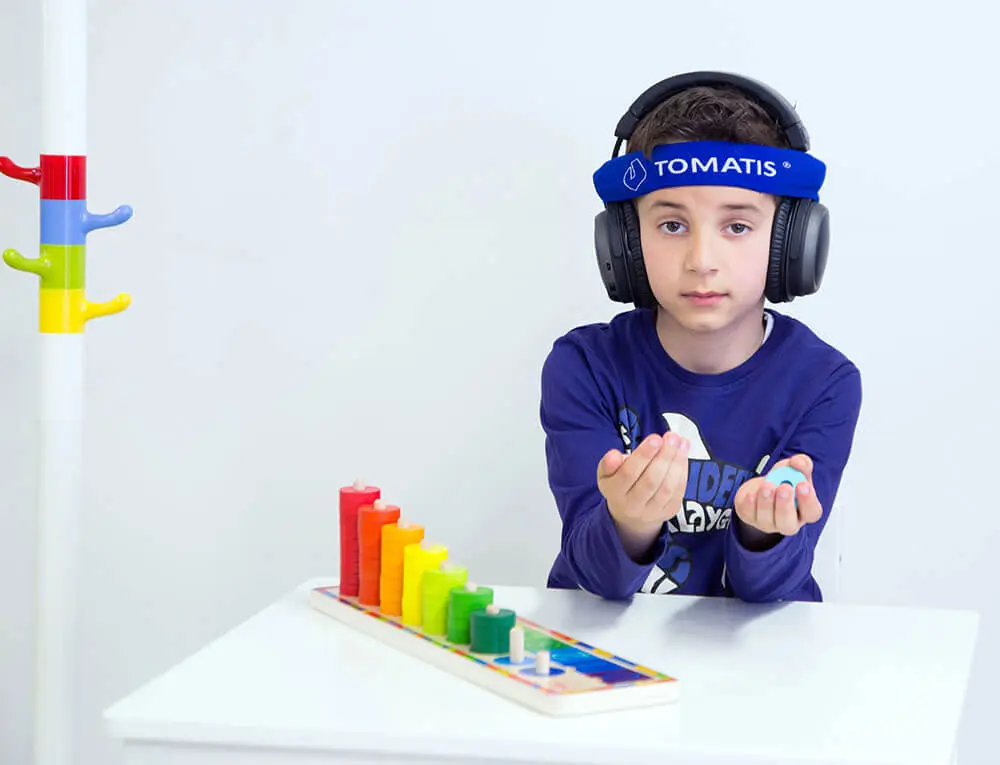
Auditory processing – What are auditory processing disorders and how can they be treated?
Have you ever wondered how the ability to listen – rather than simply hear – affects a person’s overall development? The ear is not just for hearing. It also stimulates the brain and helps maintain balance. Good hearing plays a key role in the development of a person’s personality. Problems arise when we are dealing […]

The Autism Spectrum in Girls
A word of introduction In the 1970s, the British psychiatrist Lorna Wing observed that if a child exhibits various difficulties in three areas: then we can talk about autism. The Autism Spectrum We are talking about the autism spectrum, which means that symptoms and the severity of difficulties can vary significantly from person to person. […]
Do you need some help?
Speech and language therapy at the Dialog Centre for Children and Families
Specialist therapy for children whose speech difficulties have a neurological cause — when standard speech and language therapy is not enough.
Book a speech and language therapy session