


Contents:
- Diagnosis: the most effective form of educational support for children and young people!
- Early identification versus diagnosis of dyslexia after the age of 10
- Academic and emotional difficulties experienced by children with dyslexia
- Symptoms of dyslexia – how can you tell if a child might have dyslexia?
- Diagnosing dyslexia – diagnostic methods and tools
- A set of methods for diagnosing the causes of academic failure
- Adjustments at school for pupils with dyslexia
- An assessment from a psychological and educational counselling centre – what does it offer and how does it work?
- Summary
- Related articles
Diagnosis: the most effective form of educational support for children and young people!
Developmental dyslexia is a specific difficulty in learning to read and write that occurs in children with normal intellectual development.
It is a neurodevelopmental disorder (with a neurobiological basis) – this means that it stems from abnormalities in the functioning of the nervous system, usually of a very subtle nature, which most often arise as early as the prenatal period. These difficulties are caused by impairments in certain cognitive (e.g. language, visual) and motor functions, as well as problems with their integration.
In other words, the brain of a child with dyslexia processes information relating to written and spoken language in a disorganised way, which results in difficulties in mastering schoolwork. However, dyslexia is not linked to a lack of intelligence or motivation – it is rather an atypical way of learning, which, without appropriate support, can significantly hinder a child’s educational achievements.
It is estimated that this problem affects around 10–15 per cent of pupils, of whom around 4 per cent have a severe form of the condition. Importantly, dyslexia has a strong genetic basis (it often runs in families) and structural basis – research points to subtle differences in the structure and functioning of the brains of people with dyslexia.
Although this condition makes learning to read and write more difficult, it does not preclude success – with the right diagnosis and treatment, many children with dyslexia do very well, and there are some outstanding figures from the worlds of science and literature amongst adults with dyslexia.
Early identification versus diagnosis of dyslexia after the age of 10
The first signs pointing to a risk of dyslexia can be observed as early as in pre-school children and younger schoolchildren. However, specialists emphasise that a reliable, definitive diagnosis of developmental dyslexia is only made after the age of 10, usually around the time of the transition from Year 3 to Year 4 of primary school.
At an earlier age (Years 1–3, approx. 7–9 years), psychological and educational counselling centres do not yet diagnose dyslexia, but merely identify what is known as a ‘risk of dyslexia’. This means that a number of symptoms have been observed in the child that suggest specific difficulties in learning to read and write, but their skills are not yet sufficiently developed to confirm dyslexia fully.
Why only around the age of 10?
By this age, many children are only just mastering the basics of reading and writing – some develop more slowly, but catch up through practice.
Postponing a diagnosis until the end of Year 3 allows time for preventative measures and support from teachers. However, if, despite intensive educational support, significant difficulties with reading and spelling persist, an official diagnosis of developmental dyslexia can be made in Year 4.
It is worth noting that in Poland, the standard approach is the multi-stage diagnostic model proposed by Prof. Marta Bogdanowicz: first, school readiness is assessed (ages 5–6), followed by an assessment of the risk of dyslexia (ages 7–9, using specialised scales and screening tests), and only then is a diagnosis of dyslexia made in an older child if the difficulties persist.
Do you need some help?
Assessment of dyslexia and dysorthography at the Dialog Centre for Children and Families
Is your child struggling with reading and writing? A diagnosis will explain the causes and pave the way for adjustments to be made to their schoolwork.
Academic and emotional difficulties experienced by children with dyslexia
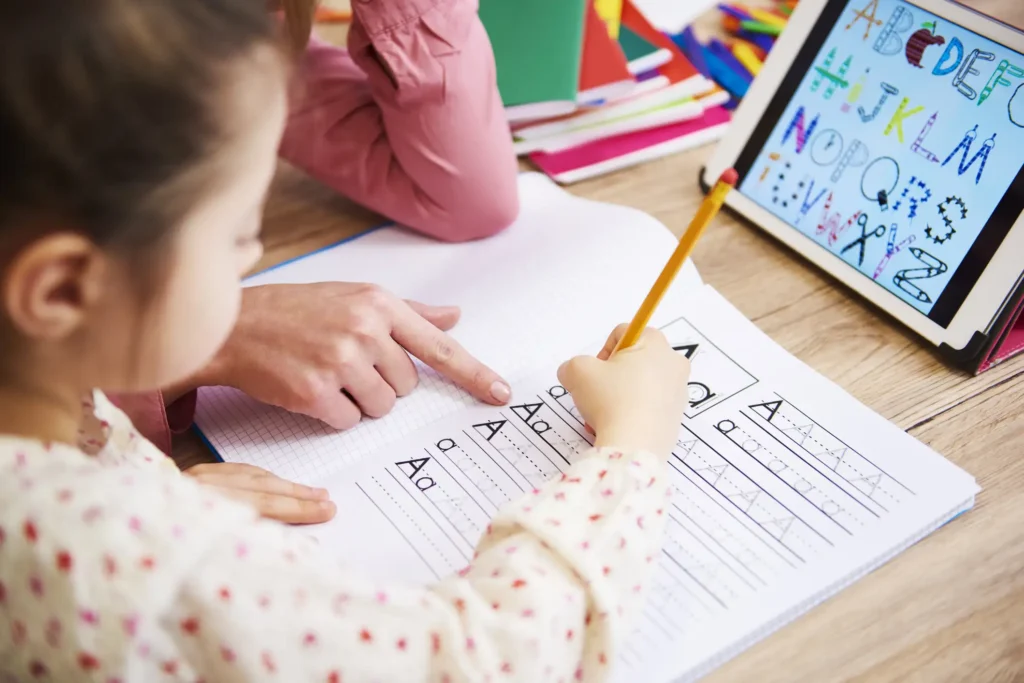
The typical difficulties faced by children with dyslexia at school relate primarily to reading and writing. Children with dyslexia read slowly, often making mistakes; they struggle to understand what they are reading and lose their place on the line. They also make numerous spelling mistakes – both dysorthographic (breaking the rules of spelling) and graphomotor (known as dysgraphia – their handwriting is illegible and uneven).
It is also common to confuse letters of similar shape (e.g. b, d, p, g), to transpose or omit letters and syllables within words, and to have difficulty mastering spelling rules despite extensive practice. Difficulties also arise when learning foreign languages (due to problems with correct spelling and remembering sequences of sounds) and may affect other school subjects.
As experts point out, dyslexia – through its impact on fluency in reading, writing and speaking – can lead to difficulties in learning a wide range of subjects (from maths to history, and even music or PE).
A child may, for example, have difficulty remembering sequences of information (the multiplication table, dates, the alphabet), instructions for tasks or notes from lessons, which in turn affects their performance in various school subjects.
Unfortunately, long-term academic difficulties often lead to emotional and social problems.
Children with dyslexia often struggle with low self-esteem and a lack of self-worth. Despite the considerable effort they put into their studies, their results are often worse than those of their peers, leading to growing frustration, feelings of shame or guilt. Many of them begin to see themselves as ‘inferior’ or ‘less capable’ than others.
This situation causes severe school-related stress, which may manifest as a fear of being assessed, a reluctance to go to school, a lack of motivation, and even psychosomatic symptoms (stomach aches, headaches before lessons). A child with dyslexia may be withdrawn socially and avoid situations where they would have to read aloud or write in front of others (e.g. answering questions at the blackboard).
If they do not receive the right support, symptoms of depression or severe anxiety disorders may even develop over time.
It is emphasised that the emotional problems experienced by people with dyslexia are usually secondary in nature – they result from chronic educational stress and a lack of success.
That is why it is so important for support for children with dyslexia to be holistic: it should encompass not only reading and writing practice, but also psychological support to build their self-confidence and motivation.
Symptoms of dyslexia – how can you tell if a child might have dyslexia?
The first signs of dyslexia (known as ‘risk factors for dyslexia’) may appear as early as pre-school age. These symptoms change as the child grows older – they will be different for a pre-schooler than for a child in the early years of school.
The following are typical warning signs that should alert a parent or teacher to the fact that a child may require further assessment:
- Delayed speech development and language difficulties – the child is late to start speaking, has impaired pronunciation (e.g. lisping, distorting sounds), mispronounces more difficult words, and constructs sentences with grammatical errors. There are also often problems with distinguishing between sounds that sound similar (phonemic awareness difficulties) and with breaking words down into syllables and sounds and putting them back together (difficulties with phonological analysis and synthesis).
- Delayed motor development and poor motor skills – the child took longer than their peers to learn to walk and run, and is not very dexterous or coordinated. They have difficulty with self-care tasks such as doing up buttons, tying shoelaces and holding a pencil. They are often reluctant to draw, and their drawings lack precision. At school age, poor graphomotor skills are noticeable – handwriting is often uneven and illegible (so-called ‘bad handwriting’).
- Problems with eye-hand coordination and visual perception – the child has difficulty stacking blocks or doing jigsaw puzzles, or reproducing simple graphic patterns (lines, shapes). They may exhibit ambidexterity or confuse the right and left sides of their body; they have difficulty understanding spatial concepts (e.g. above–below, right–left).
- Difficulties with learning letters and reading – as early as in reception and the first few years of primary school, a child may show a reluctance to learn letters, or have difficulty remembering the shapes of letters and their sounds. The child takes a long time to sound out words, confuses letters that are similar in shape (p-b-d-g, m-n, l-t-ł, etc.) or similar in sound (d-t, z-s, k-g). When reading, they lose their place, mispronounce words, ignore punctuation marks and read more slowly than their peers.
- Difficulties with writing and spelling – the child omits or transposes letters within words, confuses, for example, ‘u’ with ‘ó’ or ‘ż’ with ‘rz’, and has trouble spelling nasal sounds (ą/ę) and softened consonants (si/ś, ci/ć). Numerous spelling mistakes occur despite knowing the rules. Pupils at risk of dyslexia often have a very low level of writing accuracy compared to other children and struggle with writing from dictation.
- Poor sequential memory and difficulties with memorisation – the child has trouble recalling and reciting a simple nursery rhyme or song. They find it difficult to memorise lists of names (e.g. the seasons, days of the week, months), the multiplication table, sequences of numbers (e.g. telephone numbers) or the order of letters in the alphabet. They may also confuse similar-sounding surnames or names, or mix up words. Such symptoms often persist in children with dyslexia in Years 1–2.
Of course, the presence of just one of the above symptoms does not in itself constitute proof of dyslexia – what matters is the combination of symptoms, their increasing severity and the fact that they persist despite practice. However, if many of these signs occur together and do not subside with age, it is worth taking your child to see a specialist.
Do you need some help?
Assessment of dyslexia and dysorthography at the Dialog Centre for Children and Families
Is your child struggling with reading and writing? A diagnosis will explain the causes and pave the way for adjustments to be made to their schoolwork.
Diagnosing dyslexia – diagnostic methods and tools
The process of diagnosing dyslexia is complex and interdisciplinary. It is usually carried out by a team of specialists (a psychologist, an educationalist, and sometimes a speech and language therapist, a neurologist or an ophthalmologist), with the psychological and educational counselling centre playing a key role.
Diagnosticians take a detailed history from the parents, analyse teachers’ feedback and the child’s school workbooks, and, above all, carry out a series of tests to assess various areas of cognitive and academic functioning.
Standard diagnostic procedures include, amongst others:
- School skills tests – assessment of reading skills (speed, fluency, comprehension) and writing skills (dictations to test spelling, writing from hearing and from memory, and assessment of handwriting quality). Knowledge of spelling and grammar rules is also assessed.
- Assessment of linguistic and cognitive functions – tests of phonemic hearing (distinguishing sounds), phonemic analysis and synthesis (breaking down and combining sounds into words), and auditory memory (remembering sequences of words and numbers). In addition, visual perception, visual memory (e.g. memorising patterns and shapes), eye-hand coordination (copying shapes, tracing outlines) and naming speed (the speed at which words are recalled when presented with pictures).
- General intelligence tests – assessing the intelligence quotient (IQ) is crucial for diagnosing dyslexia. The child must demonstrate normal (at least average) intellectual development for the identified reading and writing difficulties to be considered specific, rather than resulting from general cognitive deficits. Therefore, a standardised intelligence test is always carried out (e.g. the Wechsler Intelligence Scale for Children or the latest Stanford–Binet Scale 5).
An intelligence test is sometimes necessary to identify a child’s hidden difficulties or strengths, as well as to rule out an intellectual disability. For example, the Stanford–Binet 5 test is a key component of the diagnostic process – it helps to identify specific learning difficulties (such as dyslexia, dysgraphia or dyscalculia) whilst also assessing the child’s overall potential.
As experts point out, an assessment of intelligence is necessary but not sufficient – in addition to IQ, so-called non-specific factors are also assessed: whether the child can see and hear properly, and whether there are any other developmental disorders that might explain their difficulties.
Only once these factors have been ruled out and it has been established that the child’s overall cognitive development is normal can the child’s difficulties be attributed to specific disorders, such as dyslexia.
Diagnostic tools are selected according to the child’s age and the severity of their symptoms. For the youngest children (aged 5–8), simple screening tests are used – for example, Professor Bogdanowicz’s Dyslexia Risk Scale or reading tests suitable for Years 1–3. In school settings, early years teachers use short tests and observation sheets to identify children at risk of dyslexia.
When a child is referred to a counselling centre, the specialists already use standardised test batteries. One example of such a diagnostic tool is the ‘Battery of Methods for Diagnosing the Causes of School Failure’, developed by a team of researchers led by Prof. Marta Bogdanowicz, which is discussed in more detail below.
A speech and language therapy assessment is also often an important part of the process (assessing speech development and articulation) and medical consultations (e.g. a hearing test by an audiologist, an eye test by an ophthalmologist) to ensure that the difficulties are specific in nature and do not result, for example, from hearing loss.
A set of methods for diagnosing the causes of academic failure
“A battery of tests for diagnosing the causes of academic underachievement” (often referred to simply as the “Dyslexia Battery”) is a professional set of diagnostic tests used in psychological and educational counselling centres to diagnose developmental dyslexia and related learning difficulties. It is an extremely useful tool, as it not only confirms the existence of difficulties with reading and writing, but, above all, helps to identify their causes – that is, to investigate which of the child’s cognitive functions are functioning abnormally and contributing to their academic difficulties.
The battery was developed by a team of specialists (including Prof. Marta Bogdanowicz, Dr Dorota Kalka and Dr Elżbieta Karpińska) and standardised on a sample of Polish schoolchildren. There are various versions tailored to different age groups: separate versions for children aged 7–9, 10–12 years, 13–15 years and young people aged 16 and over (known as the 7/9, 10/12, 13/15 and 16 Plus Batteries). All of these consist of a similar set of tasks, appropriately selected for the developmental level. The Battery assessment is carried out individually by a psychologist or specialist educationalist (at a counselling centre) and requires the assessor to have undergone special training in its use.
What does Bateria investigate?
It comprises a dozen or so tests which comprehensively assess the most important reading and writing skills. These include, amongst others:
- Visual-spatial functions – e.g. perceptual acuity and speed of visual processing, visual organisation skills and eye-hand coordination (the child carries out tasks involving copying figures, joining dots, arranging shapes, etc., which reveal any deficits in visual perception and visual-motor integration).
- Auditory-linguistic functions – including phonemic hearing (recognising and distinguishing speech sounds), phonological memory (memorising and reproducing sequences of sounds or words), phonological analysis and synthesis (breaking words down into sounds and combining sounds into words), abstracting sounds from words, as well as auditory attention (the ability to focus on auditory stimuli). These tests reveal whether a child has language processing deficits typical of dyslexia.
- Naming speed – a test that assesses how quickly a child can recall the names of objects shown to them (e.g. colours, objects). A slow naming speed is a common indicator of specific reading difficulties.
- Reading and writing – The battery also enables the direct assessment of academic skills: it includes tasks that assess reading (both silent and oral reading of a text; measuring speed, accuracy and comprehension) and writing (dictations to test spelling, copying text to assess handwriting, and writing from memory to examine writing technique). An analysis of the errors made by the child in these tests helps to determine the nature of their difficulties (e.g. whether typically dysorthographic errors predominate, or whether there are problems with the actual technique of reading).
Once a full battery of tests has been carried out, the assessor receives a profile of the child’s results – indicating which functions are impaired and which fall within the normal range. On this basis, it is possible to determine whether the child’s difficulties actually meet the criteria for developmental dyslexia.
The ‘Bateria’ test is a reliable and standardised assessment tool, adhering to Polish standards for different year groups and types of school (e.g. separate tests for primary, lower secondary and upper secondary school pupils). This allows a child’s results to be compared with those of their peers. Importantly, the Bateria was previously known as Bateria GIM (for lower secondary schools) – the latest editions are updates to it, maintaining continuity with previous versions of the tool.
To sum up, the “Assessment Battery for the Causes of Academic Difficulties” is a comprehensive tool that sheds light on the origins of a child’s difficulties at school. When used in conjunction with intelligence tests and an analysis of the pupil’s educational history, it enables a reliable diagnosis of dyslexia to be made and an appropriate treatment plan to be drawn up.
Do you need some help?
Assessment of dyslexia and dysorthography at the Dialog Centre for Children and Families
Is your child struggling with reading and writing? A diagnosis will explain the causes and pave the way for adjustments to be made to their schoolwork.
Adjustments at school for pupils with dyslexia
A child diagnosed with developmental dyslexia is entitled to various educational adjustments and support measures, which are designed to level the playing field and minimise the negative impact of the condition on their academic performance. To benefit from these, the school must be provided with an official report from a psychological and educational counselling centre confirming the dyslexia. Such a report usually contains recommendations regarding specific support measures for the pupil. The most important of these include:
Adapting teaching requirements and methods:
Teachers should take into account the difficulties faced by pupils with dyslexia when planning tests and written assignments. It is recommended, amongst other things, to limit written assignments in favour of oral responses, to divide the material into smaller sections, and to provide the pupil with notes or prepared materials (so that they do not have to listen and take notes at the same time).
A pupil with dyslexia may use a computer or typewriter in lessons if handwriting poses a significant problem for them. In the case of text-based tasks or written instructions, the teacher may also read them aloud to the whole class or to the pupil in question to ensure that they understand the content properly. When learning spelling, it is often recommended to use a spelling dictionary and to display lists of difficult words in the classroom – so that the pupil has a visual aid.
Positive reinforcement is also important – teachers should focus primarily on assessing effort and knowledge, rather than penalising pupils for mistakes caused by dyslexia.
Special arrangements for external examinations
Pupils with dyslexia (who have a PPP assessment) are entitled to special arrangements in state examinations, such as the Year 8 exam or the A-levels.
These include, amongst others: extra time for the exam, usually 50 per cent longer (which allows a pupil who reads more slowly to complete all the tasks at their own pace); the option to sit the exam in a separate room, where the teacher reads out the instructions and task texts aloud at the start, whilst the pupil can follow the text on their exam paper; the right to use an exam paper printed in a larger font (e.g. 14 point, sans-serif, which makes reading easier for those with perceptual difficulties).
Furthermore, in the case of pupils with severe dyslexia, it is possible to mark their answers directly on the exam paper (rather than transferring them to the answer sheet) during the school-leaving exam or other examination, in order to minimise the risk of errors.
When marking the written work of such pupils, examiners apply adapted criteria – that is, they are not penalised for spelling mistakes resulting from dyslexia (the focus is mainly on the content and form of expression). It is worth noting that these adjustments are intended to compensate for difficulties, but they must not alter the scope of the knowledge being tested – a pupil with dyslexia still completes the same examination paper, but under conditions that are more suited to their needs.
Other forms of support
The school may also offer a pupil with dyslexia the opportunity to take part in remedial or corrective-compensatory sessions, where, under the supervision of a specialist, they practise skills they find difficult (e.g. additional educational therapy sessions, often held at a counselling centre or at school). In day-to-day teaching, it is worth allowing such pupils more time to complete tasks in class, breaking instructions down into simpler steps, and allowing them to rest when they show signs of significant fatigue from concentrating. Close cooperation between teachers, parents and the school psychologist or educational counsellor is extremely helpful – jointly establishing strategies for working with the child, motivating them, but also, where possible, relieving them of tasks that are beyond their capabilities (e.g. limiting the amount of homework if it involves reading large sections of text).
To sum up
A pupil with dyslexia can and should have their educational requirements adapted; this does not mean lowering the standard of teaching, but rather enabling them to demonstrate their knowledge and skills despite their specific difficulties.
Education law requires schools to respect the recommendations set out in the guidance centre’s reports – teachers must take these into account in their expectations and assessment, and in the case of external examinations, adjustments are standardised and approved by the Central Examinations Board.
Thanks to these solutions, many people with dyslexia are able to complete their schooling successfully, whilst developing qualities such as perseverance and creativity in overcoming difficulties.
Do you need some help?
Assessment of dyslexia and dysorthography at the Dialog Centre for Children and Families
Is your child struggling with reading and writing? A diagnosis will explain the causes and pave the way for adjustments to be made to their schoolwork.
An assessment from a psychological and educational counselling centre – what does it offer and how does it work?
A dyslexia assessment (issued by a psychological and educational counselling centre, whether state or independent) is an official document in which specialists, following a diagnosis, describe the child’s specific difficulties and set out recommendations for the school and parents.
Such an assessment is not the same as a decision on the need for special educational needs support – it does not mean that the child will be transferred to a different school or class. Rather, it serves as guidance for teachers on how to adapt their teaching and assessment methods to the pupil’s needs.
The report usually contains information on the diagnosis (e.g. developmental dyslexia, dysgraphia, dysorthography), a description of the child’s strengths and weaknesses, and detailed educational and behavioural recommendations. By submitting such an assessment to the school, parents can formally request that the recommendations contained therein be implemented.
The school is obliged to take the advice of the counselling centre into account, provided that it contains information regarding the pupil’s needs and has been issued in accordance with the regulations.
It is worth noting that an assessment of specific learning difficulties can be issued by either a public or a private counselling centre – provided that the latter is duly authorised to do so.
In Poland, there are many non-state (private) psychologicaland educational counselling centres which have been entered in the register of educational institutions and are subject to the supervision of the school superintendent; as a result, their diagnoses and assessments are recognised in all public and non-public schools on an equal footing with those of public counselling centres.
For parents, this means greater access to diagnostic services – private clinics often offer shorter waiting times for tests and more convenient appointment slots. Of course, such a centre must operate in accordance with the requirements of the Ministry of Education – employing qualified specialists and using standardised methods.
Dialog Centre for Children and Families
The Dialog Centre for Children and Families is an example of just such an organisation. It is registered as a non-state psychological and educational counselling centre (listed in the register of educational institutions and supervised by the relevant local education authority) and has the same powers as a state counselling centre.
This means that the assessments of dyslexia (and other conditions) issued by the Development Support Centre are recognised in all schools – both state and private – throughout the country.
A parent who receives an assessment report for their child at such a centre can take it to the school, and the school is obliged to implement the recommendations contained therein. As a result, a child with dyslexia who is receiving support from the Development Support Centre can benefit from all the adjustments and forms of support described above at their school.
Do you need some help?
Assessment of dyslexia and dysorthography at the Dialog Centre for Children and Families
Is your child struggling with reading and writing? A diagnosis will explain the causes and pave the way for adjustments to be made to their schoolwork.
Summary
Dyslexia is a serious educational challenge, but with the right approach – early diagnosis, a reliable assessment from a specialist centre, and supportive help from the school and parents – a child with dyslexia has the chance to reach their full potential. Understanding the nature of this neurodevelopmental disorder and making use of the tools available (such as diagnostic tests like the Battery or special exam adjustments) helps to minimise its negative effects. Children with dyslexia, when given the right support, often grow up to be creative, ambitious individuals – and the challenges they face at school teach them perseverance and resilience, which will stand them in good stead in adult life.
Bibliography:
- Polish Dyslexia Association – definition of dyslexia and prevalence zdrowie.pap.pl
- PAP Health website – article “Developmental dyslexia: its symptoms appear as early as nursery school!” (2024)
- WP Parenting – article “Diagnosing dyslexia” (2020) parenting.pl
- Radio ZET Health – article “A child with dyslexia at school – what support are they entitled to?” (2022) zdrowie.radiozet.pl
- Trampolina Counselling Centre – blog: “The Hidden Burden – The Emotions of a Child with Dyslexia” poradniatrampolina.pl
- TrudnościRozwojowe.pl – an expert article on the assessment of intelligence in children (2021) trudnoscirozwojowe.pl.
- Fiklon.pl – description of the Stanford–Binet Intelligence Scale 5 fiklon.pl.
- Psychological and Pedagogical Testing Centre – description of the tool: A battery of methods for diagnosing the causes of academic failure pracowniatestow.pl
- Połczyn-Zdrój Psychological and Educational Counselling Centre – description of Battery 13/15 polczynzdroj.naszaporadnia.com.
- PRAXIS Private PPP Clinic – information on the clinic’s authorisations: ppp-bydgoszcz.pl.
- Librus (as quoted by Radio ZET) – guidance for teachers working with pupils with dyslexia zdrowie.radiozet.pl
- Rodziceidzieci.com – guide: ‘How to tell if your child has dyslexia’ (2024) rodziceidzieci.com.
Read more
Related articles
Dyscalculia in children – what is it and how does it affect a child’s learning?
Dyscalculia is one of a number of specific developmental disorders, characterised by significant difficulties in learning mathematics. It is often referred to as ‘mathematical dyslexia’, because, just as with dyslexia (which affects reading and writing), dyscalculia mainly affects numeracy and the ability to work with numbers. A child with dyscalculia has difficulty understanding numbers, performing […]
Support for pupils – why is a diagnosis of dyslexia important?
Not every instance of academic underachievement is down to laziness or a lack of ability on the part of the pupil. Sometimes, difficulties in mastering reading and writing skills are caused by specific learning difficulties. These are complex neurodevelopmental disorders which cause a child’s brain to process information differently – despite normal development, intelligence and […]
What is dysorthography? Symptoms, causes and treatment methods.
Not every typo is down to a lack of care, and not every spelling mistake is the result of rushing. Dysorthography affects thousands of children who know how to follow the rules of correct spelling but are unable to put that knowledge into practice. Why is that? What is dysorthography? What are its symptoms and […]

Speech and language therapy assessment – how does it work and when is it advisable to have one?
We often regard a child’s first words as one of the most important milestones in their development. Every little one goes through this stage at their own pace. However, it is worth keeping a regular eye on whether the subsequent stages in the development of our children’s communication skills are progressing as they should. To […]
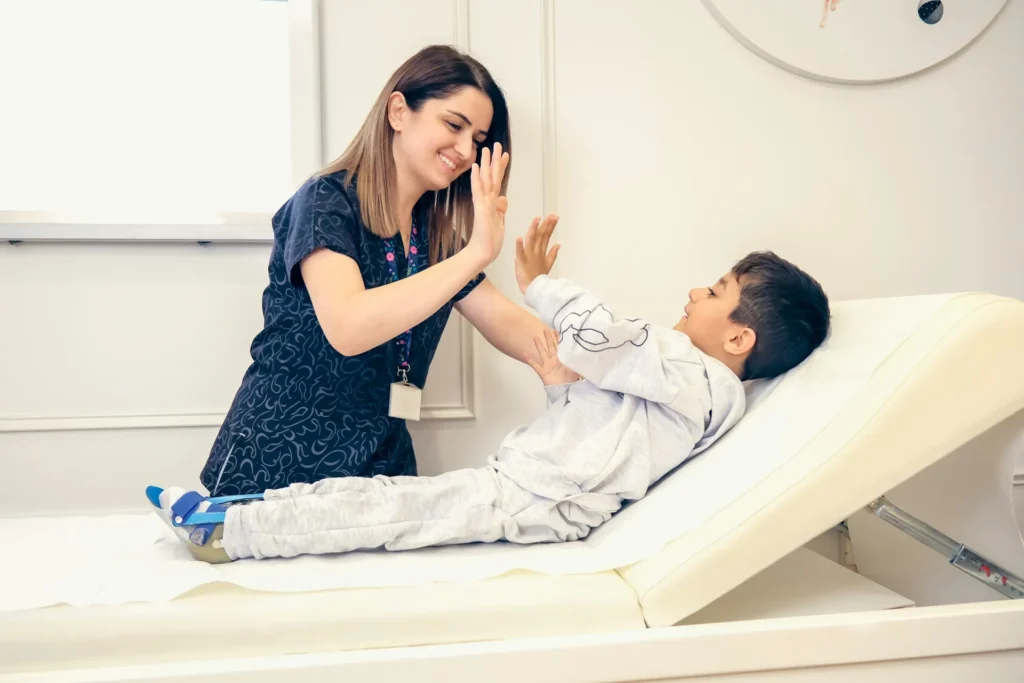
Sensory Integration (SI) diagnosis – what is sensory integration and what does the assessment involve?
What is sensory integration? Sensory integration refers to the process by which the nervous system receives sensory stimuli and utilises them in everyday functioning. Thanks to this, the body is able to respond appropriately to sounds, sights, touch, movement, taste, smell and signals from the motor system. But what happens when certain aspects of this […]

Atypical autism – symptoms, diagnosis and prognosis
What is atypical autism? Atypical autism is a developmental disorder that falls within the broad spectrum of autism spectrum disorders. In practice, this means that a child with this type of autism may share many characteristics with people diagnosed with childhood autism or Asperger’s syndrome, however, their symptoms did not appear until after the age […]
Do you need some help?
Assessment for dyslexia and dysorthography at the Dialog Centre for Children and Families
Is your child struggling with reading and writing? A diagnosis will explain the causes and pave the way for adjustments to be made to their schoolwork.
Book an appointment