





DIALOG CENTRE FOR CHILDREN AND FAMILIES
Family therapy
in Warsaw
Understand each other better, feel closer together.
It is psychotherapy focused on the relationships between all members of the household. It is meant for families going through conflict, a crisis or an important change. In a safe atmosphere, we look together for solutions that will help you regain peace and mutual understanding.
Mokotów, 3c Cybernetyki St.
Śródmieście, 19 Słomińskiego St.
Working with families for 20 years
We know the difficulties families most often come to us with, and we know how important a sense of safety is at such times.
Psychologist, therapist and psychiatrist in one place
Our team works closely with child and adolescent mental health specialists. If needed, we will help you plan broader support.
Over 20 family therapists
Each of them has their own areas of experience. When you book, we will help you choose the right person for your situation.
WHO IT IS FOR
When does a family come to therapy?
Families come to therapy when tension at home makes everyday life difficult or when they are going through a change that is hard to handle on their own. You do not need to wait for a serious crisis: you can also come to prevent conflicts from escalating.
More and more frequent arguments
Small things trigger strong emotions, and conversations quickly turn into conflict. It is hard to calmly say what you feel and what you need.
Better support at school
A formal diagnosis makes it possible to adapt learning conditions to the child’s needs: extra time in tests, an individual approach from teachers or support from the school counsellor.
A child’s difficulties that affect the whole family
Anxiety, low mood, developmental challenges or problems at school that get worse especially at home.
Parents separating and life in a blended family
Divorce, shared custody or a new partner. Changes to familiar routines disrupt the child’s sense of security.
A child’s diagnosis or illness
A diagnosis such as ADHD or autism, or a chronic illness, changes everyday life for everyone at home, including siblings.
Grief and other difficult changes
The death of a loved one, a house move, the birth of a sibling. Support helps you find your way in the new situation.
When a child is in a mental health crisis, the first step is a consultation with a child and adolescent psychiatrist.
systemic approach
What is family therapy?
Family therapy (also called systemic therapy) is a form of psychotherapy that works with the relationships between family members, not only with the one person who has the difficulty.
The therapist sees the family as a system of interconnected parts. A crisis in one of you affects the others, and the way you talk to and react to each other can either increase tension or help ease it.
The aim of the sessions is to learn to talk, listen to each other and deal with differences – without looking for someone to blame and with attention to the needs of each of you.
In therapy you can work on:
better understanding of each person’s emotions and needs
calmer communication and resolving conflicts
rebuilding trust and closeness
setting rules and boundaries
coping with crises together
strengthening the child’s sense of security
Comparison
Family therapy, couples therapy or child therapy: which to choose?
Family therapy covers the relationships of the whole family, couples therapy the relationship between two partners, and individual child therapy focuses on the child alone. If you are not sure where to start, an initial consultation will help you decide.
| Family therapy | Couples therapy | Individual child therapy | |
| Who takes part | Parents and children, sometimes siblings or grandparents. Who attends may change from session to session. | Two partners. | A child or teenager; parents attend consultation meetings. |
| What the work focuses on | Relationships and communication across the whole family: rules, boundaries, roles. | The couple’s relationship: closeness, conflicts, decisions. | The child’s emotions, thoughts and behaviour. |
| Typical situations | Conflicts with a teenager, parents separating, a crisis, a child’s difficulties showing at home. | A crisis in the relationship, differences in parenting, a decision to separate. | Anxiety, low mood, difficulties with peers. |
| Where to start | An initial consultation with a family therapist, often without the child. | A consultation for couples. | A parent consultation with a child psychologist or psychotherapist. |
step by step
How does family therapy
work at the Dialog Centre for Children and Families?
The process starts with an initial consultation. Based on it, you and the therapist set the goals of the work and decide who will take part in the sessions. The therapy sessions themselves usually take place every 2–3 weeks and last 90 minutes.
Initial consultation
You talk with the therapist about what made you seek help, what relationships in the family look like and what you want to change. Often only the parents come.
Goals and who takes part
The therapist helps you sort out the difficulties and name goals that matter to you and are achievable. You agree who will take part in the next sessions.
A series of family sessions
90-minute sessions every 2–3 weeks. How often and how many sessions depends on the family’s needs; you discuss progress with the therapist as you go.
Changes in everyday life
You check what helps you and what needs more work. At the end you sum up the therapy; follow-up sessions are possible.
Team of specialists
Who runs family therapy?
At the Dialog Centre for Children and Families, support is provided by qualified psychotherapists with many years of experience working with children, adolescents and parents. Each of them has completed specialist training in the systemic approach and works under regular supervision.

Why Dialog
Why choose the Dialog Centre for Children and Families?
We believe that a mindful conversation can help you find a way out of even the most difficult impasse. At Dialog, we combine a safe space for rebuilding relationships with the support of experienced psychologists, psychotherapists and psychiatrists.

Training and supervision

Our therapists have experience working with children, adolescents and parents. They have completed training in family therapy and keep developing their skills through courses and supervision.
The child’s and the parent’s perspective

Every person in the family can be heard. Therapy is not about judging parents but about understanding relationships better.
One team
Psychologists, psychotherapists and psychiatrists work together at the Centre. This means we can help you consider other forms of support if they turn out to be needed.
In person and online
You can attend sessions at our Warsaw centres or ask about the option of online therapy.
price
How much does family therapy cost?
A session costs from PLN 350 to PLN 600, depending on the specialist you choose. Sessions take place in person at our centres in Mokotów and Śródmieście, and in some cases also online.
Initial consultation
A conversation with a family therapist about the family’s situation; often without the child.
Family therapy session
Sessions with the whole family. The process works towards the goals you have agreed on.
Articles
Read our articles on this topic

Social skills training for children
Social Skills Training, abbreviated to TUS, can be described, in the simplest terms, as active therapy in the form of workshops, which are conducted in groups of people of a similar age or with a similar level of functioning. The aim of TUS is to develop emotional and social skills through modelling (i.e. learning by […]
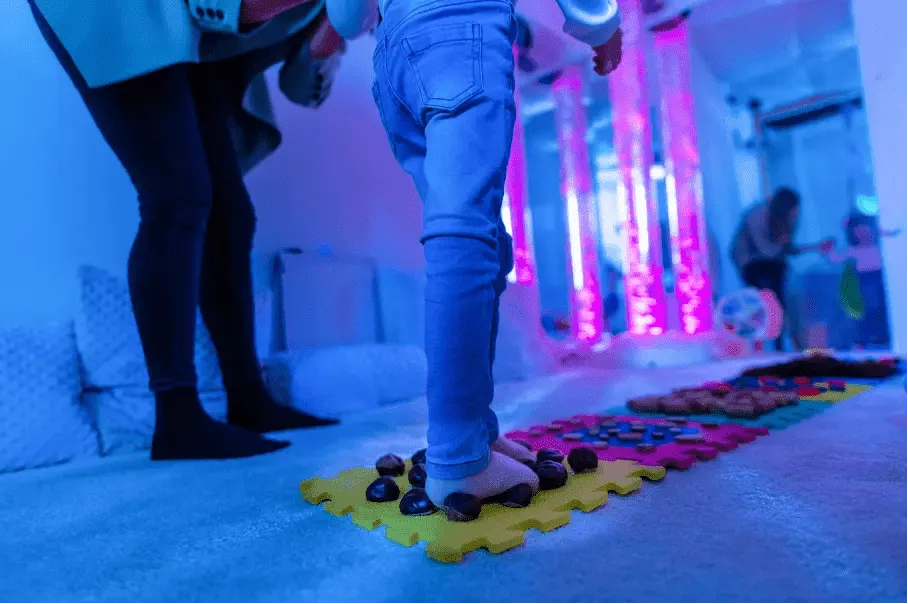
Sensory Integration in the Snoezelen Room
A sensory room, also known as a ‘Snoezelen sensory room’ or simply a ‘Snoezelen room’, is a specially designed space intended to create an environment that stimulates the senses whilst providing a sense of safety and relaxation. These rooms are often used when working with people with a range of needs, including those with developmental […]

Psychomotor development (children aged 0–3 years)
A child’s psychomotor development is a process in which the child develops both their mental and motor skills during the first three years of life. This is a period of rapid change, during which a child reaches many milestones in the development of their motor, cognitive and social skills. During the first three years of […]
Frequently asked questions
Family therapy: questions and answers
Book an initial consultation
At the first session you will tell the therapist about your family’s situation and decide together whether family therapy is the right direction for you.