




Separator line

make an appointment by phone

Mon–Sun: 7.30 am – 10.00 pm

DIALOG CENTRE FOR CHILDREN AND FAMILIES

Family therapy
in Warsaw

Mokotów, 3c Cybernetyki St.

Śródmieście, 19 Słomińskiego St.

Working with families for 20 years

We know the difficulties families most often come to us with, and we know how important a sense of safety is at such times.

Psychologist, therapist and psychiatrist in one place

Our team works closely with child and adolescent mental health specialists. If needed, we will help you plan broader support.

Over 20 family therapists

Each of them has their own areas of experience. When you book, we will help you choose the right person for your situation.

01

More and more frequent arguments

Small things trigger strong emotions, and conversations quickly turn into conflict. It is hard to calmly say what you feel and what you need.

02

Better support at school

A formal diagnosis makes it possible to adapt learning conditions to the child’s needs: extra time in tests, an individual approach from teachers or support from the school counsellor.

03

A child’s difficulties that affect the whole family

Anxiety, low mood, developmental challenges or problems at school that get worse especially at home.

04

Parents separating and life in a blended family

Divorce, shared custody or a new partner. Changes to familiar routines disrupt the child’s sense of security.

05

A child’s diagnosis or illness

A diagnosis such as ADHD or autism, or a chronic illness, changes everyday life for everyone at home, including siblings.

06

Grief and other difficult changes

The death of a loved one, a house move, the birth of a sibling. Support helps you find your way in the new situation.

When family therapy is not the first step

When a child is in a mental health crisis, the first step is a consultation with a child and adolescent psychiatrist.

What is family therapy?

Family therapy (also called systemic therapy) is a form of psychotherapy that works with the relationships between family members, not only with the one person who has the difficulty.

The therapist sees the family as a system of interconnected parts. A crisis in one of you affects the others, and the way you talk to and react to each other can either increase tension or help ease it.

The aim of the sessions is to learn to talk, listen to each other and deal with differences – without looking for someone to blame and with attention to the needs of each of you.

In therapy you can work on:

better understanding of each person’s emotions and needs

calmer communication and resolving conflicts

rebuilding trust and closeness

setting rules and boundaries

coping with crises together

strengthening the child’s sense of security

Family therapy covers the relationships of the whole family, couples therapy the relationship between two partners, and individual child therapy focuses on the child alone. If you are not sure where to start, an initial consultation will help you decide.

Family therapyCouples therapyIndividual child therapy
Who takes partParents and children, sometimes siblings or grandparents. Who attends may change from session to session.Two partners.A child or teenager; parents attend consultation meetings.
What the work focuses onRelationships and communication across the whole family: rules, boundaries, roles.The couple’s relationship: closeness, conflicts, decisions.The child’s emotions, thoughts and behaviour.
Typical situationsConflicts with a teenager, parents separating, a crisis, a child’s difficulties showing at home.A crisis in the relationship, differences in parenting, a decision to separate.Anxiety, low mood, difficulties with peers.
Where to startAn initial consultation with a family therapist, often without the child.A consultation for couples.A parent consultation with a child psychologist or psychotherapist.

How does family therapy
work at the Dialog Centre for Children and Families?

1 STEP
90 min

Initial consultation

We get to know your situation

You talk with the therapist about what made you seek help, what relationships in the family look like and what you want to change. Often only the parents come.

2 STEP
1–2 sessions

Goals and who takes part

You set the direction together

The therapist helps you sort out the difficulties and name goals that matter to you and are achievable. You agree who will take part in the next sessions.

3 STEP
90 min

A series of family sessions

You work towards your goal

90-minute sessions every 2–3 weeks. How often and how many sessions depends on the family’s needs; you discuss progress with the therapist as you go.

4 STEP
summary

Changes in everyday life

You bring the changes home

You check what helps you and what needs more work. At the end you sum up the therapy; follow-up sessions are possible.

Training and supervision

Our therapists have experience working with children, adolescents and parents. They have completed training in family therapy and keep developing their skills through courses and supervision.

The child’s and the parent’s perspective

Every person in the family can be heard. Therapy is not about judging parents but about understanding relationships better.

One team

Psychologists, psychotherapists and psychiatrists work together at the Centre. This means we can help you consider other forms of support if they turn out to be needed.

In person and online

You can attend sessions at our Warsaw centres or ask about the option of online therapy.

first step

Initial consultation

90 min

A conversation with a family therapist about the family’s situation; often without the child.

price from PLN 350
series of sessions

Family therapy session

90 min

Sessions with the whole family. The process works towards the goals you have agreed on.

price from PLN 350
Piątka dzieci zgłaszająca się do odpowiedzi na pytanie

Social skills training for children

Social Skills Training, abbreviated to TUS, can be described, in the simplest terms, as active therapy in the form of workshops, which are conducted in groups of people of a similar age or with a similar level of functioning. The aim of TUS is to develop emotional and social skills through modelling (i.e. learning by […]
Read
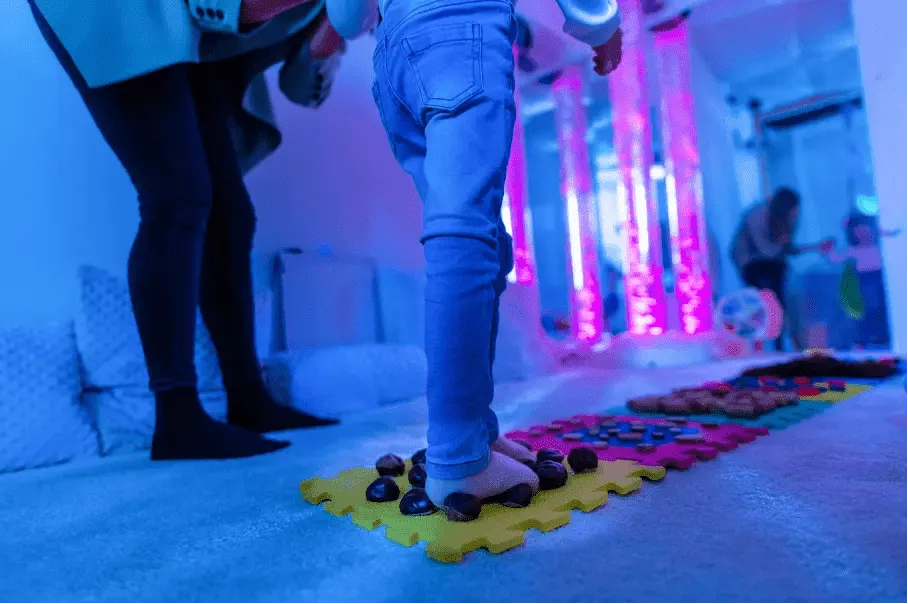
Dziecko z rodzicem w sali snoezelen

Sensory Integration in the Snoezelen Room

A sensory room, also known as a ‘Snoezelen sensory room’ or simply a ‘Snoezelen room’, is a specially designed space intended to create an environment that stimulates the senses whilst providing a sense of safety and relaxation. These rooms are often used when working with people with a range of needs, including those with developmental […]

Read
Dwójka młodych dzieci bawiących się na podłodze

Psychomotor development (children aged 0–3 years)

A child’s psychomotor development is a process in which the child develops both their mental and motor skills during the first three years of life.  This is a period of rapid change, during which a child reaches many milestones in the development of their motor, cognitive and social skills.  During the first three years of […]

Read
No. You can come both when you are facing serious difficulties and when you want to improve communication, better understand your needs at a new stage of life (e.g. after the birth of another child or when a teenager is growing up) or prevent everyday conflicts from building up.
No. Difficulties at home have many complex causes and come from the way people interact, not from bad intentions. Sessions are not about judging or looking for someone to blame, but about better understanding the patterns in your relationships and finding solutions that will support everyone at home.
Not always. The first consultation is often attended by the parents only, so that you can talk freely about the difficulties without burdening the child. During the process, the therapist decides as you go which combination of people is best for each stage – some sessions are for the whole family, some for the parents only and some for the siblings only.
Families with children of any age can take part – from babies to adult children who live with their parents or have a close relationship with them. With the youngest children, the therapist adapts the session to their abilities (e.g. through play together and observing interactions), and the conversation takes place mainly with the adults.
If one person is not willing or ready, it does not close the door to getting help. You can start with a parental consultation attended by one parent only (or a parent with the children) to discuss the situation and look for ways to make positive changes. Often, when the other person sees the first results or understands that the therapy room is a safe, non-judgemental space, they decide to join at a later stage.
Couples therapy focuses only on the partner relationship, intimacy, communication and crises between two adults. Systemic work takes a broader perspective. It looks at the bonds between parents and children and between siblings, focusing on how you function as a whole and how to support each person’s development.
Yes, the two often complement each other well. To give the child a full sense of safety and confidentiality, individual work and joint sessions are usually led by different specialists, who can work together with the parents’ consent to support the process of change consistently.
The first visit is a consultation. The therapist gets to know your perspective, asks about everyday functioning and sets the goal of the work together with you. You do not need to prepare notes or ready answers. Being open to talking is enough. It is only worth telling your child beforehand, in a simple and supportive way, where you are going and that nobody there will judge or question them.
Yes. Parents separating, starting a new relationship or bringing two households together (in a blended family) are times of big change that often bring tension and unclear roles. A specialist’s support helps you work out safe rules for co-parenting, makes it easier for children to adapt to the new situation and lets you look after everyone’s boundaries.
A session usually lasts up to 90 minutes – longer than a standard individual appointment, so that everyone has space to speak.
Yes, therapists are bound by full professional confidentiality. This means that all information discussed during sessions stays in the therapy room. The only exceptions are situations provided for by law, when the health or life of one of the participants is at risk.
It depends on the nature of the difficulties, the goals of the work and your current situation. Sometimes a few consultations are enough, while in more complex situations the process lasts several months or longer. Together with the therapist, you review the sessions as you go and decide on the next steps.
How often you meet is agreed with the specialist, taking into account your needs and practical possibilities. Sessions most often take place every 2 weeks, to give everyone at home time to put changes into practice in everyday life.
Yes, we also offer online sessions. Whether this form of support is available and suits your situation is best confirmed with reception or directly with the specialist when booking an appointment.
The current price of a session at the Dialog Centre for Children and Families is from PLN 350 to PLN 600, depending on the specialist you choose.

Contact

Centres for Children and Families

City Centre

📍 19
Zygmunta Słomińskiego Street, Entrance C/I, Flat 520, 00-195 Warsaw

Mokotów

📍 3c Cybernetyki Street,
02-677 Warsaw

Our specialists also see patients at other branches of the Dialog Therapy Centre

Wspólna

70 Wspólna Street (Park Avenue)

Wola

137 Górczewska Street

Mokotów Domaniewska

26B Bukowińska Street

Gocław

33A Bora-Komorowskiego Street

Żoliborz

5 Gwiaździsta Street

City Centre

19 Słomińskiego Street, Entrance C

Ursynów

19 Stryjeńskich Street

Wilanów

35 Kosiarzy Street

Powiśle

16/22 Fabryczna Street