



Would you like your child to get to grips with English in a natural and relaxed way?
Book them onto:
English – Creative English
Course dates
| Monday | Tuesday | Wednesday | Thursday | Friday | |
|---|---|---|---|---|---|
| 11:00 |
Creative English – 45 min 6–36 months Miss Rachel ul. Cybernetyki 3C |
Monday
No classes
Tuesday
No classes
Wednesday
Creative English
–
45 min
6–36 months
Miss Rachel
ul. Cybernetyki 3C
Thursday
No classes
Friday
No classes
English – Creative English – Warsaw
From a very young age, children naturally become familiar with language and make their first attempts at communication. Introducing English into the daily routine helps to support this process in a relaxed way that is tailored to their stage of development.
During lessons, the language is introduced through play, movement and everyday activities, enabling children to learn it intuitively. English becomes a natural part of their experience, rather than a separate task to be completed.
This approach builds language awareness and makes further language learning in the future easier and more natural.
Why should you choose Creative English classes?
Introducing English from the very first months of a child’s life supports their natural development and helps them realise their full learning potential.
A natural aptitude for learning
A young child’s brain is highly malleable, which means that language acquisition takes place intuitively and effortlessly.
Sensitivity to sounds and intonation
In the early stages of their development, children find it easier to recognise and imitate sounds, which helps them to develop a natural accent.
Support for cognitive development
Exposure to more than one language helps to improve concentration, memory, flexible thinking and creativity.
Openness to the world
Learning a language at an early age helps children to better understand diversity and fosters their curiosity about the world.
Preparing for the future
Knowledge of English makes further education easier and opens up greater opportunities for the future.
What is Creative English?
Creative English is an approach to language learning in which experience and context are paramount. As the philosophy behind it states: ‘Don’t teach the word, teach the world’ – language is not an end in itself, but a tool for exploring the world.
During lessons, children do not learn individual words in isolation from their meaning. Language emerges naturally through activities, play and exploration, making it understandable and closely linked to their everyday experiences.
In our work, we use, amongst other things, simple experiments, sensory activities and age-appropriate tasks. This enables children to learn through doing, and English becomes part of their natural exploration of the world.


Creative English at Senso Senso
The classes are taught in English and are based on engaging all the senses. We try to use real objects wherever possible, and picture cards as a second choice.
Our teacher, Anna Pękała, loves to immerse herself (literally!) in the language alongside the children during lessons, for example by making multi-coloured modelling clay, searching together for animal figures amongst the colourful autumn leaves, and in summer, catching little fish from jelly water. This allows the pupils to ‘immerse’ themselves in the language and shows them that English is great fun.
Our aim is for children to build a solid foundation for their future learning through engaging language lessons.
The classes are aimed at children aged between 6 months and 3 years.
Classes last 45 minutes

Enrol your child in:
Creative English
You can trust us
A child’s early experiences with language are of great importance for their development and their sense of confidence in communication.
That is why, at the Dialog Centre for Children and Families, the sessions are led by experienced facilitators who specialise in working with very young children. We ensure a safe and supportive environment
Articles
Have a look at our articles on this topic
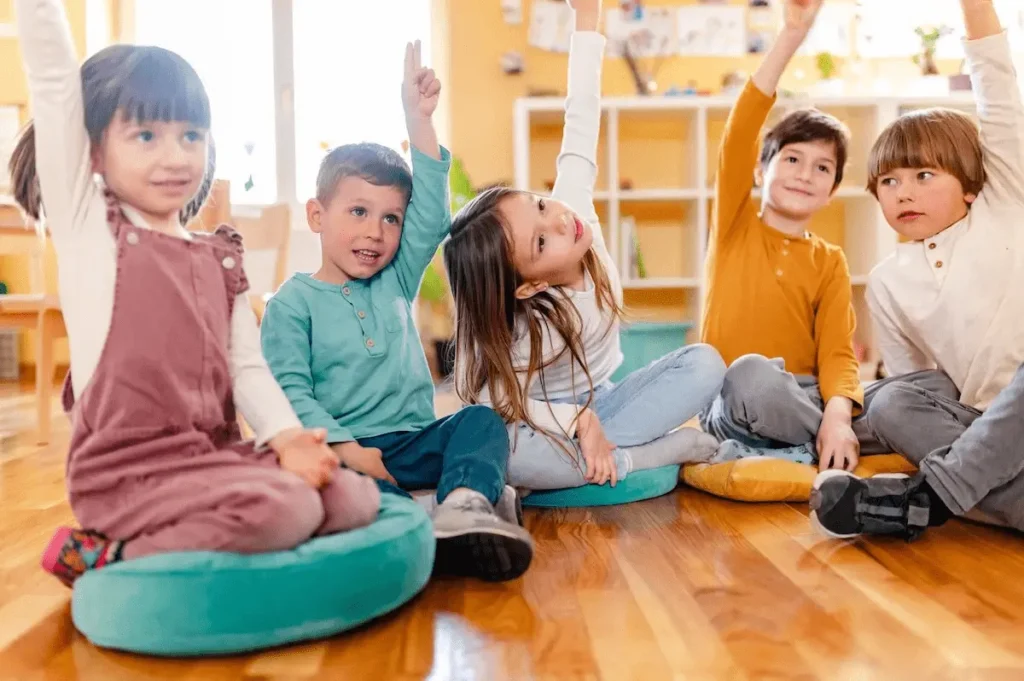
Social skills training for children
Social Skills Training, abbreviated to TUS, can be described, in the simplest terms, as active therapy in the form of workshops, which are conducted in groups of people of a similar age or with a similar level of functioning. The aim of TUS is to develop emotional and social skills through modelling (i.e. learning by […]
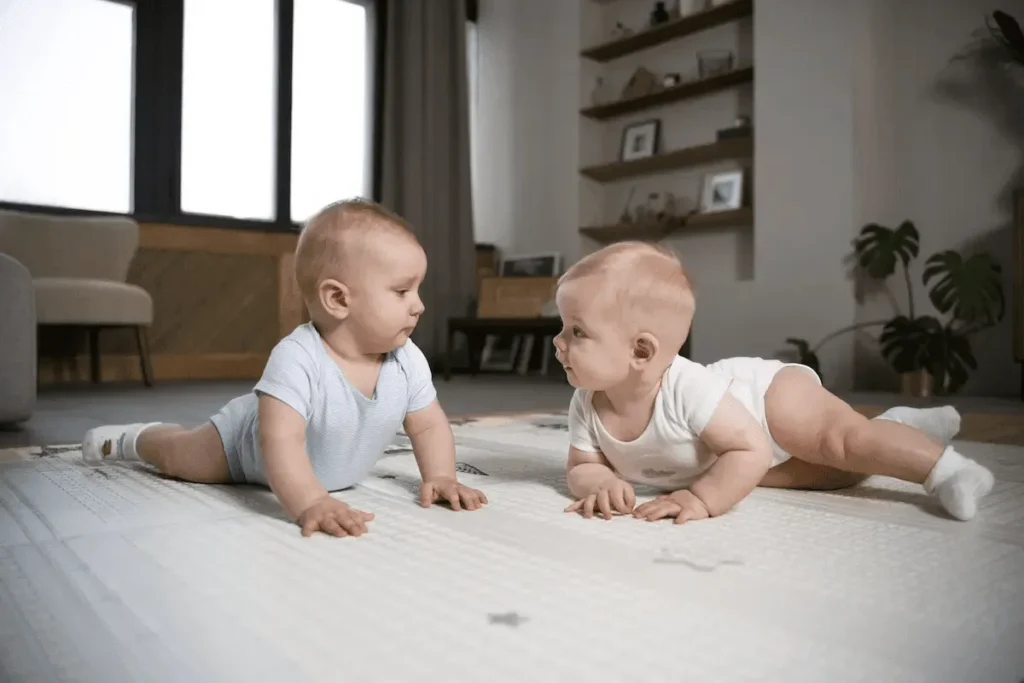
Psychomotor development (children aged 0–3 years)
A child’s psychomotor development is a process in which the child develops both their mental and motor skills during the first three years of life. This is a period of rapid change, during which a child reaches many milestones in the development of their motor, cognitive and social skills. During the first three years of […]

Snoezelen, or the Sensory Room
1. Introduction The senses form the basis of every person’s development. They provide information about the world around us. Without them, none of us could develop. However, some people are unable to respond to them appropriately, whilst others have lost these abilities due to an accident or illness. For these people, the world can be […]


