



Contents:
Stimming, or self-stimulatory behaviours, is a phenomenon commonly observed in people on the autism spectrum and in those with various neurodevelopmental disorders. Although it is most commonly associated with autism, it can also occur in people with ADHD, during periods of high emotional arousal, and even in situations typical of everyday life, such as clicking a pen or fiddling with fidget toys. Furthermore, most people engage in certain habitual, repetitive movements that can be described as mild forms of stimming.
What exactly is stimming?
Stimming involves various forms of movement, sound or sensory contact that stimulate, calm or arouse the nervous system. It may involve rocking the body, humming, flapping the hands, manipulating objects or engaging with a specific sensory stimulus, for example, when the feel of certain fabrics provides comfort.
As a natural regulatory mechanism and a means of regulating the nervous system, stimming serves as a way of coping with difficult emotions, information overload and unpleasant stimuli. The literature also uses terms such as ‘stereotypies in autism’ and ‘rethinking autism’, as well as comparisons to categories such as ‘non-autistic motor stereotypies’, which emphasises that the phenomenon is not exclusive to those with a diagnosis.
Do you need some help?
Diagnosis of autism at the Dialog Centre for Children and Families
We carry out a comprehensive psychological assessment of the autism spectrum — thoroughly, providing a complete picture of the child’s potential and recommendations for the school.
Is stimming a bad thing?
Stimming should not be a cause for concern if it serves a regulatory purpose and does not harm the individual. On the contrary — it can have positive effects, such as calming the person down, reducing muscle tension, alleviating negative emotions or helping to regain a sense of control when the body is overwhelmed or experiencing intense anxiety.
What are often perceived as stereotypical movements, for example, when a person starts rocking back and forth or repeating short sequences of movements, should not provoke fear or contempt, although unfortunately this is often the case when such behaviour is displayed in public.
It is worth noting that any repetitive form of movement that constitutes a response to a stimulus can serve an adaptive function and help to manage stress or sensory overload.
Why does stimming occur so frequently in autism?
In autism, stimming is of particular importance. For people on the autism spectrum, reactions to their surroundings may be more intense, and sensory processing may differ. Sensory processing difficulties are common, manifesting as the system reacting with either heightened or reduced sensitivity. As a result, a person may need additional stimulation to feel safe or, conversely, to calm down when a lack of stimulation causes discomfort to build up.
For some people, stereotyped and repetitive movements are a response to anxiety; sometimes they help prevent a panic attack, a meltdown or a shutdown. They are sometimes described as involuntary movements or tics, but unlike conditions such as Tourette’s syndrome, in autism they are most often regulatory in nature.
Stimming may also occur in people with sensory integration disorders, as well as in children who have difficulty processing sensory input or in people with other neurodevelopmental disorders. In such cases, stimulation serves an organising function, and repetitive movements help the individual to respond to changing environmental conditions.
Stimming and ADHD
Although ADHD is mainly associated with hyperactivity and difficulties with inhibitory control, stimming can also occur in this context. People with ADHD sometimes use self-stimulation by manipulating objects, moving their hands, or even making small sounds. In some cases, self-stimulation in ADHD serves to maintain attention – some people need to move in order to process information more effectively.
Examples include small actions such as twirling a pen, clicking a pen or reaching for all sorts of stress-relieving toys, such as rubber stress balls.
Stimming and emotions
Stimming can occur during times of strong emotions – both positive and negative. Sometimes, sudden stress triggers behaviours that help manage emotions before they escalate into intense reactions. Some people may feel a greater need to move during moments of tension, whilst others instinctively start manipulating objects, repeating gestures or humming.
In the context of autism, this can be a form of protection against ‘bad stim’, i.e. a stimulus that places an excessive burden on the senses. In such cases, stimming becomes a form of defence against sensory overload, before the excessive arousal can be stopped.
Various forms of stemming
The most common examples:
- waving one’s arms or fluttering one’s fingers,
- rocking, that is, the need to gently rock the body,
- rotating objects,
- staring at a light or at movement,
- rhythmic tapping of the foot,
- a twitch resembling minor muscle contractions,
- repeated sounds, purring, smacking,
- a love of a particular material and the feel of its texture.
Some people prefer motor stimming, whilst others prefer sensory stimming involving visual, auditory, olfactory or tactile stimuli. Still others require more complex stimulation to help their nervous system achieve stability.
How should we view stimming?
Experts emphasise that stimming is an important part of daily life for many people. Research literature (including works by Cunningham, Allison, Donnellan, Hill, Lear, Harris, Mahone, Singer, Lanovaz, Robertson, Soerono and Watkins) conveys the message that stimming should be understood rather than suppressed.
How society perceives self-stimulatory behaviour depends on education and awareness. Once we understand that it is an adaptive mechanism, we cease to feel fear or contempt towards people whose behaviour deviates from the norm.
Can stimming be controlled?
The aim of therapy is not to eliminate stimming, but to channel it safely. A specialist can help a person to:
- distinguishing between favourable and detrimental forms of stemming,
- finding safe activities that will provide stimulation in a socially acceptable way,
- understanding which stimuli may act as triggers,
- developing self-regulation skills to manage emotions and sensory overload,
- replacing harmful habits with safer alternatives, such as rubber stress balls.
Sometimes stimming can lead to difficulties in engaging with tasks, but just as often it is a resource that facilitates concentration and emotional stability.
Do you need some help?
Diagnosis of autism at the Dialog Centre for Children and Families
We carry out a comprehensive psychological assessment of the autism spectrum — thoroughly, providing a complete picture of the child’s potential and recommendations for the school.
Read more
Related articles

Autism spectrum assessment – a step-by-step guide to diagnosis
Autism is a complex issue, and the subject is attracting increasing interest amongst both parents and professionals working with children and adults. More and more children are being referred to specialist clinics on the suspicion that their development is different, with the child’s difficulties being particularly evident in social interactions, communication or behavioural patterns. This […]

What rules out Asperger’s syndrome – factors in the differential diagnosis
Asperger’s syndrome – an autism spectrum disorder Asperger’s syndrome is a neurodevelopmental disorder classified within the autism spectrum, characterised by a different pattern of social and communicative development. It is not a disease in the medical sense, but rather a different pattern of brain development. The term derives from the name of the Austrian paediatrician […]
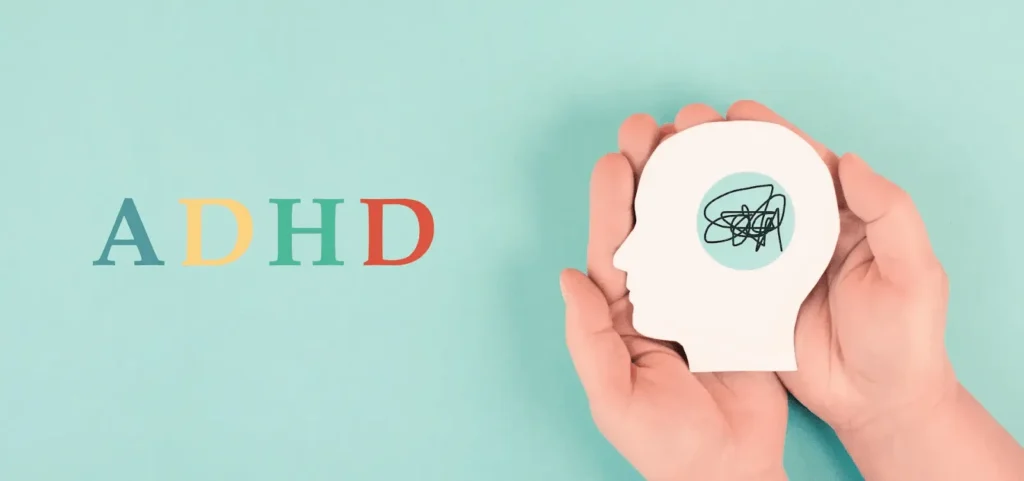
ADHD and autism – similarities and differences in functioning
Autism and ADHD are two neurodevelopmental disorders which, despite having different diagnostic criteria, can often occur together and co-occur in the same person. Modern diagnosis and in-depth assessment are making it increasingly possible to distinguish between their characteristic symptoms and to identify instances where they may occur together or overlap in the functioning of children […]

Rett syndrome – what it is, symptoms and causes of this rare disorder
What is Rett syndrome? Rett syndrome is one of the most frequently described rare and specific neurodevelopmental disorders affecting girls. In the literature, it is also referred to as Rett or Rett syndrome and belongs to the group of serious genetic disorders. Typically, Rett syndrome occurs in children who initially develop normally, but later experience […]

Autism – symptoms. How can you recognise them in children and teenagers?
Autism is a neurodevelopmental disorder that affects the way a person perceives the world, interacts with others and processes information. Nowadays, we talk about the autism spectrum, as symptoms and the level of support required can vary greatly. There is still a lack of reliable information on this subject, which is why many myths hinder […]

Speech prosody in autism – what it is and how it affects communication
Speech is not just about words and a rich vocabulary, but also about the way we say them. The pace, intonation, stress, rhythm and modulation of our voice enable the listener to understand our intentions and emotions. This is precisely the area that prosody deals with. In the context of neurodiversity, such as autism, this […]
Do you need some help?
Diagnosis of autism at the Dialog Centre for Children and Families
We carry out a comprehensive psychological assessment of the autism spectrum — thoroughly, providing a complete picture of the child’s potential and recommendations for the school.
Book a consultation