


Social
Skills Training (TUS) for children and young people – Warsaw
Group sessions in which children learn to understand emotions, work together and build relationships with their peers. In small, fixed groups, throughout the school year.

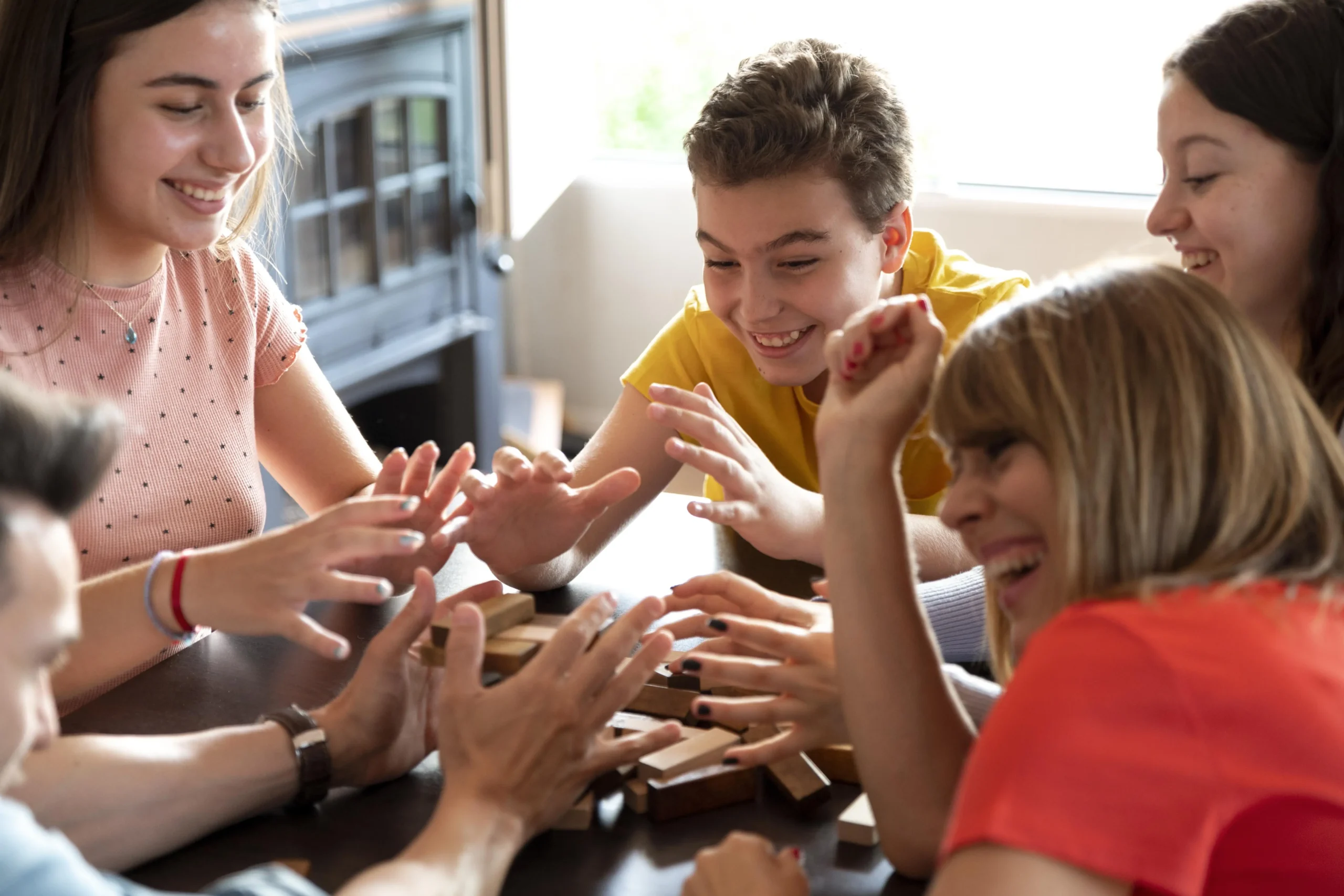
Learning through play
Small, fixed groups

Organisation of classes
Regular classes throughout the school year
Social Skills Training is a series of sessions running throughout the school year, from October to June. The consistent group composition and regularity of the sessions give the children time to build relationships and consolidate new skills.
The first step is to consult with the parent. We organise groups by theme, which is why the specialist suggests a group composition that is appropriate in terms of the child’s age, level of social functioning and the objectives of the work.




from 110 zł
Per session, per person
The price depends on the group. We will provide further details when you contact the registration office.
Timetable
When and where do the TUS groups take place?
The timetable applies to our centre. We only accept bookings for the assessment consultation,
so this information sets out the days and times when we are open.
The course runs from October to June.
| Poniedziałek | Wtorek | Środa | Czwartek | Piątek | |
|---|---|---|---|---|---|
| 16:00 |
Social Skills Training – 45 min 4–5 years Karolina Ciołek ul. Cybernetyki 3C |
||||
| 17:00 |
Social Skills Training – 45 min 7–9 years Sandra Angulska ul. Cybernetyki 3C |
Social Skills Training – 45 min 6–7 years Karolina Ciołek ul. Cybernetyki 3C |
|||
| 18:00 |
Social Skills Training – 45 min 10–12 years Sandra Angulska ul. Cybernetyki 3C |
Social Skills Training – 45 min 12–15 years Karolina Radziuk ul. Cybernetyki 3C |
Poniedziałek
Social Skills Training
–
45 min
7–9 years
Sandra Angulska
ul. Cybernetyki 3C
Social Skills Training
–
45 min
10–12 years
Sandra Angulska
ul. Cybernetyki 3C
Wtorek
Social Skills Training
–
45 min
12–15 years
Karolina Radziuk
ul. Cybernetyki 3C
Środa
Social Skills Training
–
45 min
4–5 years
Karolina Ciołek
ul. Cybernetyki 3C
Social Skills Training
–
45 min
6–7 years
Karolina Ciołek
ul. Cybernetyki 3C
Czwartek
Brak zajęć
Piątek
Brak zajęć
A specialist decides on group placement. We organise groups by theme: we group children together based on their age, level of social functioning and the objectives of the programme. That is why you book a consultation, rather than a specific date.
We update the timetable as new groups are formed. We will provide details of current availability and the price list when you contact the registration office.
Can’t see a group for your child’s age group?
Please leave your email address and we’ll get back to you with a date for a consultation and details of the groups that would be suitable for your child.
Who is TUS for?
Is social skills training
right for your child?
TUS is intended for children who
experience any of the following situations in their day-to-day lives. You don’t need to be certain – that’s
what a consultation with a specialist is for.







Before each TUS session begins, a preliminary consultation is held with the parent. During the meeting, we assess the child’s functioning and, on that basis, select the appropriate therapy group for them.
Learning through play
What does social skills training involve?
Each group consists of a small number of participants selected on the basis of their age and level of social
functioning. It is a closed group, the composition of which remains unchanged throughout the duration
of the sessions, which helps to build healthy and safe relationships.
As a result, every child has the space to participate
actively and receives appropriate support from the facilitator.
During the sessions, we use:
Social games and activities
Role-play scenarios
Communication exercises

Working with emotions

Tasks designed to foster cooperation

Elements of psychoeducation
The most important aspect of the training is the opportunity to practise new skills in natural interactions with peers. It is within the group, rather than in a one-to-one session, that the child puts these skills into practice.
Have a look inside
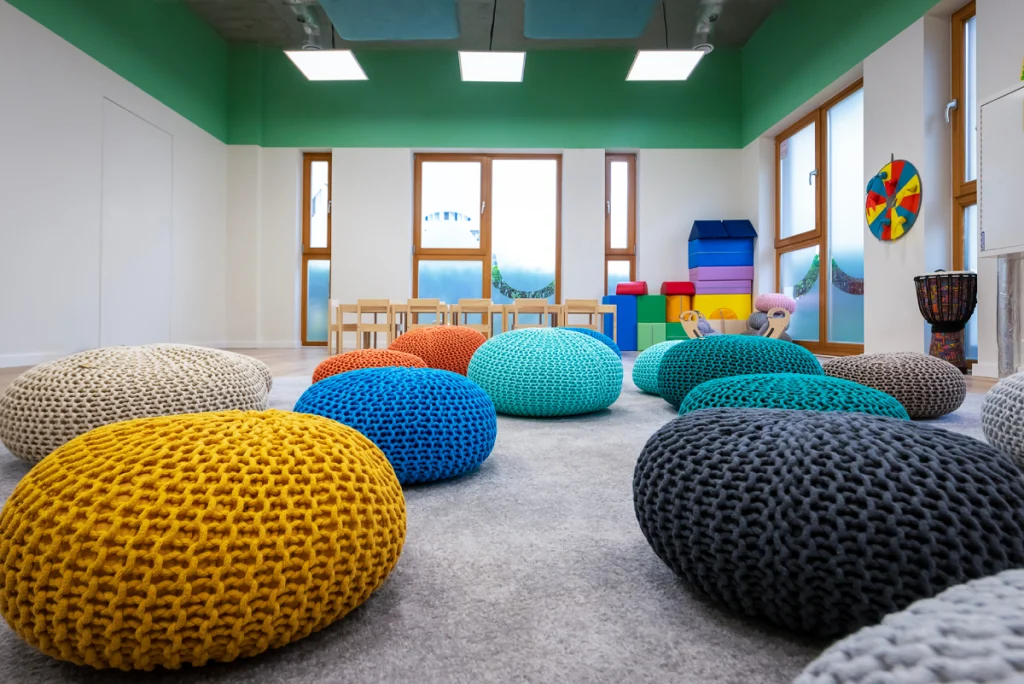
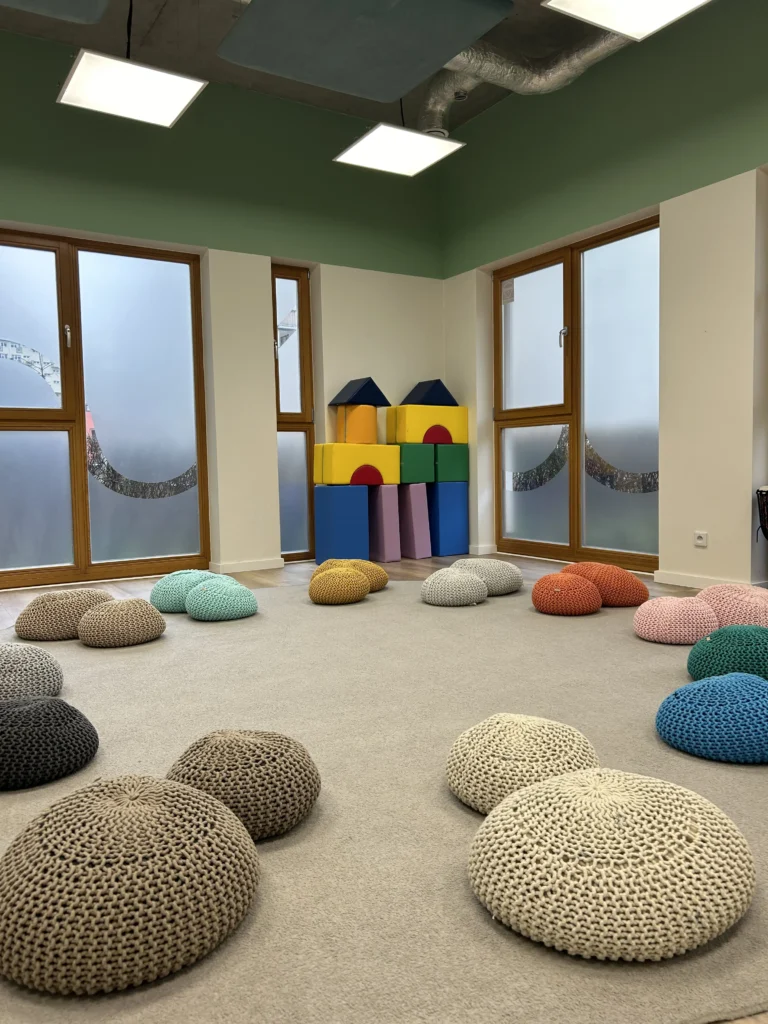
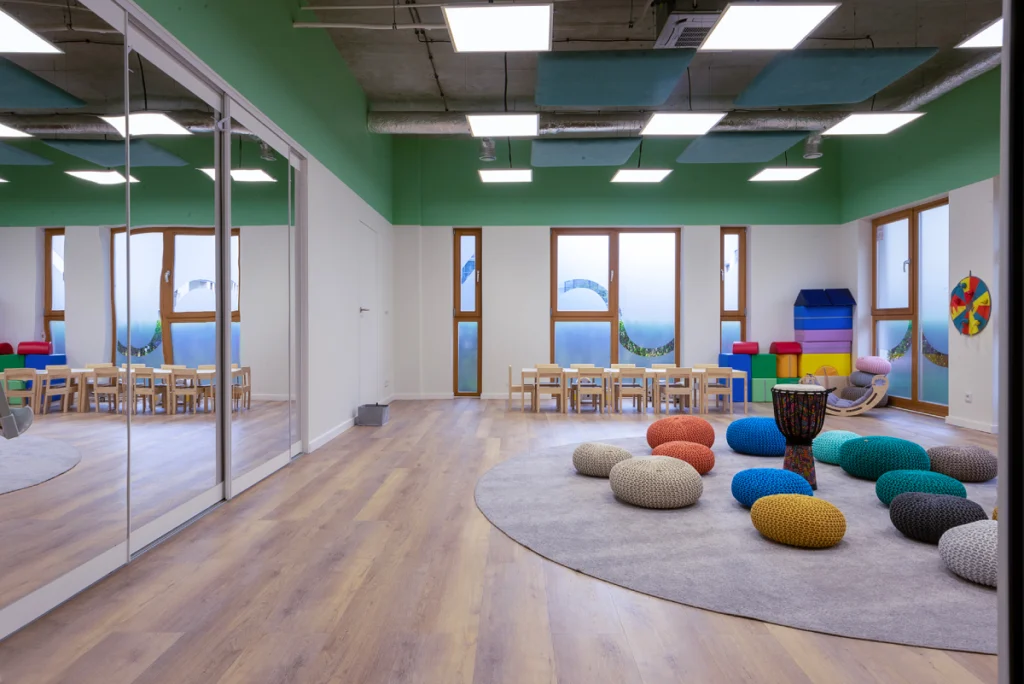
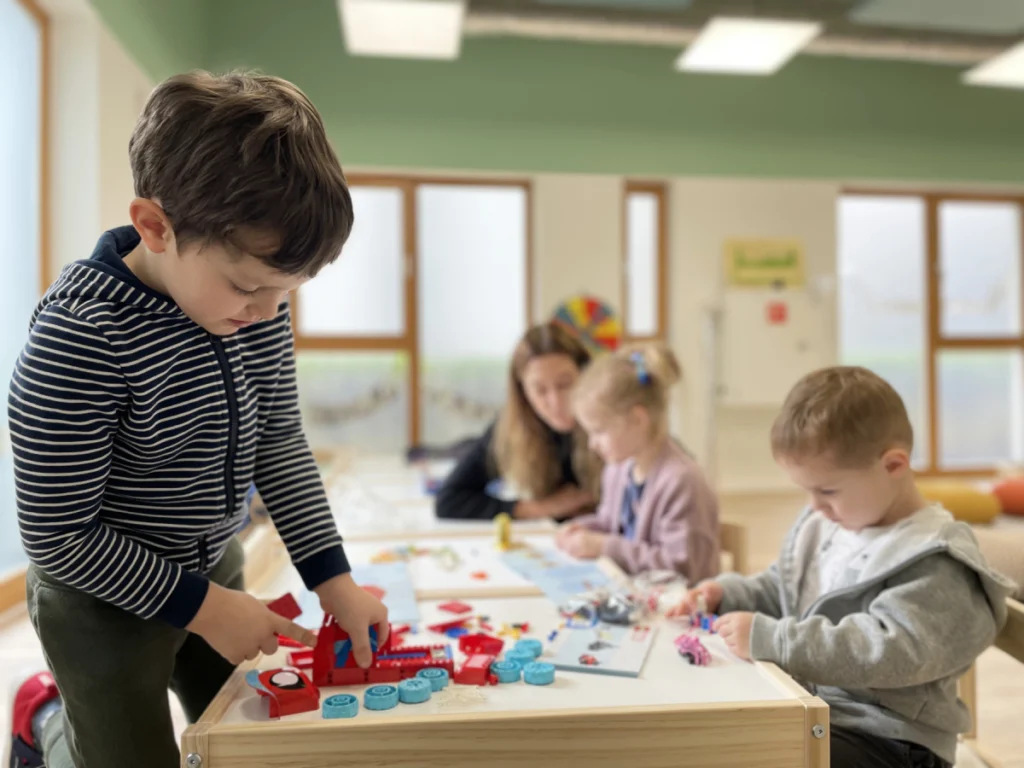
A space where children enjoy spending time
We run TUS sessions in the rooms at the Dialog Centre for Children and Families, which have been
designed with shared play and group work in mind.
Benefits of taking part
How does a child benefit from TUS?
Building relationships more easily
A better understanding of emotions
More effective communication

Greater self-confidence

Better performance at school
Skills for life
After finishing the training session
What can you expect
once the training session is over?
The effects of social skills training become apparent gradually.
Children begin to understand their emotions better, find it easier to form relationships and are more willing
to cooperate with others. Parents often notice that their child:
The pace at which results are achieved varies from child to child and depends on the child’s needs and how regularly they attend the sessions.
Do you recognise these difficulties in your child?
Give us a call and we’ll arrange an initial consultation, during which we’ll select a group that suits your child’s needs.
Articles
Have a look at our articles on this topic

Hyperactivity – symptoms, causes and ways of coping
Hyperactivity is a term that is cropping up more and more frequently in discussions about the mental health of children, young people and adults. It is sometimes equated solely with an excess of energy, but in reality it is a far more complex phenomenon. It can affect emotions, behaviour, concentration and day-to-day functioning at home, […]

Sensory overload – symptoms, causes and ways of coping
Sensory overload is a condition in which the nervous system receives more stimuli than it is able to process effectively. It can affect anyone, but is particularly common amongst highly sensitive people, those with neurodiversity, and those living under chronic stress. It manifests itself both physically and mentally, affecting day-to-day functioning, relationships and well-being. In […]