


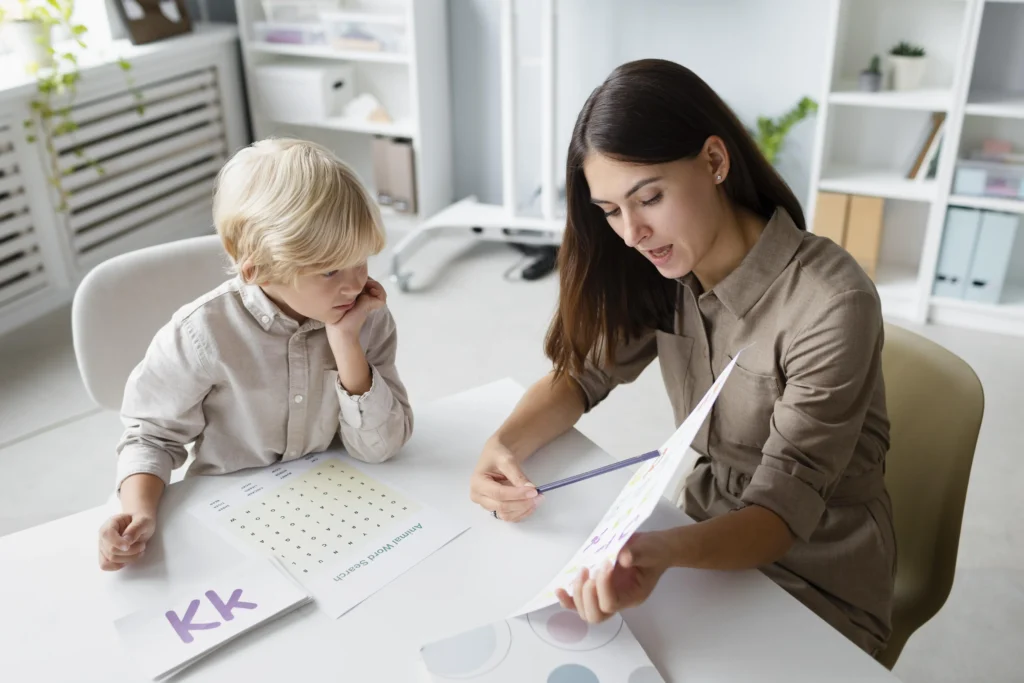
Not sure how to help your child with their difficulties at school? Start by speaking to a specialist.
Educational counselling for children and young people
How it works
What is a pedagogical consultation?
An educational consultation is a meeting between a parent and a specialist, during which they can discuss the child’s difficulties with learning, behaviour, independence, organising their responsibilities and functioning within the school or nursery environment. Its aim is to carry out an initial assessment of the situation and to identify the child’s educational and developmental needs.
A psychologist can help:
- to identify and better understand the academic difficulties observed,
- assess whether the difficulties may be due to the child’s stage of development, learning style or other factors,
- indicate whether a more in-depth educational or psychological assessment is required,
- suggest appropriate methods of learning and organising work,
- provide parents with some initial guidance to use at home,
- help you choose the specialist or form of support that best suits your child’s needs.

Pre-diagnostic consultation
A consultation may be a one-off meeting or the start of a longer-term relationship. It all depends on the child’s situation and the reason the family has come forward.
See for yourselves
When should you make an appointment for your child to see a school counsellor?
It is worth seeking advice if you notice that your child:
has difficulties with reading, writing, spelling or maths,
studies a lot, but achieves results that are not commensurate with the effort put in,
has difficulty concentrating and staying focused whilst studying,
gets discouraged easily, avoids tasks or puts off schoolwork,
has difficulty remembering things, understanding instructions or taking in new information,
is unable to plan their studies and organise their work independently,
works very slowly or often fails to complete the tasks they have started,
makes numerous mistakes despite practising regularly,
has reduced motivation to learn or has lost faith in their own abilities,
has difficulty settling into nursery, school or a new class,
is unable to cope with the educational demands appropriate for their age,
has difficulties with independence and carrying out everyday tasks,
receives reports from the school about difficulties with learning, behaviour or participation in lessons,
needs help getting ready to start school or support following a diagnosis.

Are you ready to get started?
You can also get in touch if you are unable to pinpoint the exact cause of the difficulties, but you can see that learning is taking a great deal of effort for your child or is starting to have a negative impact on their well-being. There is no need to wait until they fall further behind or become more discouraged.
Step by step
What does a teaching consultation involve?
We’re getting to know your situation
At the start, the teacher will ask about the reason for the appointment, the child’s development, their educational progress, achievements to date and any difficulties observed. This is an opportunity for you to talk freely about how your child is getting on at home, at school or at nursery, and to ask any questions you may have.
We look at the child’s needs
The specialist analyses the information provided and, depending on the child’s age and the nature of the difficulties, may also suggest a meeting with the child or teenager. The format of the consultation is tailored to the young person’s age, abilities and needs.
We are deciding on the next steps
At the end of the meeting, the teacher summarises the key points and outlines possible next steps. They may recommend a further consultation, an assessment of academic difficulties, educational support sessions, a consultation with a psychologist or another specialist, or provide parents with guidance they can follow themselves.
Would you like to start with a chat?
Arrange your first appointment. A psychologist will help you make sense of the situation and work with you to determine what your child needs at the moment.
Appointments with some specialists can also take place online.
What can a consultation offer?
Benefits for the child and the whole family

A better understanding of the difficulties

A quicker response

Practical advice for parents

The right approach to providing assistance

Discovering a child’s strengths

Support with everyday learning
Why choose us?
Why should you choose a consultation
at the Dialog Centre for Children and Families?



What happens next after the consultation?
Support tailored to the child’s needs
A single session may be enough to sort things out and provide parents with some basic advice. Sometimes the psychologist suggests further consultations or one of the available forms of support:

- educational activities designed to support the development of specific skills,
- a diagnosis of dyslexia, dysgraphia or dysorthography,
- a diagnosis of dyscalculia,
- school readiness assessment,
- a psychological assessment or an assessment of intellectual development,
- treatment for learning difficulties
- hand therapy
- parenting advice.
A recommendation is always tailored to the circumstances and does not imply an obligation to continue providing assistance in a specific form.
Articles
Have a look at our articles on this topic
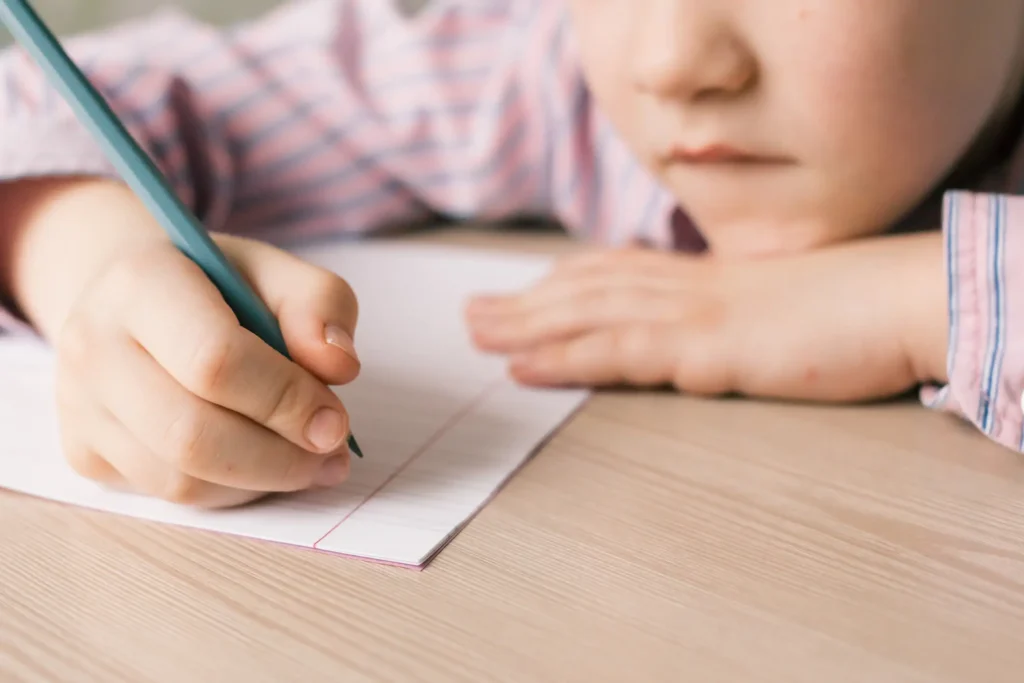
What is dysorthography? Symptoms, causes and treatment methods.
Not every typo is down to a lack of care, and not every spelling mistake is the result of rushing. Dysorthography affects thousands of children who know how to follow the rules of correct spelling but are unable to put that knowledge into practice. Why is that? What is dysorthography? What are its symptoms and […]