


Help your child to better understand their emotions and cope with everyday challenges
Psychological therapy for children and young people
How it works
What is psychological therapy?
Psychological therapy is a process based on regular sessions between a child or teenager and a specialist. Its objectives are determined on a case-by-case basis, taking into account the difficulties reported, discussions with the parents and the young person’s needs.
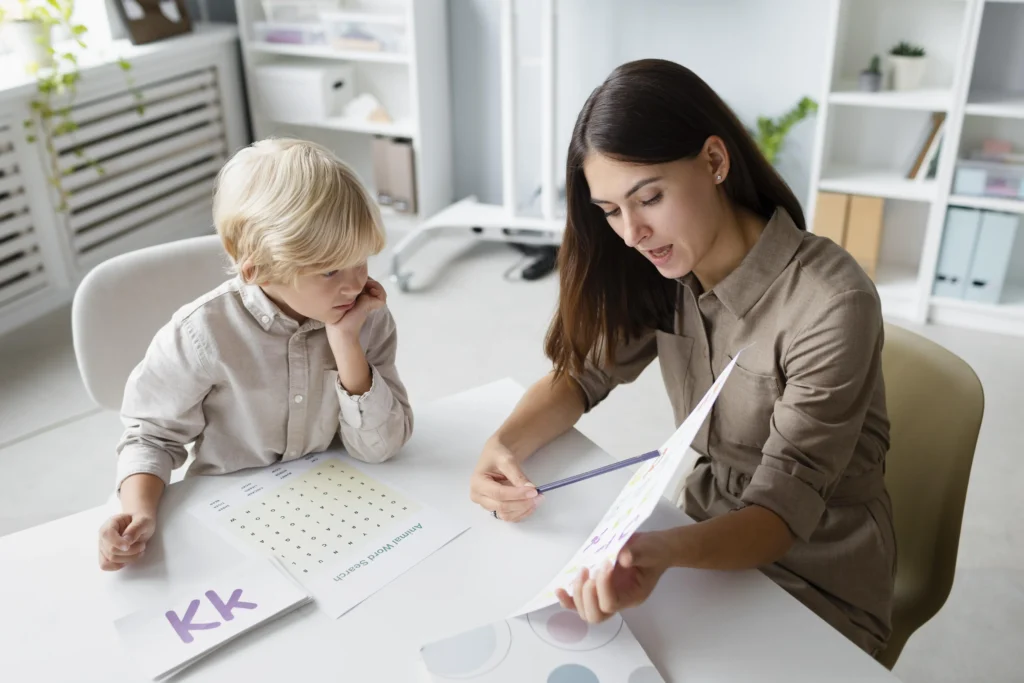
For younger children, play, drawing, storytelling and age-appropriate activities can be important tools in the therapeutic process. With teenagers, work is more often based on conversation, psychoeducation, exercises and learning specific ways of coping in difficult situations.
A psychologist can help a child:
- to recognise, name and express emotions more effectively,
- cope with anxiety, tension and worrying,
- to curb outbursts of anger and impulsive behaviour,
- to boost self-esteem,
- develop social skills and build relationships,
- cope with rejection, conflict or peer violence,
- to come to terms with a change, a loss or a difficult experience,
- to rebuild motivation and a sense of agency,
- function better at home, at school and amongst their peers,
- learn safe ways of dealing with strong emotions.
Pre-diagnostic consultation
A consultation may be a one-off meeting or the start of a longer-term relationship. It all depends on the child’s situation and the reason the family has come forward.
See for yourselves
When is it a good idea to start psychological therapy?
It is worth seeking advice if you notice that your child:
is often sad, downcast, irritable or tense,
experiences intense anxiety, worries or avoids certain situations,
has difficulty recognising and expressing emotions,
reacts with frequent outbursts of anger, aggression or impulsiveness,
withdraws from contact with family or peers,
has difficulty forming or maintaining relationships,
experiences rejection, conflict or peer violence,
has low self-esteem and does not believe in their own abilities,
doesn’t want to go to school or nursery,
has difficulty sleeping, with their appetite or with carrying out everyday activities,
is going through their parents’ separation, bereavement, a move or another significant change,
has been diagnosed with ADHD, autism spectrum disorder or other difficulties and needs support with day-to-day living,
engages in risky or self-harming behaviour,
suddenly it started behaving differently from before,
is finding it difficult to regain their balance after a traumatic experience.

Ready to get started?
You can also get in touch if you are unable to pinpoint the problem exactly, but feel that your child needs help. There’s no need to wait until the difficulties get worse.
Step by step
What does psychological therapy involve?
Consultation with a parent
The first step is to speak to a specialist. The psychologist will ask about the reason for the referral, the child’s development, their day-to-day functioning, and their situation at home, at school or at nursery. Parents can feel free to talk about their observations, any attempts they have made so far to help, and their main concerns.
A meeting with a child or teenager
The specialist seeks to understand the young person’s perspective, their needs and how they cope with difficulties. The format of the session is tailored to the child’s age, communication abilities and sense of security.
Establishing objectives and principles of cooperation
Based on the information gathered, the psychologist, together with the family, sets out the aims of the therapy, the proposed frequency of sessions and how progress will be monitored. The child or teenager should understand what they will be working on and what to expect during the sessions.
Regular treatment
During subsequent sessions, the specialist uses methods tailored to the child’s age and needs. The work may involve conversation, play, exercises, psychoeducation, training in specific skills, and exploring new ways of responding.
Progress report
The psychologist monitors the progress of the therapy and maintains contact with the parents to an agreed extent. Together, they can assess what changes are taking place, which areas still require work, and whether the therapy’s objectives should be adjusted.
Would you like to start with a chat?
Book an initial consultation. A specialist will help you determine whether psychological therapy is currently the right form of support for your child.
Consultations with some specialists can also take place online.
What can psychological therapy offer?
Benefits for the child and the whole family

A better understanding of emotions

Dealing with difficulties more effectively

Greater self-esteem

Better relationships

A greater sense of security

Support for parents
Why choose us?
Why should you choose psychological therapy
at the Dialog Centre for Children and Families?



The role of the parent in a child’s therapy
Collaboration that drives change

Family
Parents play an important role in the therapy process, particularly with younger children. They can provide the psychologist with information about the child’s behaviour, any changes they have observed, and situations that arise between sessions.

Consultation
Depending on the child’s age and the agreed guidelines for cooperation, the psychologist may suggest parental consultations, provide general information about the objectives being pursued, and suggest ways of supporting the child at home.

Safety
At the same time, the child needs to feel that the sessions provide a safe space. That is why the rules regarding confidentiality, contact with parents and the sharing of information are discussed at the start of the process in a way that is appropriate to the young person’s age.